Abstract
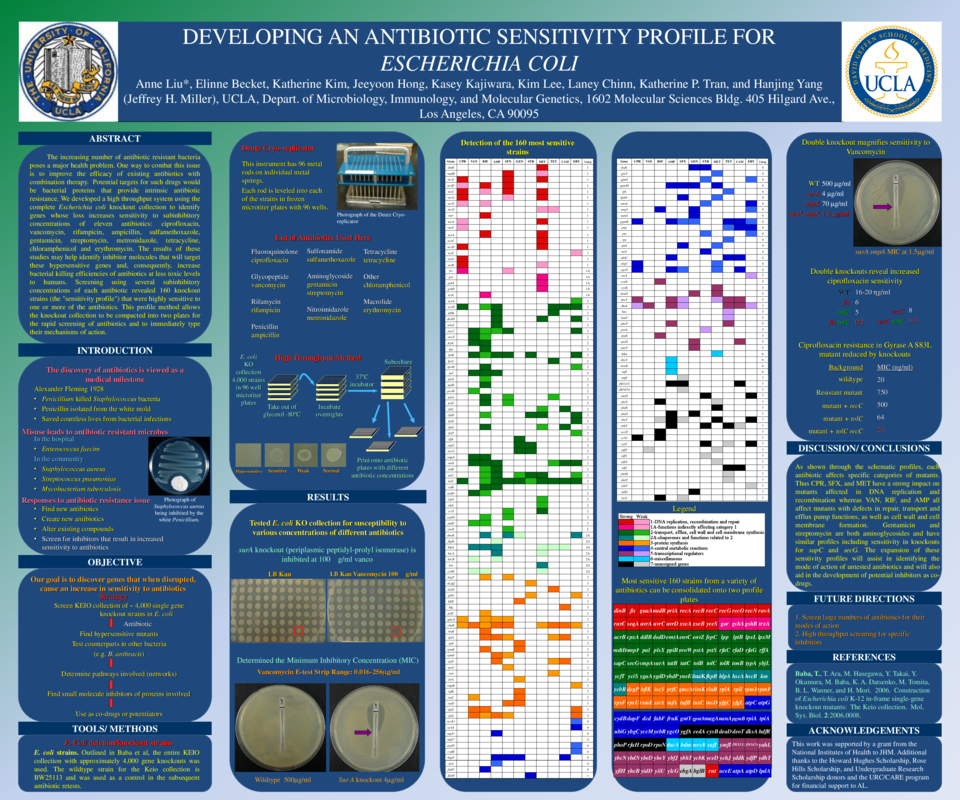
The increasing number of antibiotic resistant bacteria poses a major health problem. One way to combat this issue is to improve the efficacy of existing antibiotics with combination therapy. Potential targets for such drugs would be bacterial proteins that provide intrinsic antibiotic resistance. We developed a high throughput system using the complete Escherichia coli knockout collection to identify genes whose loss increases sensitivity to subinhibitory concentrations of eleven antibiotics: ciprofloxacin, vancomycin, rifampicin, ampicillin, sulfamethoxazole, gentamicin, streptomycin, metronidazole, tetracycline, chloramphenicol and erythromycin. The results of these studies may help identify inhibitor molecules that will target these hypersensitive genes and, consequently, increase bacterial killing efficiencies of antibiotics at less toxic levels to humans. Screening using several subinhibitory concentrations of each antibiotic revealed 160 knockout strains (the "sensitivity profile") that were highly sensitive to one or more of the antibiotics. This profile method allows the knockout collection to be compacted into two plates for the rapid screening of antibiotics and to immediately type their mechanisms of action.