Abstract
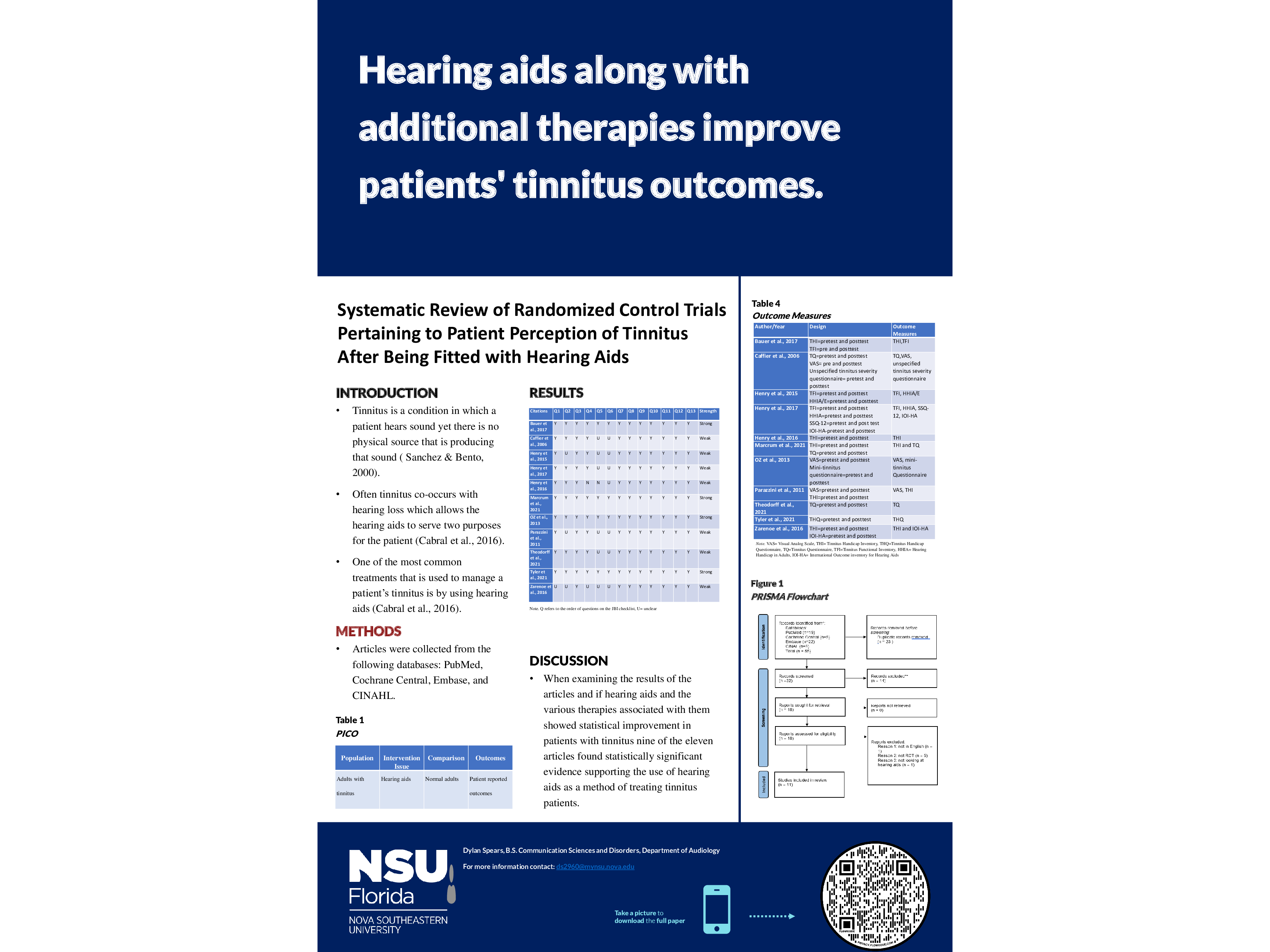
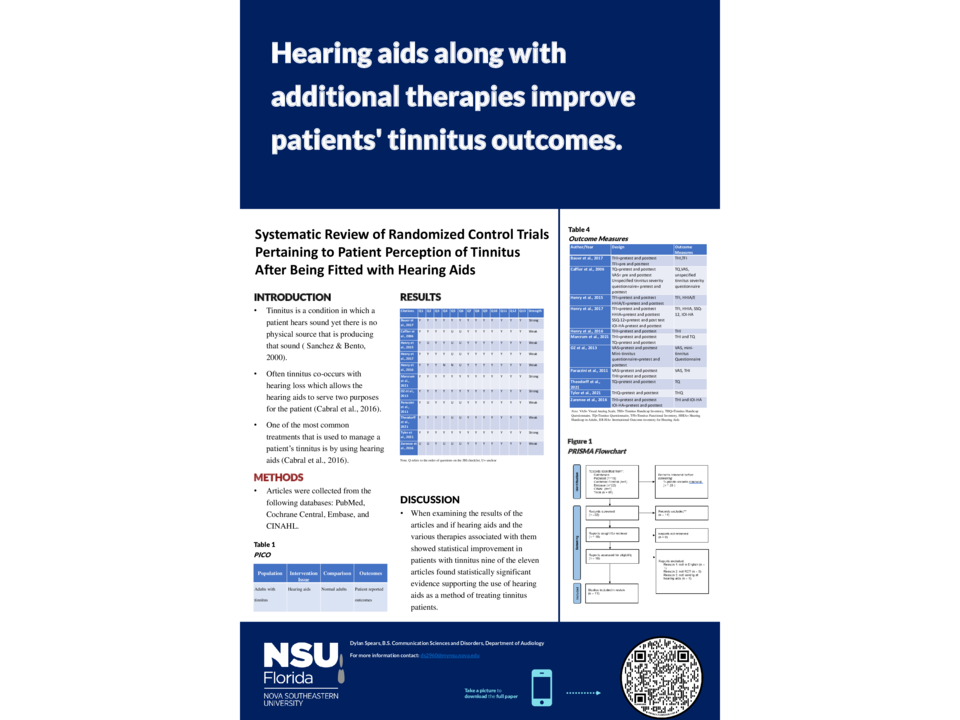
Introduction: Tinnitus is a condition in which a person hears a sound that has no physical source. The most common method used in treating patients who have tinnitus is to fit them with hearing aids, since tinnitus often occurs with hearing loss. The goal when fitting a patient with the hearing aids is to either mask out the tinnitus through a tinnitus program in the hearing aids or give proper amplification to the patient which for some people can improve their tinnitus.
Objective: The purpose of this systematic review is to examine randomized control trails of articles examining patient reported outcomes of tinnitus when treated with hearing aids to determine if they are beneficial to patients with tinnitus.
Methods: PubMed, Cochrane Central, Embase, and CINAHL were the databases used to find randomized control trials for this systematic review. Keywords such as tinnitus, hearing aids, questionnaire, and Boolean operators such as “NOT” cochlear implants were used to narrow down the number of articles searched.
Results: The research indicted that hearing aids are an effective method to utilize when treating patients with tinnitus. Of the eleven articles examined in this systematic review eight found statistically significant data to support the use of hearing aids in treating patients with tinnitus.
Conclusion: While most articles did suggest that hearing aids were an effective method to treat patients’ tinnitus in many of the studies that was a lack of transparency. In general, many of the article were unclear on if the participants were blind to the study as well as those delivering the tests. Future articles should indicate clearly the methods they used in blinding both participants and those that deliver the testing to participants to increase the validity of research.