Abstract
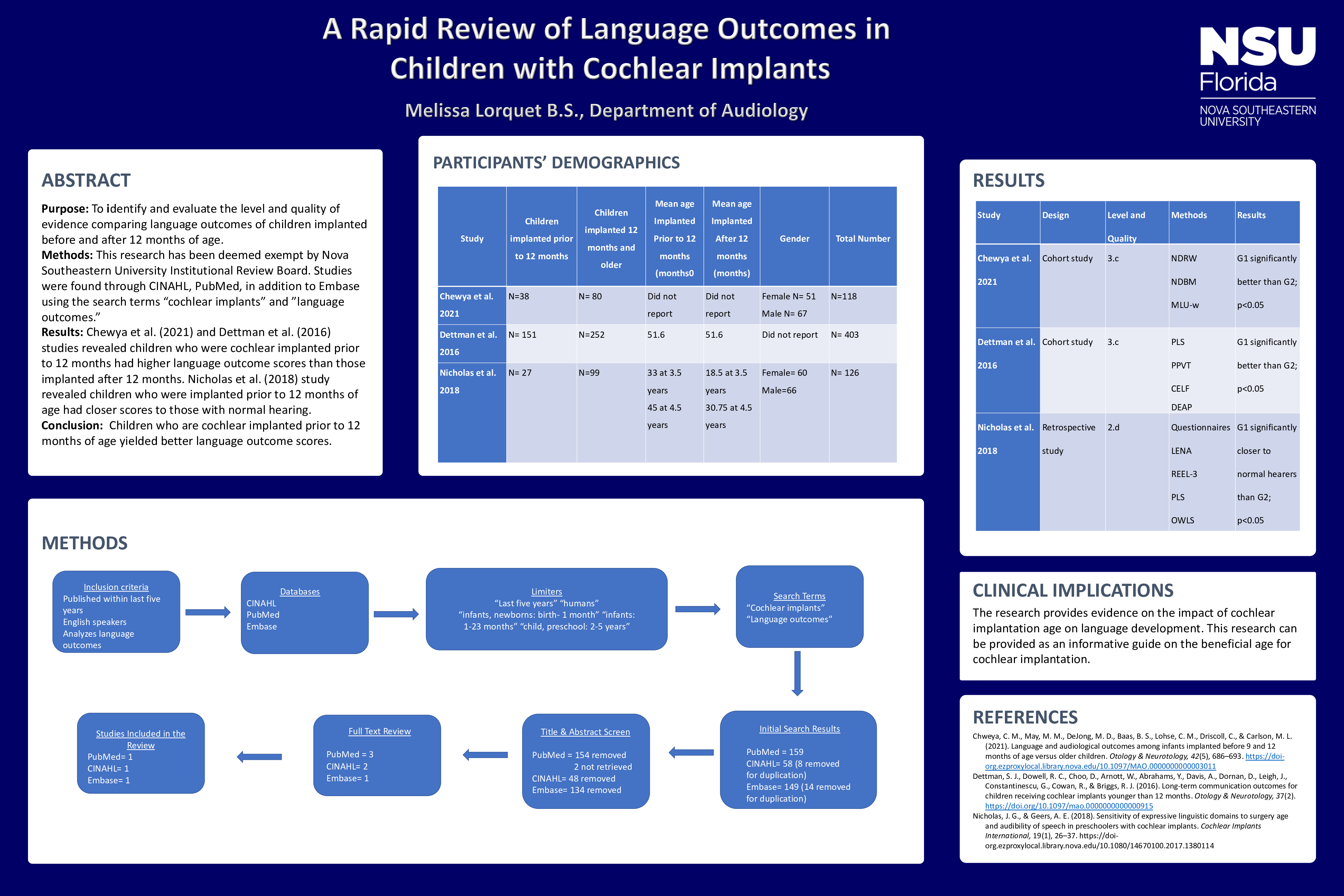
Purpose: The purpose of this research project is to identify and evaluate the level and quality of evidence comparing language outcomes in children before and after 12 months of age.
Methods: The research population is birth to five years with cochlear implants. The research intervention is children from birth through twelve months. The comparison is thirteen months through five years. The research outcome is language development. The search terms were generated using the PICO framework and were applied to PubMed, CINAHL, and Embase databases. Studies included: comparison of language outcomes prior and after 12 months of age. Studies excluded: participants with comorbidities that would statistically affect language outcomes. The PRISMA flow diagram was utilized in selecting studies for the research (Page et al., 2021). A custom data extraction form was developed by the author for retrieval of data. The risk of bias was assessed using the Cochrane risk of bias tool (Higgins et al. 2011). The studies were critically appraised using the JBI checklist and JBI levels of evidence (Johnna Briggs Institute, 2014).
Results: Three studies met the inclusion criteria. One study from each database. Chewya et al. (2021) and Dettman et al. (2016) studies revealed a statistical significance of higher language outcome scores in children implanted prior to 12 months of age when compared to children implanted after 12 months. Nicholas et al. (2018) study revealed that children implanted prior to 12 months of age were statistically significantly closer to language outcomes scores of children with normal hearing when compared to children implanted after to 12 months of age.
Conclusion: Children implanted prior to 12 months of age had better language outcomes score and closer to normal scores when compared to those implanted after 12 months. The research can be provided as an informative guide on the beneficial age for cochlear implantation.