Abstract
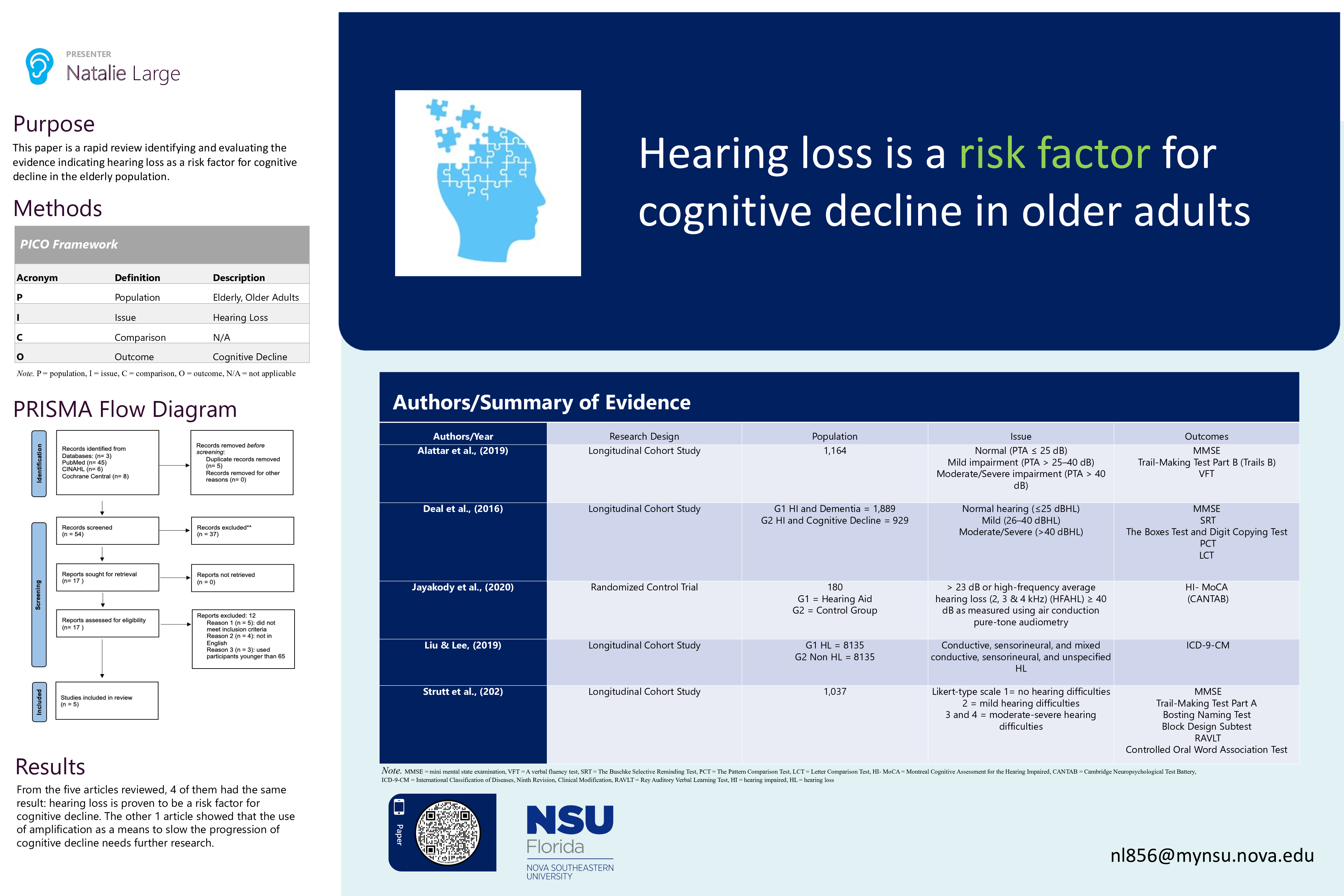
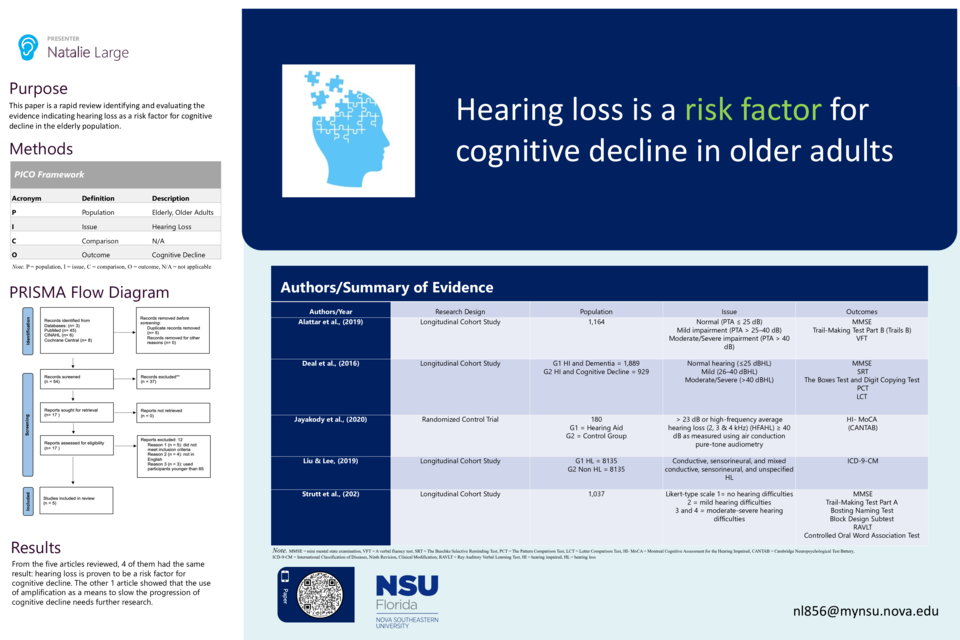
Purpose: This paper is a rapid review identifying and evaluating the evidence indicating hearing loss as a risk factor for cognitive decline in the elderly population.
Methods: A literature database search analysis was performed using PUBMED, Cochrane Central, and CINAHL. Search criteria included older adults aged 65 and up with diagnosed or self-reported hearing loss and no previous diagnosis of dementia or Alzheimer’s disease. Participants were excluded if they had been diagnosed with dementia or tested for it before the study began. Hearing loss was assessed using Pure Tone Average (PTA) categorized as follows: normal (</= 20 dB), mild impairment (>/= 25-40 dB), and moderate to severe impairment (> 40 dB). All articles were identified and assessed for eligibility according to PRISMA standards. All data accepted was critically appraised using the JBI critical appraisal checklist and documented on a data extraction form assessing risk of bias, level of evidence, and inclusion/exclusion criteria.
Results: From the five articles chosen for this literature review many of the results had the same outcome: un-treated hearing loss is a risk factor for cognitive decline and the use of amplification as a way to slow the progression needs more research.
Conclusion: This review was conducted to explore the current literature available on hearing loss as a risk factor for cognitive decline. While there are various hypotheses on whether there is a definitive relationship between the two, many of the studies reviewed found that a hearing loss in older adults will result in a poorer change of cognitive ability or cognitive decline