Abstract
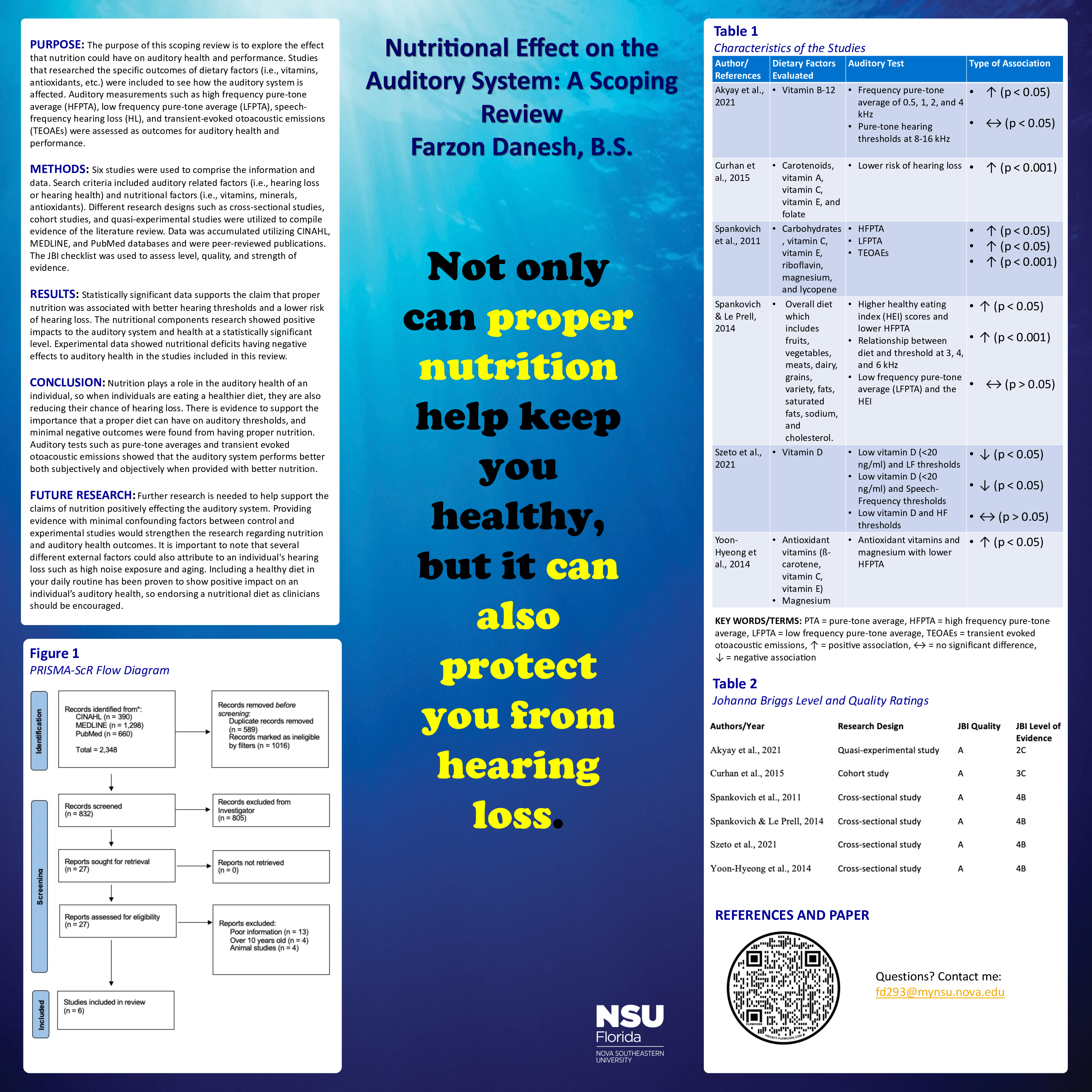
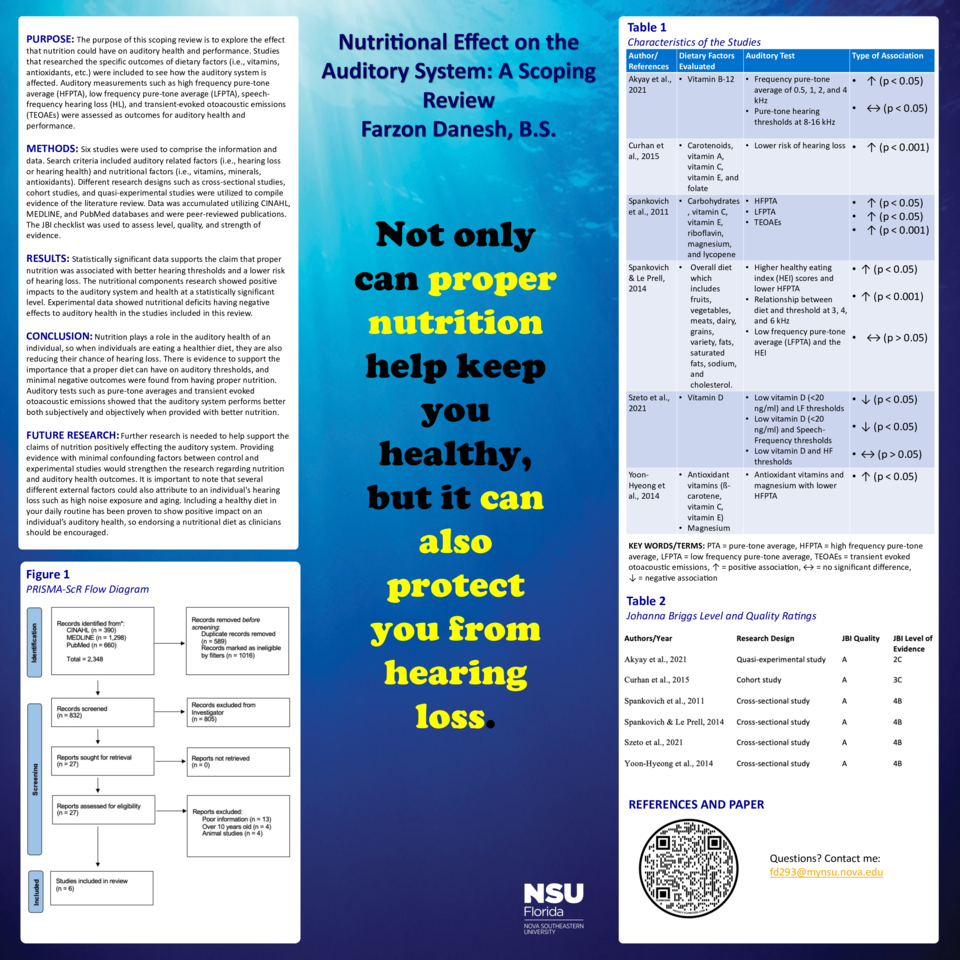
Objective: The purpose of this scoping review is to explore the effect that nutrition could have on auditory health and performance. Studies that researched the specific outcomes of dietary factors (i.e., vitamins, antioxidants, etc.) were included to see how the auditory system is affected. Auditory measurements such as high frequency pure-tone average (HFPTA), low frequency pure-tone average (LFPTA), speech-frequency hearing loss (HL), and transient-evoked otoacoustic emissions (TEOAEs) were assessed as outcomes for auditory health and performance.
Methods: Six studies were used to comprise the information and data. Search criteria included auditory related factors (i.e., hearing loss or hearing health) and nutritional factors (i.e., vitamins, minerals, antioxidants). Different research designs such as cross-sectional studies, cohort studies, and quasi-experimental studies were utilized to compile evidence of the literature review. Data was accumulated utilizing CINAHL, MEDLINE, and PubMed databases and were peer-reviewed publications. The JBI checklist was used to assess level, quality, and strength of evidence.
Results: Statistically significant data supports the claim that proper nutrition was associated with better hearing thresholds and a lower risk of hearing loss. The nutritional components research showed positive impacts to the auditory system and health at a statistically significant level. Experimental data showed nutritional deficits having negative effects to auditory health in the studies included in this review.
Conclusion: Nutrition plays a role in the auditory health of an individual, so when individuals are eating a healthier diet, they are also reducing their chance of hearing loss. There is evidence to support the importance that a proper diet can have on auditory thresholds, and minimal negative outcomes were found from having proper nutrition. Auditory tests such as pure-tone averages and transient evoked otoacoustic emissions showed that the auditory system performs better both subjectively and objectively when provided with better nutrition.
Further Research: Further research is needed to help support the claims of nutrition positively effecting the auditory system. Providing evidence with minimal confounding factors between control and experimental studies would strengthen the research regarding nutrition and auditory health outcomes. It is important to note that several different external factors could also attribute to an individual's hearing loss such as high noise exposure and aging. Including a healthy diet in your daily routine has been proven to show positive impact on an individual’s auditory health, so endorsing a nutritional diet as clinicians should be encouraged.