Abstract
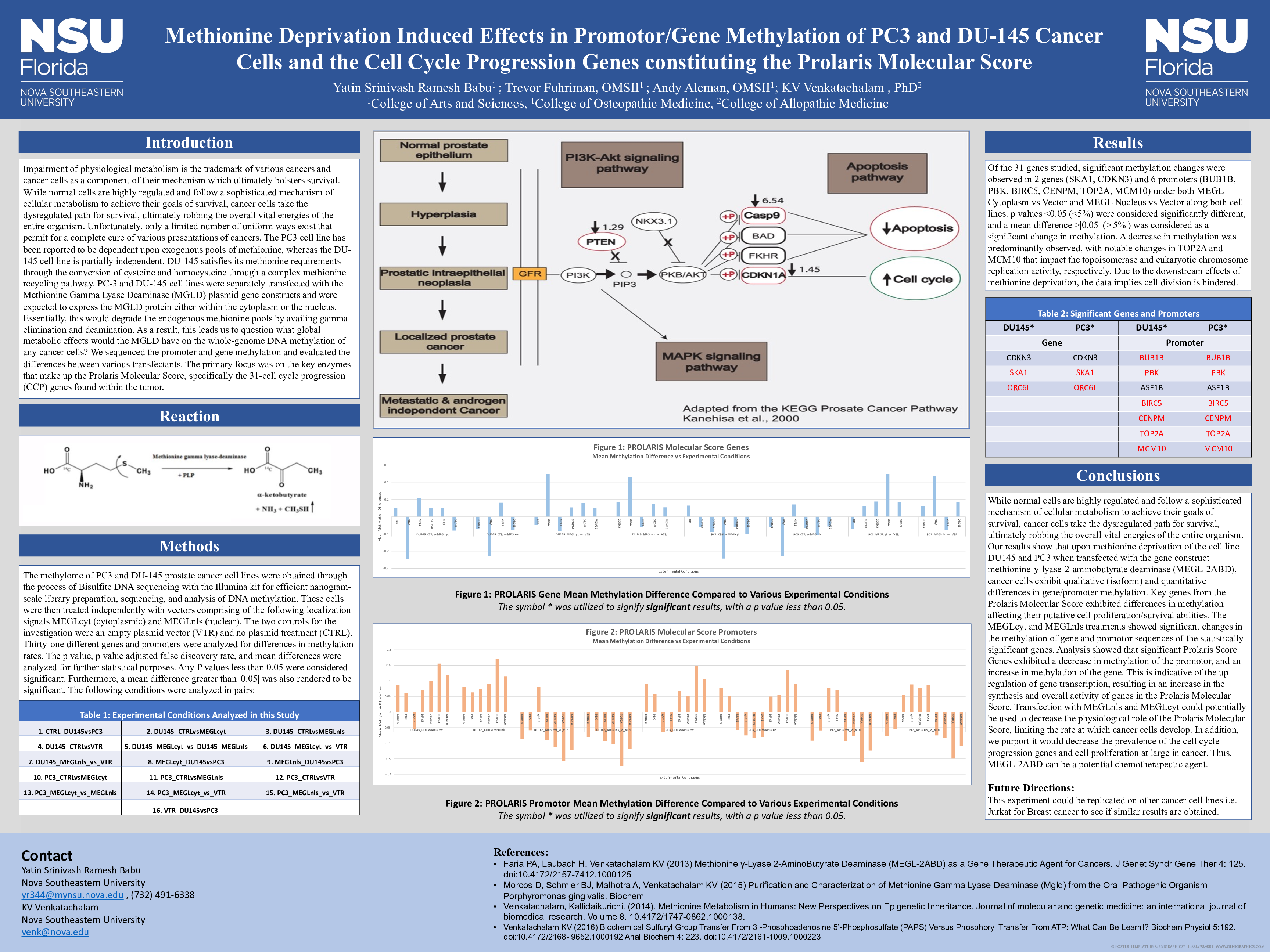
Impairment of physiological metabolism is the trademark of various cancers and
cancer cells as a component of their mechanism which ultimately bolsters survival.
While normal cells are highly regulated and follow a sophisticated mechanism of
cellular metabolism to achieve their goals of survival, cancer cells take the
dysregulated path for survival, ultimately robbing the overall vital energies of the
entire organism. Unfortunately, only a limited number of uniform ways exist that
permit for a complete cure of various presentations of cancers. The PC3 cell line has
been reported to be dependent upon exogenous pools of methionine, whereas the DU-145 cell line is partially independent. DU-145 satisfies its methionine requirements
through the conversion of cysteine and homocysteine through a complex methionine
recycling pathway. PC-3 and DU-145 cell lines were separately transfected with the
Methionine Gamma Lyase Deaminase (MGLD) plasmid gene constructs and were
expected to express the MGLD protein either within the cytoplasm or the nucleus.
Essentially, this would degrade the endogenous methionine pools by availing gamma
elimination and deamination. As a result, this leads us to question what global
metabolic effects would the MGLD have on the whole-genome DNA methylation of
any cancer cells? We sequenced the promoter and gene methylation and evaluated thedifferences between various transfectants. The primary focus was on the key enzymes that make up the Prolaris Molecular Score, specifically the 31-cell cycle progression (CCP) genes found within the tumor.