Abstract
Background: Cancer is the second most common cause of death in the United States, claiming over 600,000 lives every year. Breast, cervical, colorectal, and prostate cancers are major contributors to health burdens in the United States of America. The COVID-19 pandemic placed an unprecedented halt on many elective procedures, including many life-saving screening procedures for these cancers.
Objective: To determine the effects of the COVID-19 pandemic on routine colorectal, breast, and prostate cancer screening levels.
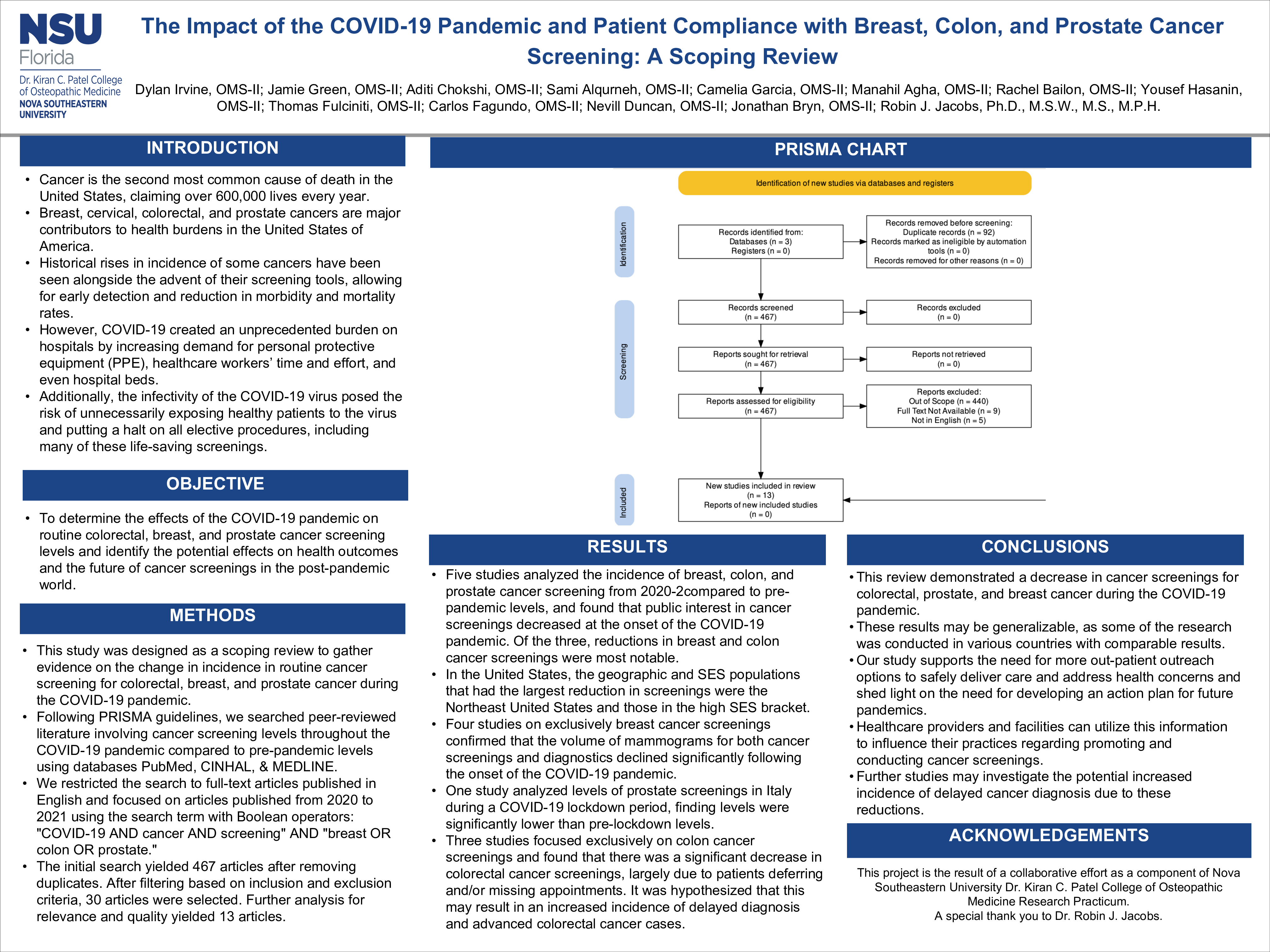
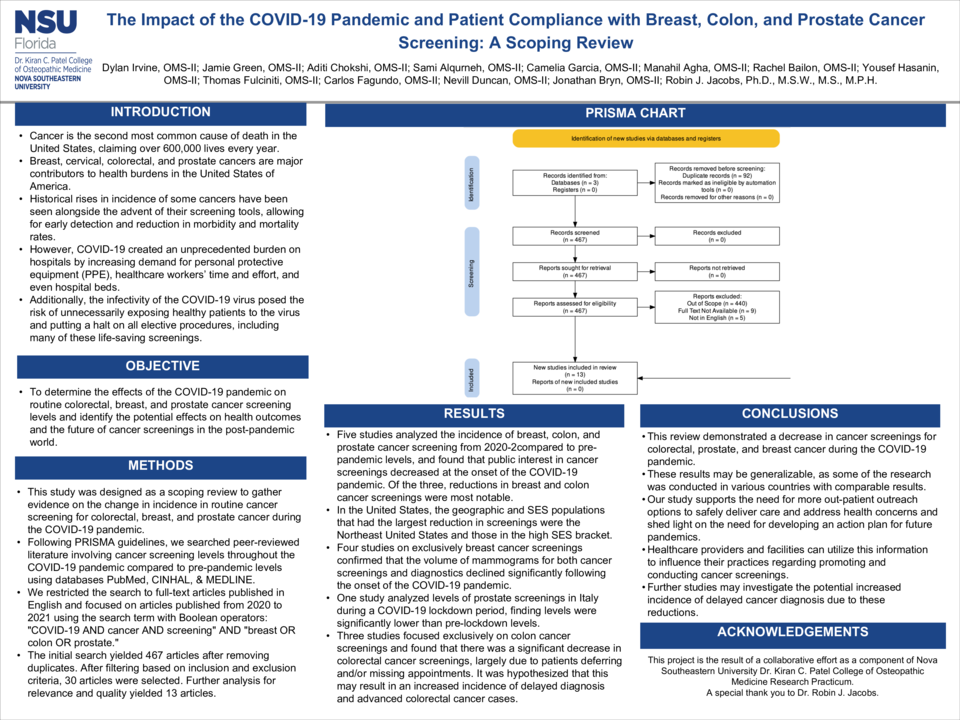
Methods: This study was designed as a scoping review to gather evidence on the change in incidence in routine cancer screening for colorectal, breast, and prostate cancer during the COVID-19 pandemic. Following PRISMA guidelines, we searched peer-reviewed literature involving cancer screening levels throughout the COVID-19 pandemic compared to pre-pandemic levels using databases PubMed, CINHAL, & MEDLINE. We restricted the search to full-text articles published in English and focused on articles published from 2020 to 2021 using the search term with Boolean operators: "COVID-19 AND cancer AND screening" AND "breast OR colon OR prostate." The initial search yielded 467 articles after removing duplicates. After filtering based on inclusion and exclusion criteria, 30 articles were selected. Further analysis for relevance yielded 13 articles.
Results: Five studies analyzed the incidence of breast, colon, and prostate cancer screening from 2020- 21, compared to pre-pandemic levels, and found that public interest in cancer screenings decreased at the onset of the COVID-19 pandemic. Of the three, reductions in breast and colon cancer screenings were most notable. In the United States, the geographic and SES populations that had the largest reduction in screenings were the Northeast United States and those in the high SES bracket. Four studies on exclusively breast cancer screenings confirmed that the volume of mammograms for both cancer screenings and diagnostics declined significantly following the onset of the COVID-19 pandemic. One study analyzed levels of prostate screenings in Italy during a COVID-19 lockdown period, finding levels were significantly lower than pre-lockdown levels. Three studies focused exclusively on colon cancer screenings and found that there was a significant decrease in colorectal cancer screenings, largely due to patients deferring and/or missing appointments. It was hypothesized that this may result in an increased incidence of delayed diagnosis and advanced colorectal cancer cases.
Conclusion: This review demonstrated a decrease in cancer screenings for colorectal, prostate, and breast cancer during the COVID-19 pandemic. Further studies may investigate the potential increased incidence of delayed cancer diagnosis due to these reductions.