Abstract
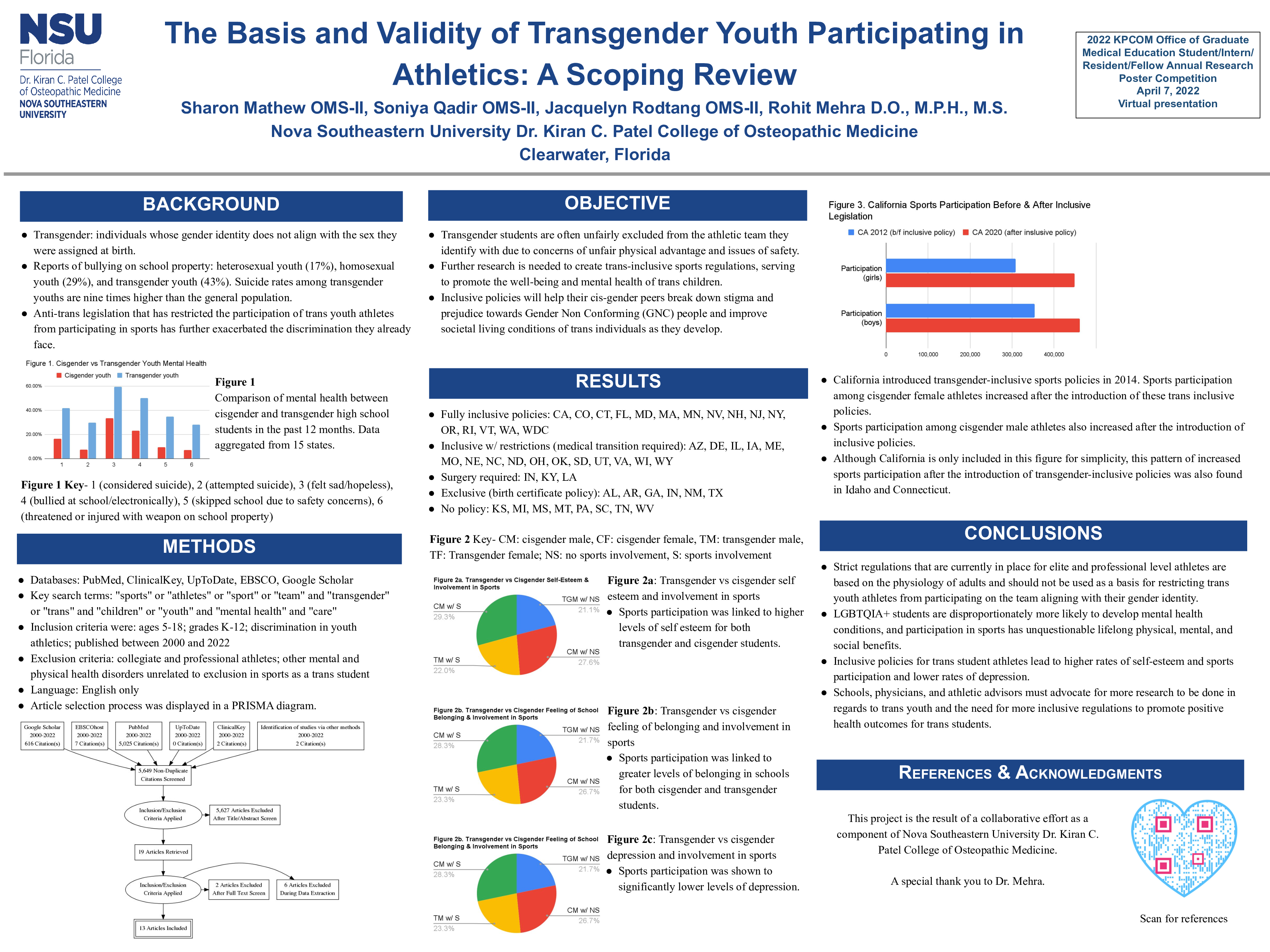
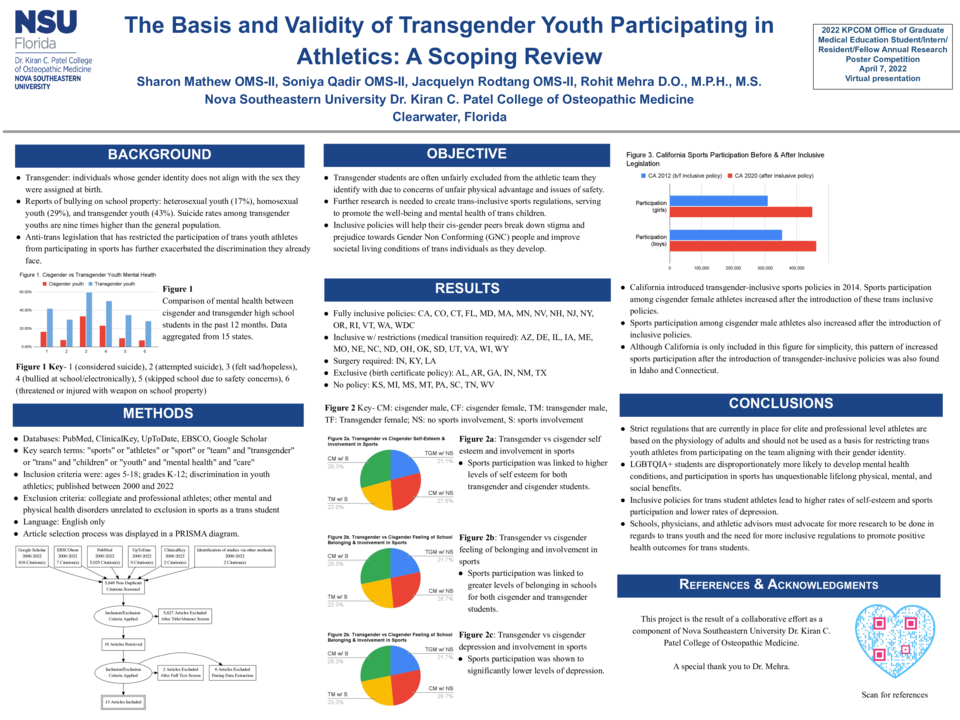
Background: Transgender children are disproportionately subject to bullying, harassment, and rejection from peers. Anti-trans legislation that has restricted the participation of trans youth athletes from participating in sports has further exacerbated the discrimination they already face. Athletic trainers, coaches, PCPs, and sports medicine physicians have the opportunity to intervene on behalf of trans youth by devising updated regulations that are more inclusive of trans athletes and ensure all children can participate on the sports team aligning with their gender identity.
Objective: Transgender students are often unfairly excluded from the athletic team they identify with due to concerns of unfair physical advantage and issues of safety. While there is research to disprove these claims, further research is needed to create trans-inclusive sports regulations, serving to promote the well-being and mental health of trans children. These inclusive policies will help their cis-gender peers break down stigma and prejudice towards Gender Non Conforming people and improve societal living conditions of trans individuals as they develop.
Methods: This study is designated as a scoping review using data gathered from 5 databases - PubMed, ClinicalKey, UpToDate, EBSCO, and Google Scholar. The key search terms are "sports" OR "athlet*" AND "juvenile" OR "youth" AND "Trans" OR "Transgender" OR "trans youth.” The inclusion criteria are articles published between 2000 and 2022 relating to discrimination in youth athletics involving non-cisgender identifying individuals ages 5-18 or those in grades K-12. A total of 13 publications fit these criteria.
Results: The current regulations for professional and elite adult athletes, implemented by the International Olympic Committee, states that trans men are allowed to compete in the male category without restrictions, while trans women must have testosterone levels below ten nmol/L for at least 12 months before they are able to compete. Females with Differences in Sex Development (DSD) or hyperandrogenism also face tight regulations regarding their hormone levels to be eligible to compete. Current data suggests, however, that physiological differences between pre-pubescent cisgender males and females are insignificant. Additionally, a number of studies have noted that the mental health benefits of youth participation in sports, with current research suggesting these benefits also extend to transgender youth. Furthermore, in states with trans-exclusionary sports policies, participation in sports among girls decreased, whereas participation increased in states with trans-inclusionary policies.
Conclusions: Strict regulations that are currently in place for elite and professional level athletes are based on the physiology of adults and should not be used as a basis for restricting trans youth athletes from participating on the team aligning with their gender identity. LGBTQIA+ students are disproportionately more likely to develop mental health conditions, and participation in sports has unquestionable lifelong physical, mental, and social benefits. Considering this, schools, physicians, and athletic advisors must advocate for more research to be done in regards to trans youth and the need for more inclusive regulations to promote positive health outcomes for trans students.