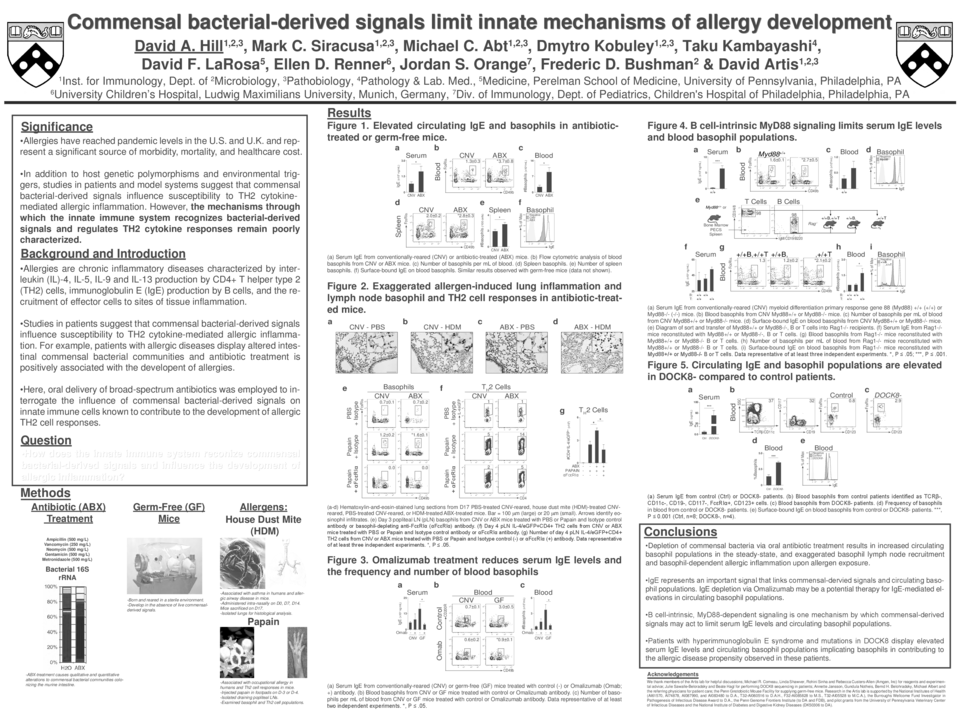
Commensal Bacterial-Derived Signals Limit Innate Mechanisms of Allergy Development
Abstract
Significance:
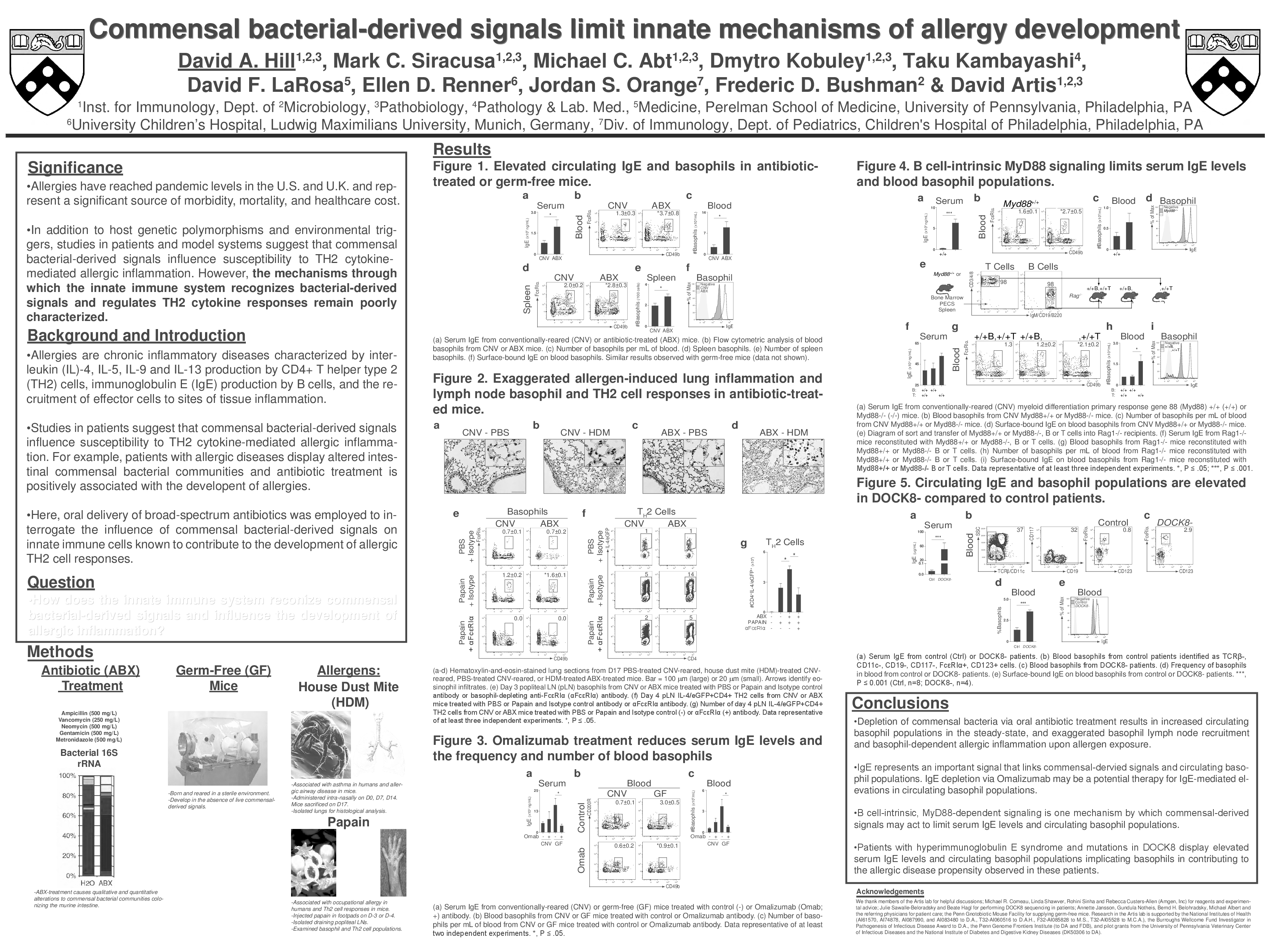
•Allergies have reached pandemic levels in the U.S. and U.K. and represent a significant source of morbidity, mortality, and healthcare cost.
•In addition to host genetic polymorphisms and environmental triggers, studies in patients and model systems suggest that commensal bacterial-derived signals influence susceptibility to TH2 cytokine-mediated allergic inflammation. However, the mechanisms through which the innate immune system recognizes bacterial-derived signals and regulates TH2 cytokine responses remain poorly characterized.
Background and Introduction:
•Allergies are chronic inflammatory diseases characterized by interleukin (IL)-4, IL-5, IL-9 and IL-13 production by CD4+ T helper type 2 (TH2) cells, immunoglobulin E (IgE) production by B cells, and the recruitment of effector cells to sites of tissue inflammation.
•Studies in patients suggest that commensal bacterial-derived signals influence susceptibility to TH2 cytokine-mediated allergic inflammation. For example, patients with allergic diseases display altered intestinal commensal bacterial communities and antibiotic treatment is positively associated with the development of allergies.
•Here, studies of human patient populations as well as oral delivery of broad-spectrum antibiotics was employed to interrogate the influence of commensal bacterial-derived signals on innate immune cells known to contribute to the development of allergic TH2 cell responses.
Question:
•How does the innate immune system recognize commensal bacterial-derived signals and influence the development of allergic inflammation?
Results:
•Depletion of commensal bacteria via oral antibiotic treatment results in increased circulating basophil populations in the steady-state, and exaggerated basophil lymph node recruitment and basophil-dependent allergic inflammation upon allergen exposure.
•IgE represents an important signal that links commensal-derived signals and circulating basophil populations. IgE depletion via Omalizumab may be a potential therapy for IgE-mediated elevations in circulating basophil populations.
•B cell-intrinsic, MyD88-dependent signaling is one mechanism by which commensal-derived signals may act to limit serum IgE levels and circulating basophil populations.
•Patients with hyperimmunoglobulin E syndrome and mutations in DOCK8 display elevated serum IgE levels and circulating basophil populations implicating basophils in contributing to the allergic disease propensity observed in these patients.
Related articles