Abstract
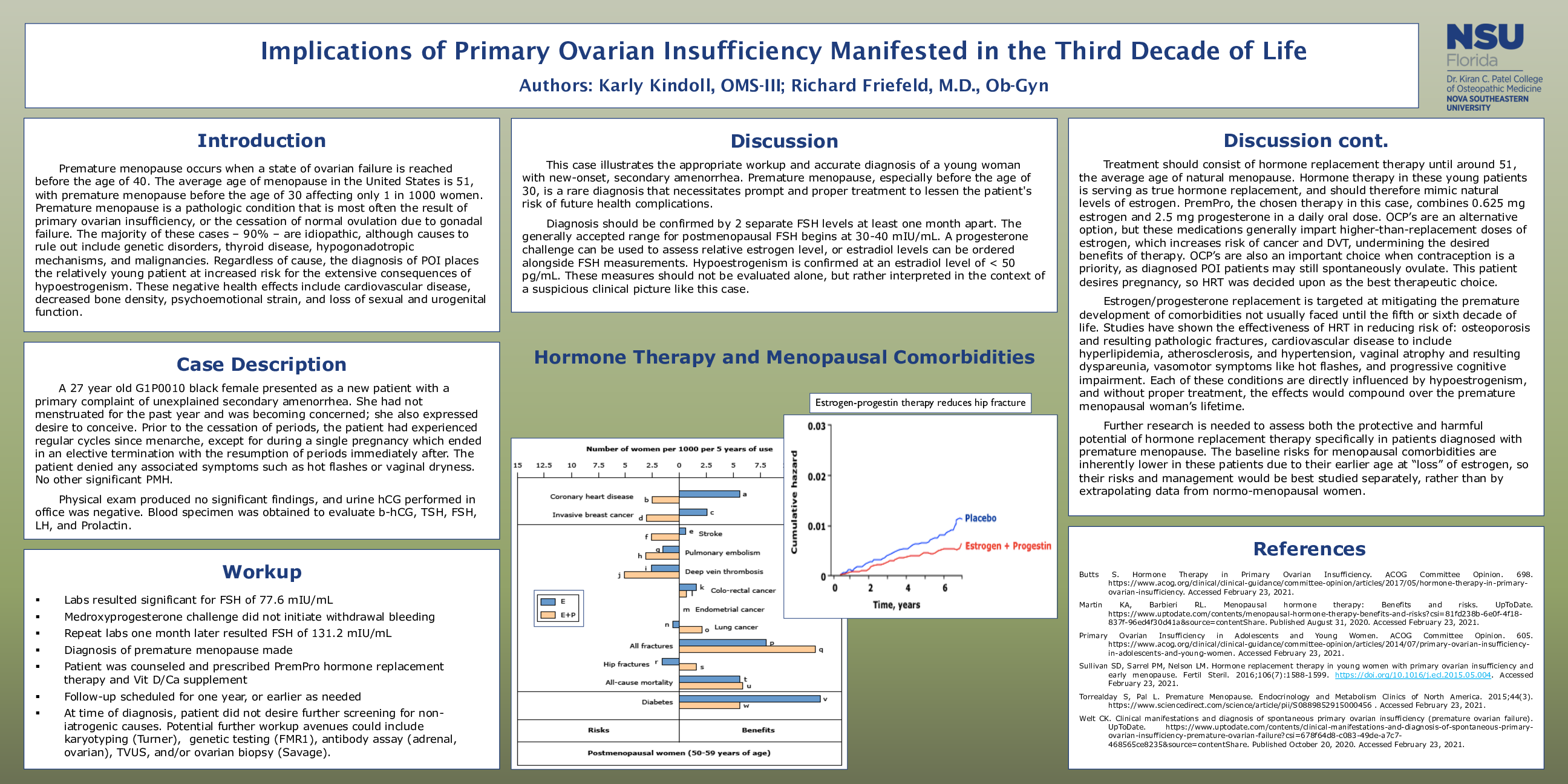
Introduction: Premature menopause occurs when a state of ovarian failure is reached before the age of 40. The average age of menopause in the United States is 51, with premature menopause before the age of 30 affecting only 1 in 1000 women. Menopause is diagnosed clinically after 12 consecutive months of amenorrhea, but is confirmed quantitatively by a FSH level above 30-40. Menopause before the typical age is a pathologic condition that can often be attributed to primary ovarian insufficiency. The majority of cases are idiopathic, but regardless of cause, the diagnosis spells out a dire situation for the patient. Hypoestrogenism has significant negative health effects throughout the body, including but not limited to hyperlipidemia, decreased bone density, psychoemotional changes, and vaginal atrophy, effects that all compound over time as the body continues to function in the absence of this vital chemical. Treatment with hormone replacement therapy is critical not only for the physical well-being of the patient, but also may help address the psychological and emotional challenges of entering the menopausal phase of life at such an early age.
Case Description: We present a case of a 27 year old G1P0010 black female with a primary complaint of unexplained secondary amenorrhea. Prior to the cessation of periods, the patient had experienced regular cycles since menarche. Physical exam produced no significant findings, and urine hCG performed in office was negative. Blood specimen was obtained to evaluate b-hCG, TSH, FSH, LH, and Prolactin. Labs returned significant for FSH of 77.6 mIU/mL. At this time, the patient was prescribed a medroxyprogesterone challenge (10 mg x 5 days), after which she did not experience any withdrawal bleeding. Repeat labs obtained one month after initial labs showed even further elevated FSH of 130 mIU/mL. In context, this result effectively confirmed the suspected diagnosis of menopause at the early age of 27. The patient was counseled on the implications of this diagnosis, to include health risks and infertility, and the decided upon treatment was PremPro dual hormone replacement therapy along with Vitamin D and Calcium supplementation. Follow-up office appointment was scheduled for one year.
Discussion: This case illustrates the appropriate workup and accurate diagnosis of a young woman with new-onset amenorrhea. Premature menopause before the age of 30 is a relatively rare diagnosis, but one that necessitates prompt and proper treatment to lessen the patient's risk of future health complications.