Abstract
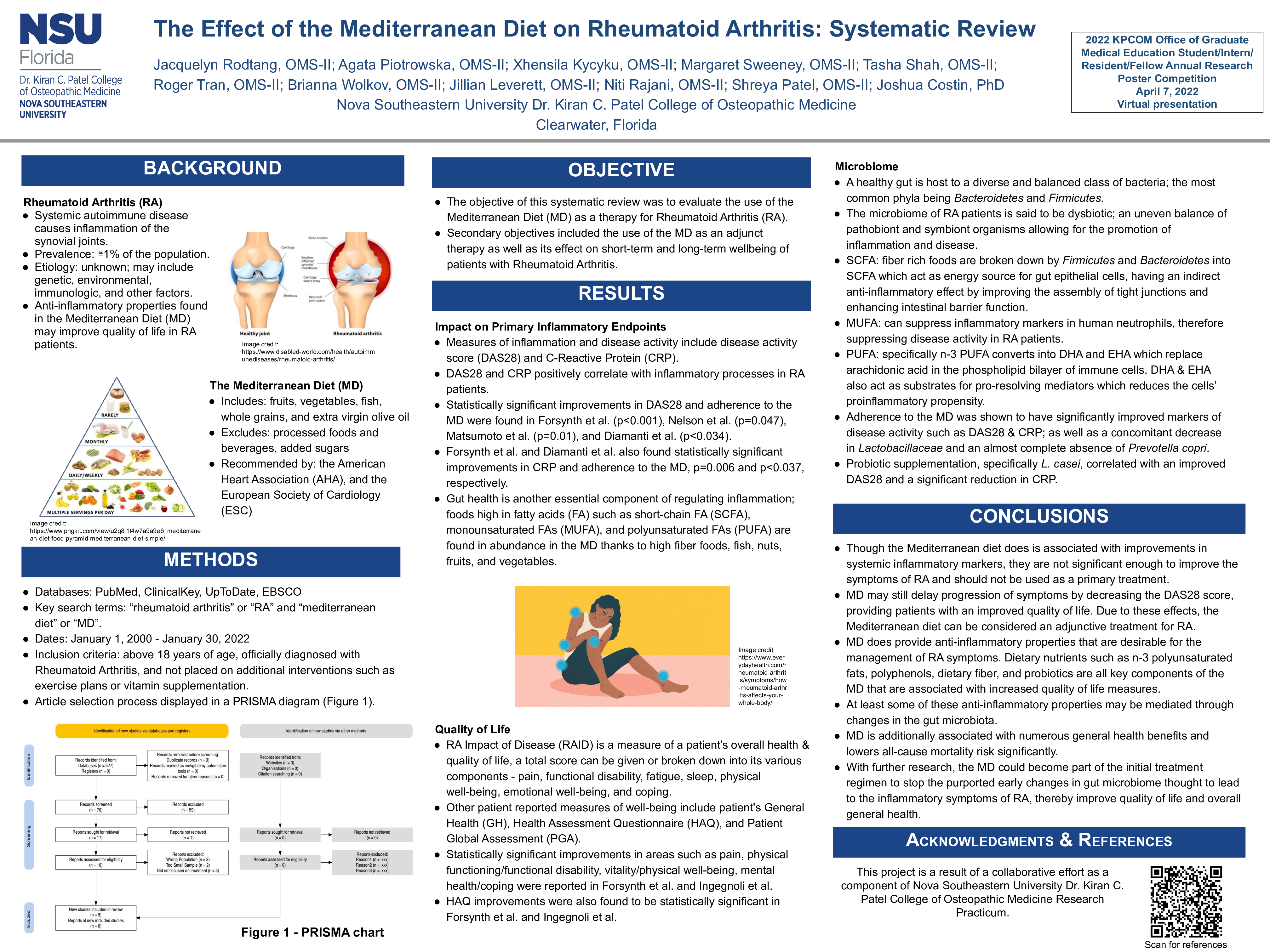
Background: The Mediterranean Diet presents anti-inflammatory properties, a desirable attribute for RA patients. Rheumatoid arthritis is a systemic autoimmune disease of the synovial joints affecting about 1% of the population. Its exact complex etiology is unknown, but includes genetic, environmental, immunologic, and other factors. Patients may be less debilitated by this autoimmune disease if a lifestyle modification, like diet, can be implemented. The Mediterranean diet places an emphasis on foods found around the Mediterranean Sea. This diet does not limit caloric intake nor single out any one of a specific food product. Instead, it emphasizes eating plenty of fruits, vegetables, whole grains, fish, and extra virgin olive oil while avoiding any foods and beverages with a high quantity of added sugars and any overly processed foods, which is consistent with the current American Heart Association (AHA) and European Society of Cardiology (ESC) recommendations for dietary caloric distribution.
Objective: The objective of this study is to determine the extent of use of Mediterranean Diet as secondary therapy in conjunction with medical therapies, aimed to help with short-term and long-term wellbeing of patients with Rheumatoid Arthritis.
Methods: This study was designated as a systematic review using data gathered from databases. The key search terms were “rheumatoid arthritis” or “RA” and “mediterranean diet” or “MD”. The articles selected were published between the year 2000 and present. The patient inclusion criteria were: age above 18 years of age, officially diagnosed with Rheumatoid Arthritis, and were not placed on additional interventions such as exercise plans or vitamin supplementation. The research data were gathered using PubMed, ClinicalKey, UpToDate, and EBSCO databases and the article selection process was displayed in a PRISMA diagram. Initial database searches yielded 527 articles with the key search terms listed above. An initial screening of the articles produced 76 articles which were further assessed for eligibility and further narrowed to 16 articles. Of those two had the wrong patient population, two had insufficient sample sizes, and three focused on RA prevention instead of treatment; nine articles were included in the final review.
Results: Of the nine articles used for this study, this included systematic reviews (n=4), literature reviews (n=2) and cohort studies (n=3). The systematic reviews included studies from clinical trials, prospective trials, and randomized studies while the cohort studies included cross-sectional studies. These studies were conducted in the United States, United Kingdom, and Northern Europe. Using the preliminary data found, the Mediterranean Diet may provide benefit for Rheumatoid Arthritis in conjunction with medical treatment but further studies are needed to see if the Mediterranean Diet alone is sufficient enough to see significant results in the improvements of symptoms in Rheumatoid Arthritis.
Conclusions: MD has known positive effects on health that all people, including RA patients may benefit from. However, evidence for direct anti-inflammatory properties of the diet contributing to control of RA is currently lacking. A diet high in n-3 PUFAs, polyphenols, dietary fiber, & probiotics do have evidence to support a decrease in systemic inflammation & improve Rheumatoid Arthritis disease outcomes.