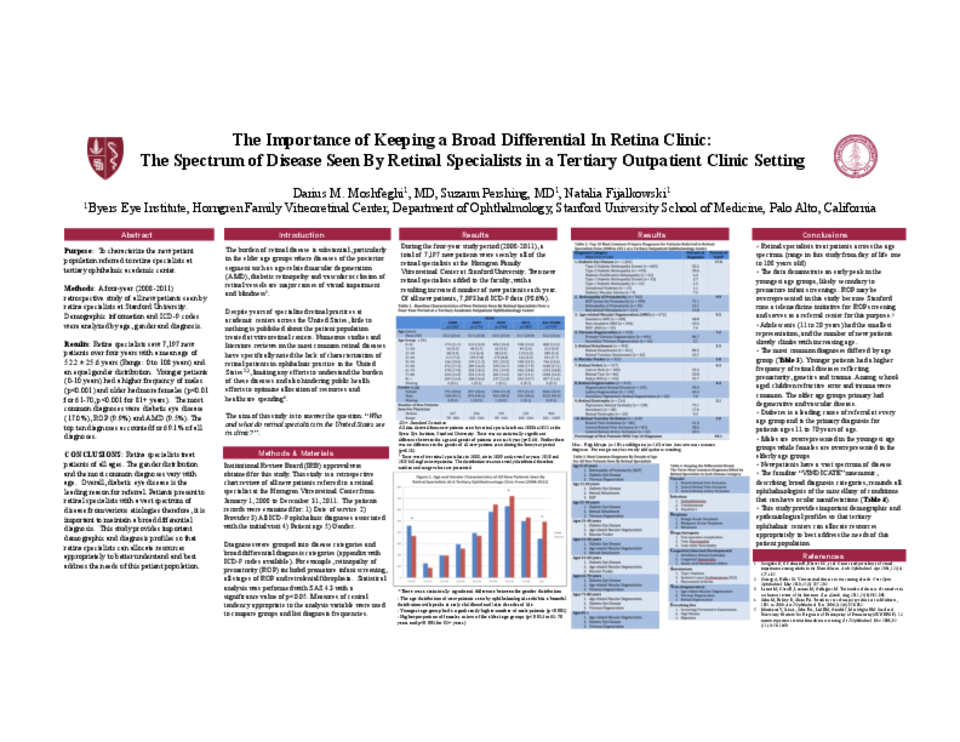
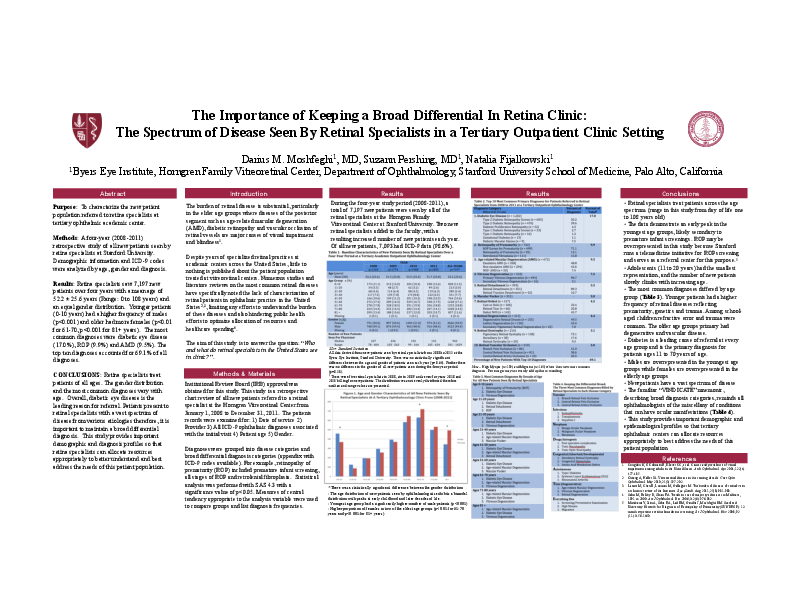
The Importance of Keeping a Broad Differential In Retina Clinic: The Spectrum of Ophthalmic Disease Seen By Retinal Specialists in a Tertiary Outpatient Clinic Setting
Abstract
Purpose: To characterize the new patient population referred to retina specialists at tertiary ophthalmic academic center.
Methods: A four-year (2008-2011) retrospective study of all new patients seen by retina specialists at Stanford University. Demographic information and ICD-9 codes were analyzed by age, gender and diagnosis.
Results: Retina specialists saw 7,197 new patients over four years with a mean age of 52.2 ± 25.6 years (Range: 0 to 108 years) and an equal gender distribution. Younger patients (0-10 years) had a higher frequency of males (p<0.001) and older had more females (p<0.01 for 61-70, p<0.001 for 81+ years). The most common diagnoses were diabetic eye disease (17.0%), ROP (9.9%) and AMD (9.5%). The top ten diagnoses accounted for 69.1% of all diagnoses.
Conclusions: Retina specialists treat patients of all ages. The gender distribution and the most common diagnoses vary with age. Overall, diabetic eye disease is the leading reason for referral. Patients present to retinal specialists with a vast spectrum of disease from various etiologies therefore, it is important to maintain a broad differential diagnosis. This study provides important demographic and diagnosis profiles so that retina specialists can allocate resources appropriately to better understand and best address the needs of this patient population.
Related articles