Abstract
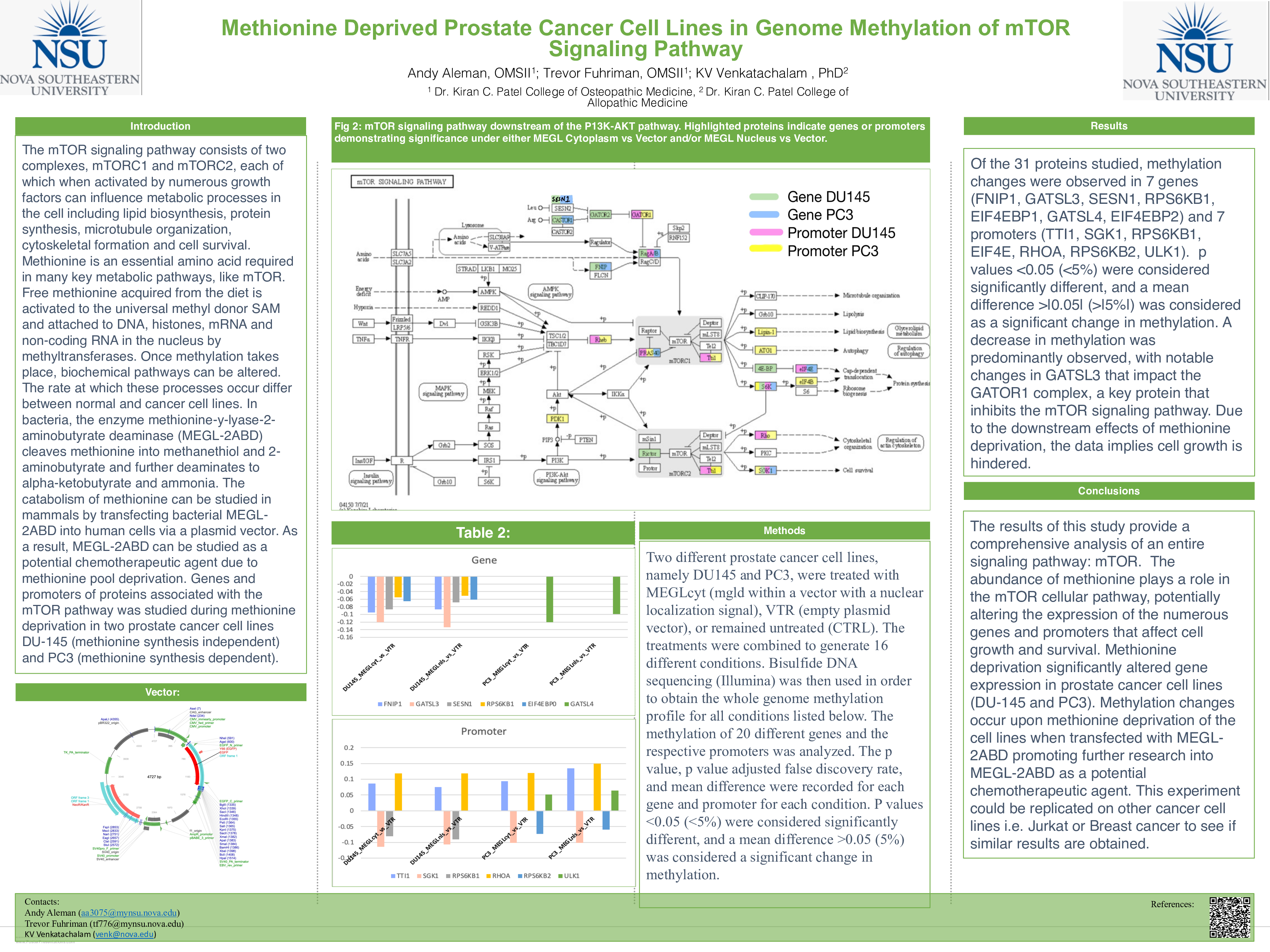
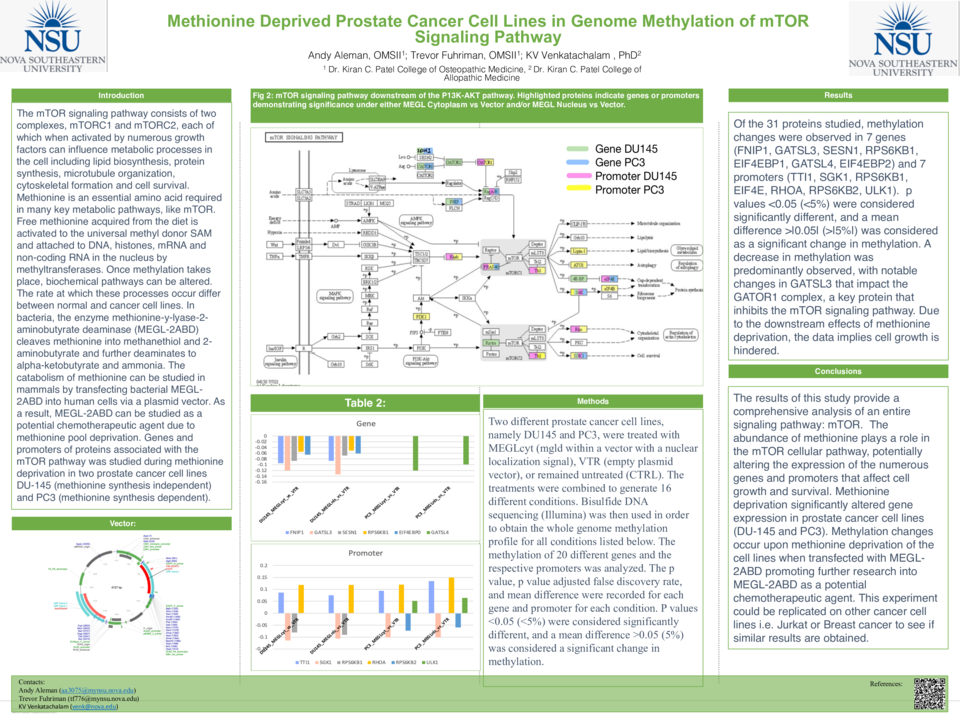
The mTOR signaling pathway consists of two complexes, mTORC1 and mTORC2, each of which when activated by numerous growth factors can influence metabolic processes in the cell including lipid biosynthesis, protein synthesis, microtubule organization, cytoskeletal formation, and cell survival[1]. Methionine is an essential amino acid required in many key metabolic pathways, like mTOR. Free methionine acquired form the diet is activated to the universal methyl donor SAM and the methyl group is then transferred to DNA, histones, mRNA and non-coding RNA in the nucleus by methyltransferases. Once methylation takes place, biochemical pathways could often change. The rate at which these processes occur differ between normal and cancer cell lines. In bacteria, the enzyme methionine-y-lyase-2-aminobutyrate deaminase (MEGL-2ABD) cleaves methionine into methanethiol and 2-aminobutyrate and further deaminates to alpha-ketobutyrate and ammonia. The catabolism of methionine can be studied in mammals by transfecting bacterial MEGL-2ABD into human cells via cloned plasmid vector. As a result, MEGL-2ABD can be studied as a potential chemotherapeutic agent due to methionine deprivation. Genes and promoters of proteins associated with the mTOR pathway was studied during methionine deprivation in two prostate cancer cell lines DU-145 (methionine synthesis independent) and PC3 (methionine synthesis dependent) and observed methylation differences.