Abstract
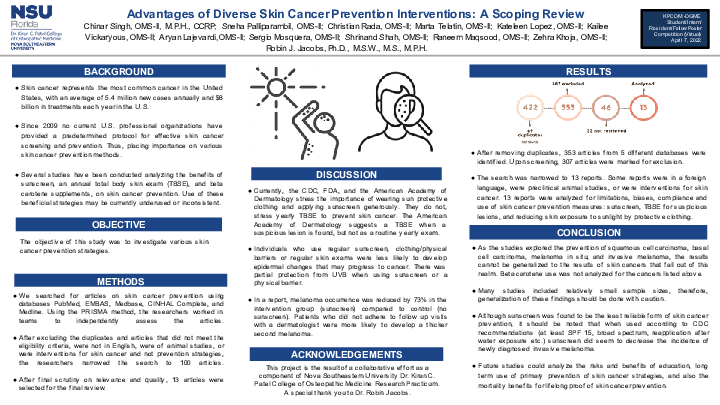
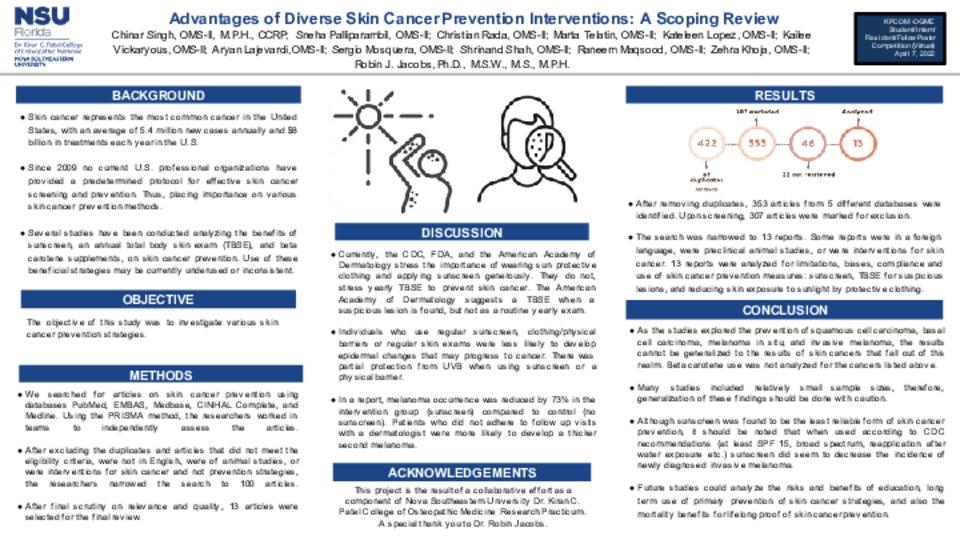
Background: Skin cancer represents the most common cancer in the United States, with an average of 5.4 million new cases annually and $8 billion in treatments each year in the United States. Furthermore, since 2009 no current U.S. professional organizations have provided a predetermined protocol for effective skin cancer screening and prevention. Thus, placing importance on various skin cancer prevention methods. Several studies have been conducted analyzing the benefits of sunscreen, an annual total body skin exam (TBSE), and beta carotene supplements, on skin cancer prevention. Use of these beneficial strategies may be currently underused or inconsistent.
Objective: The objective of this study is to map out the literature on various skin cancer prevention strategies.
Methods: We searched for articles on skin cancer prevention using databases PubMed, EMBAS, Medbase, CINHAL Complete, and Medline. Using the PRISMA method, the researchers worked in teams to independently assess the articles and after excluding the duplicates and those not meeting the eligibility criteria, that were not in English, were of animal studies, or interventions for skin cancer and not prevention strategies, narrowed it down to 100 articles. After final scrutiny on relevance and quality, 13 articles were selected for the final review.
Results: The 13 articles in this review were assessed for biases, compliance, and use of skin cancer prevention measures such as sunscreen, TBSE for suspicious lesions, beta-carotene supplementation, and reducing skin exposure to sunlight by protective clothing. Our findings indicate that the current studies incorporate a small sample size, short duration of follow-up and are limited to specific populations. Some reports did not discuss their limitations and also reported overall reduced knowledge of skin cancer among participants.
Conclusion: Future studies could analyze the risks and benefits of education, long term use of primary prevention of skin cancer strategies, and also the mortality benefits for lifelong proof of skin cancer prevention.