Abstract
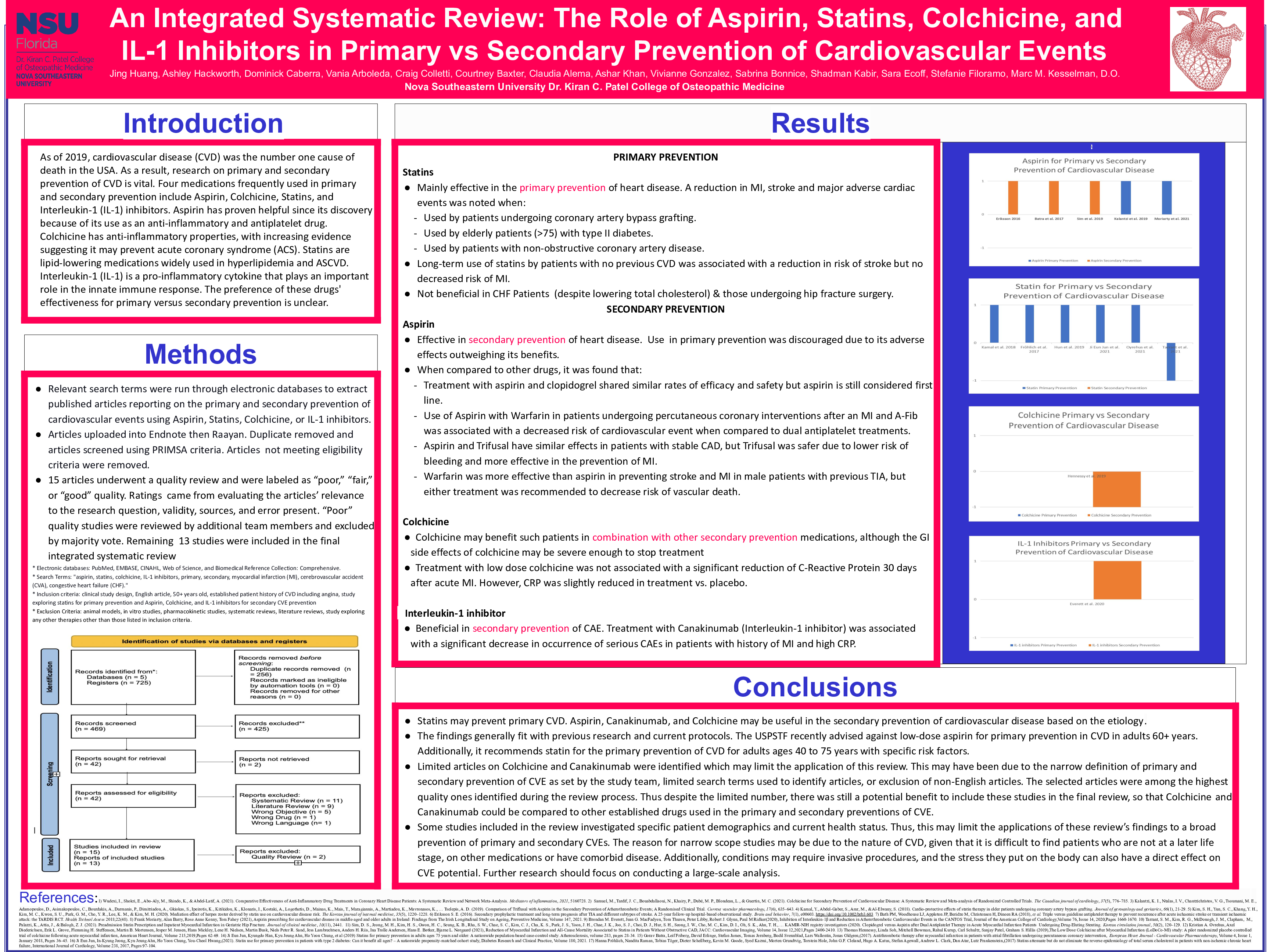
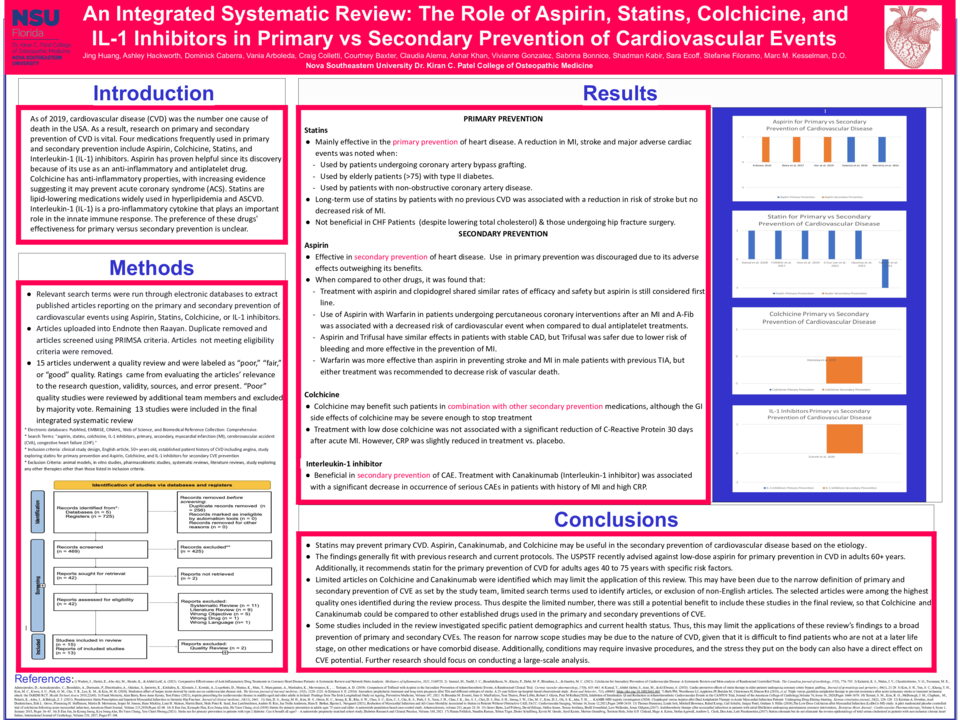
Background: As of 2019, cardiovascular events (CVE) were the number one cause of death in the United States. Prevention of CVE includes a combination of lifestyle modifications and drug intervention, including Aspirin, colchicine, statins, and interleukin-1 (IL-1) inhibitors as the main tools in primary and secondary prevention. The preference of these drugs' effectiveness for primary versus secondary prevention is unclear.
Objective: To determine the role and effectiveness of Aspirin, statins, colchicine, and IL-1 inhibitors in primary and/or secondary prevention of CVE.
Methods: PubMed, EMBASE, CINAHL, Web of Science, and Biomedical Reference Collection: Comprehensive, were searched on November 12-14th, 2021, to extract published articles using the selected drugs as primary or secondary prevention of CVE. The search terms were "aspirin, statins, colchicine, IL-1 inhibitors, primary, secondary, myocardial infarction (MI), cerebrovascular accident (CVA), congestive heart failure (CHF)." The resulting articles were screened in accordance with PRISMA guidelines.
Results: 725 articles were screened; thirteen studies were included in this systematic review. Statin use in primary prevention was associated with a decreased risk of stroke and all causes of death. Canakinumab was beneficial in the secondary prevention of serious CVE in men and women with prior MI. Combination therapy of Aspirin decreases the composite risk of MI compared to dual platelet therapy. While patients' recovering from MI well-tolerated low-dose colchicine, this treatment was not associated with secondary prevention.
Conclusions: Statins were the only drug with a possible role in the primary prevention of CVE. In patients with higher CV risk, the complications of Aspirin use for primary prevention outweighed the benefits. Yet, evidence indicates Aspirin is effective in the secondary prevention of CVE. Canakinumab could play a secondary preventive role in patients with residual inflammatory risk following MI. Colchicine may help patients with prior MI in combination with other secondary prevention medications. Future research should focus on the long-term efficacy of combination drugs for the optimal secondary prevention of CVE.