Abstract
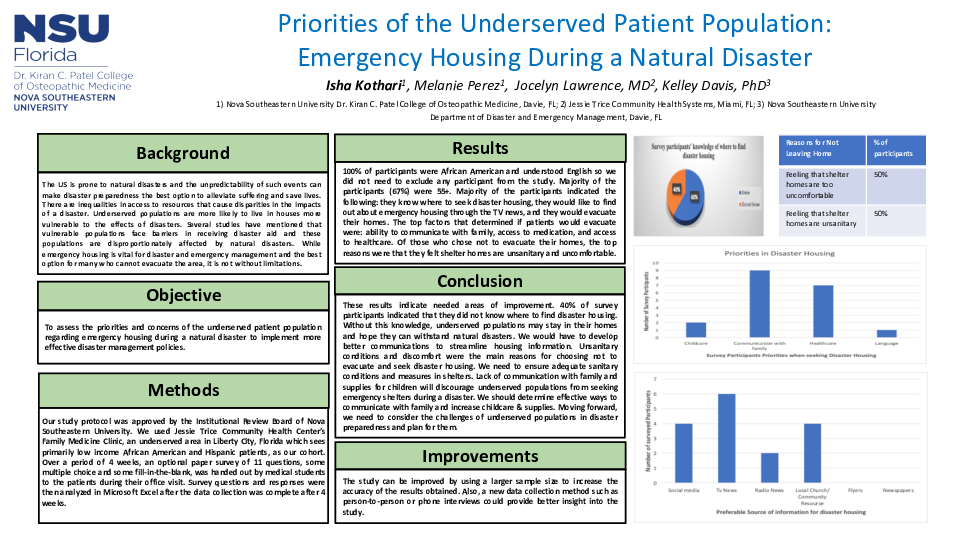
The United States (U.S.) is prone to natural disasters and the unpredictability of such events can make disaster preparedness the best option to alleviate suffering and save lives. While emergency housing is vital for disaster and emergency management and the best option for many who cannot evacuate the area, it is not without limitations. The objective of our study is to assess the priorities and concerns of the underserved patient population regarding emergency housing during a natural disaster to help implement more effective disaster management policies. We used Jessie Trice Community Health Center's Family Medicine Clinic, an underserved area in Liberty City, Florida which sees primarily low income African American and Hispanic patients, as our cohort. An optional paper survey was handed out during office visits and responses were then analyzed in Microsoft Excel after the data collection was complete after 4 weeks. Majority of the participants were 55+ and indicated the following: they do not know where to seek disaster housing, they would like to find out about emergency housing through the TV news, and they would evacuate their homes. The top factors patients chose if they would evacuate included: ability to communicate with family, access to medication, and access to healthcare. Of those who chose not to evacuate their homes, the top reasons were that they felt shelters are unsanitary and uncomfortable. These results indicate needed areas of improvement including information on where to find disaster housing, adequate sanitary conditions, communication with family, childcare supplies. Moving forward, we need to consider the challenges of underserved populations in disaster preparedness and plan for them.