Abstract
Objectives: Investigate the molecular pathway behind anti-CD147 treatment in cutaneous squamous cell carcinoma (cSCC).
Study Design: Pre-clinical investigation.
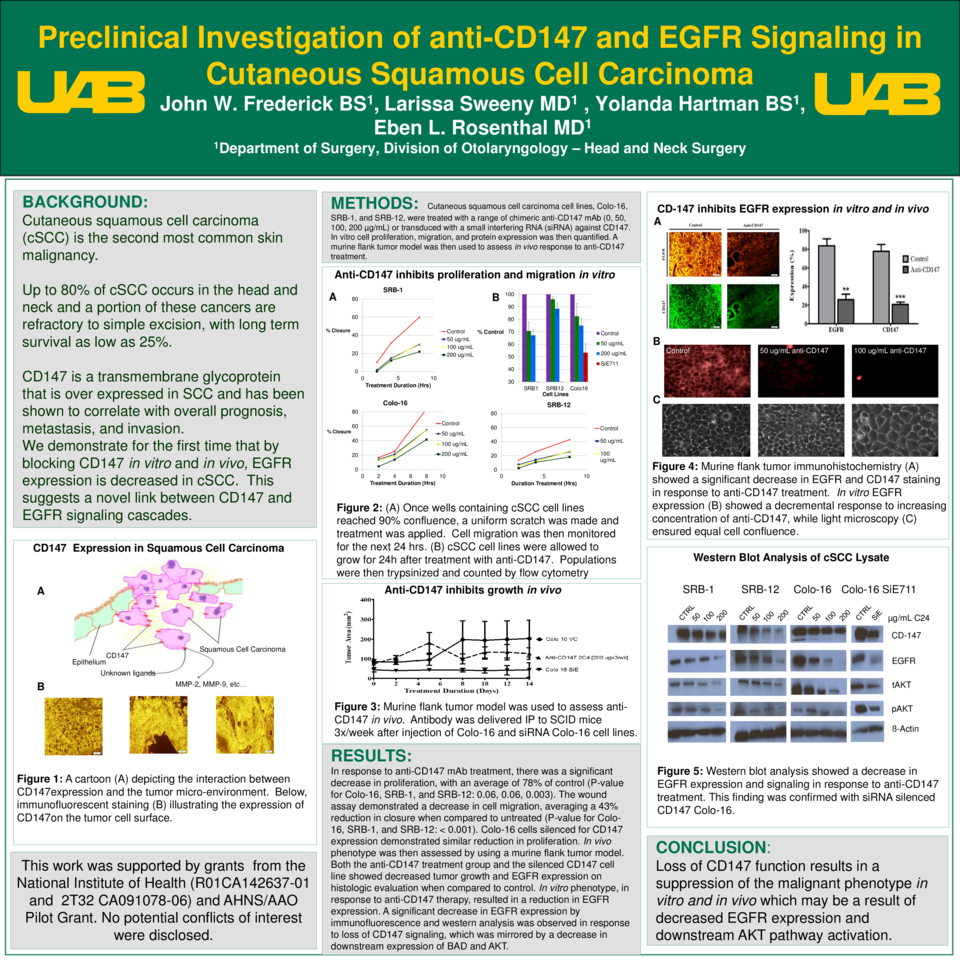
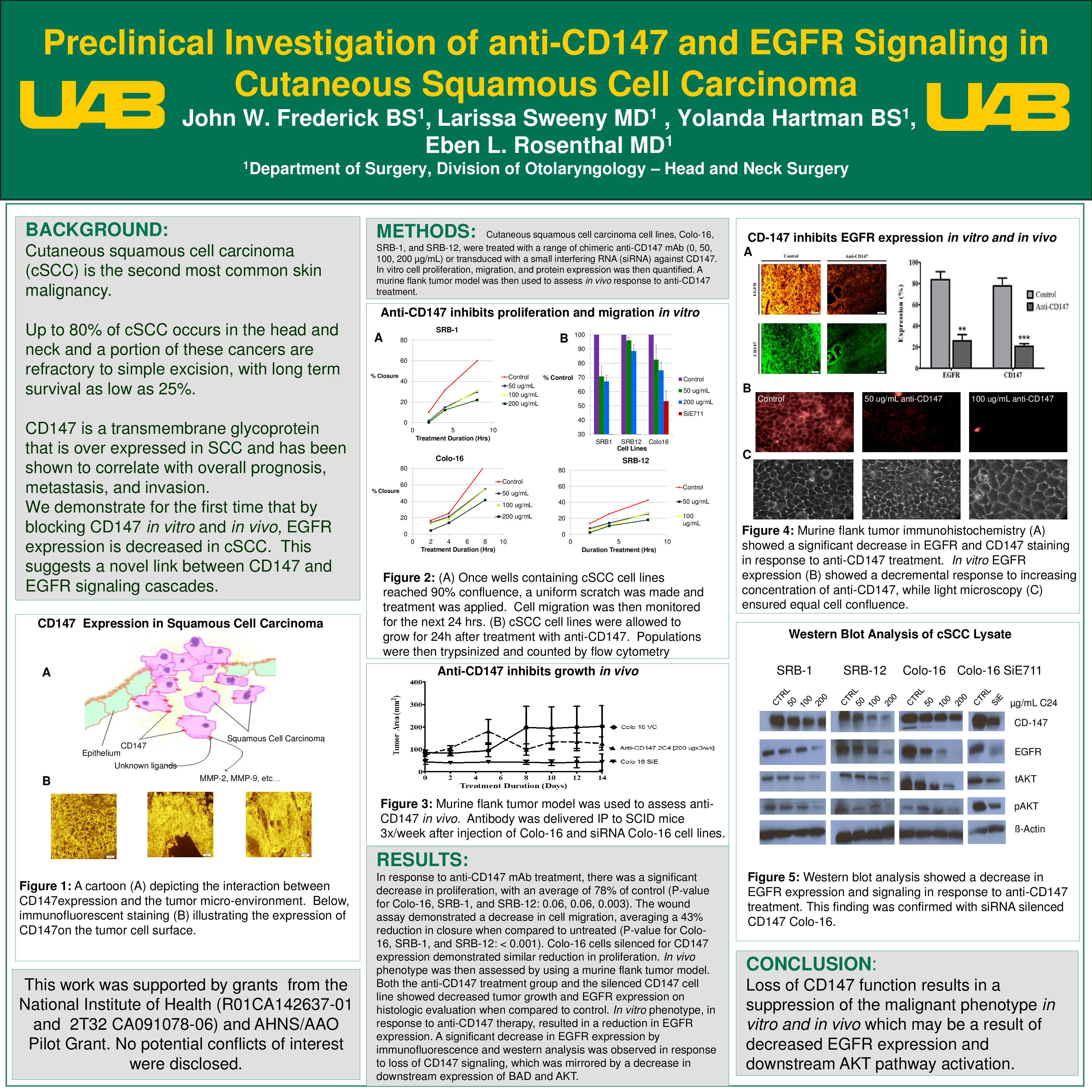
Methods: Cutaneous squamous cell carcinoma cell lines, Colo-16, SRB-1, and SRB-12, were treated with a range of chimeric anti-CD147 mAb (0, 50, 100, 200 µg/mL) doses or transduced with a small interfering RNA (siRNA) against CD-147. In vitro cell proliferation, migration, and protein expression was then quantified. A murine flank tumor model was then used to assess in vivo response to anti-CD-147 treatment.
Results: In response to anti-CD147 mAb treatment, there was a significant decrease in proliferation, with an average of 78% of control (P-value for Colo-16, SRB-1, and SRB-12: 0.06, 0.06, 0.003). The wound assay demonstrated a decrease in cell migration, averaging a 43% reduction in closure when compared to untreated (P-value for Colo-16, SRB-1, and SRB-12: < 0.001). Colo-16 cells silenced for CD147 expression demonstrated similar reduction in proliferation and wound closure. In vitro phenotype, in response to anti-CD147 therapy, resulted in a reduction in EGFR expression. A significant decrease in EGFR expression by immunofluorescence and western analysis was observed in response to loss of CD147 signaling, which was mirrored by a decrease in downstream expression of BAD and AKT. In vivo phenotype was then assessed by using a murine flank tumor model. Both the anti-CD147 treatment group and the silenced CD147 cell line showed decreased tumor growth and EGFR expression on histologic evaluation when compared to control.
Conclusions: Loss of CD147 function results in a suppression of the malignant phenotype in vitro and in vivo which may be a result of decreased EGFR expression and AKT pathway activation.