Abstract
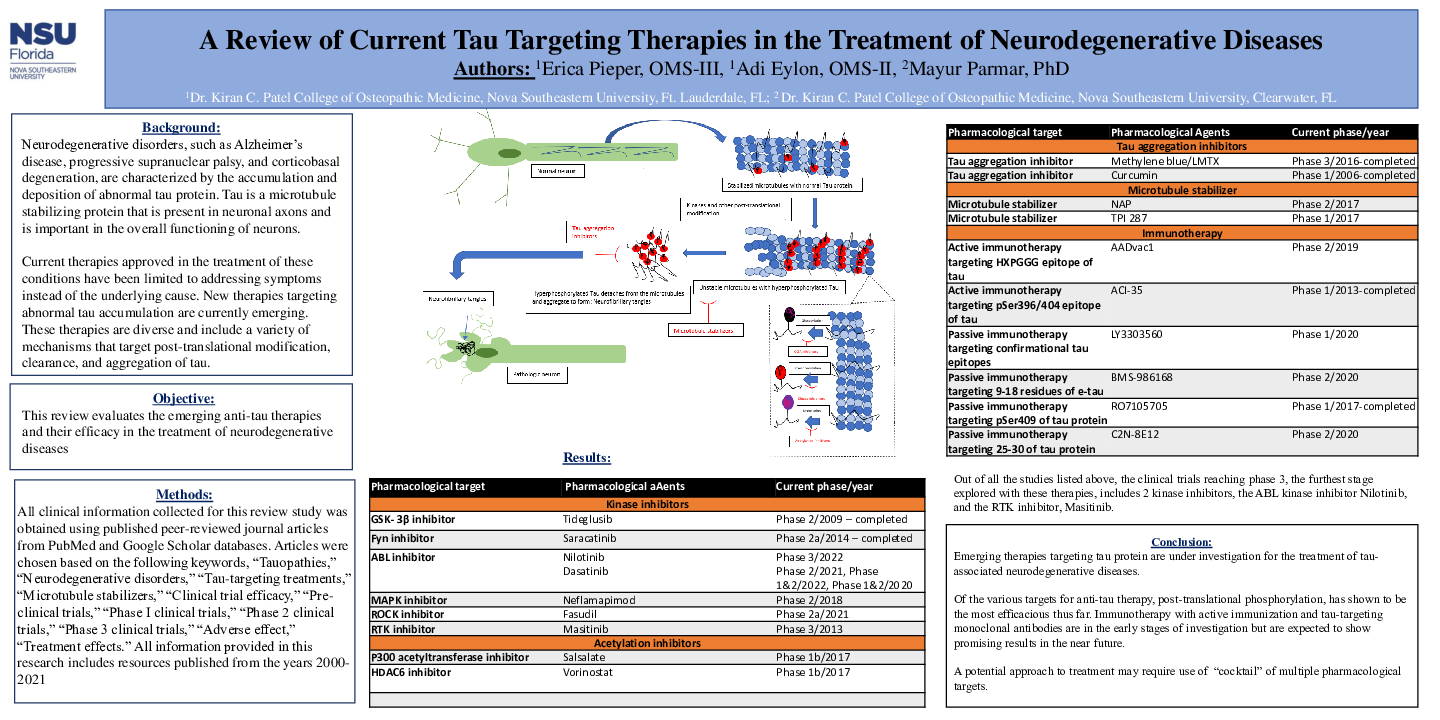
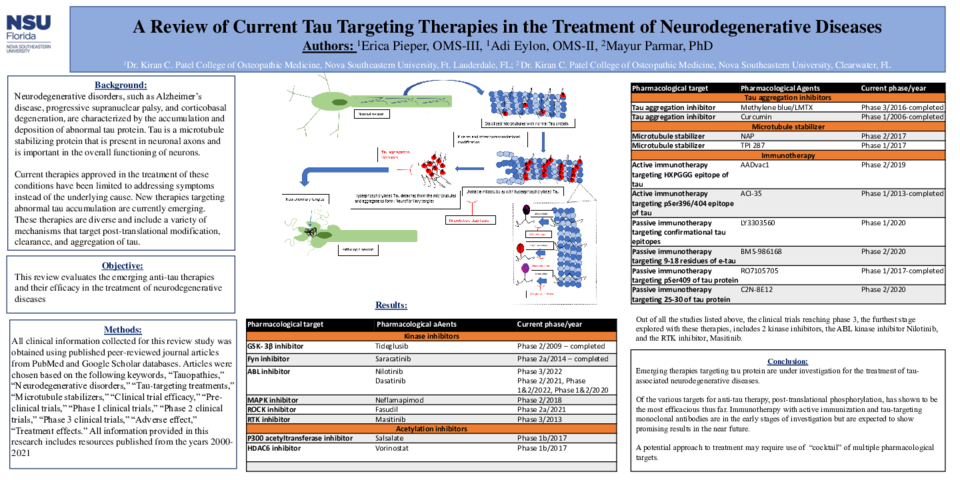
Background: Tau is a microtubule stabilizing protein that is present in neuronal axons and is important in the overall functioning of neurons. Neurodegenerative disorders, such as Alzheimer’s disease, progressive supranuclear palsy, and corticobasal degeneration, are characterized by the accumulation and deposition of abnormal tau protein. Current therapies approved in the treatment of these conditions have been limited to addressing symptoms instead of the underlying cause. New therapies targeting abnormal tau accumulation are currently emerging. These therapies are diverse and include a variety of mechanisms that target post-translational modification, clearance, and aggregation of tau. It is important to explore these potential anti-tau therapies and their efficacy in the treatment of neurodegenerative tauopathies.
Objective: The objective of this study is to evaluate the various targets and mechanisms of delivery in emerging tau targeting therapies.
Methods: This study was designed to examine potential anti-tau therapies that are currently undergoing preclinical and clinical trials. The current targets that will be investigated in this study includes 1) post-translational modification involving phosphorylation, acetylation, and glycosylation of tau, 2) tau aggregation inhibitors, and 3) microtubule stabilizers. The treatments under investigation in this study are delivered mainly via 1) immunotherapy, and 2) gene therapy. Efficacy, side effects, and challenges encountered for each drug target will be reviewed.
Results: There are several clinical trials currently underway in the development of tau targeting therapies. It has been found that post-translational modification, particularly phosphorylation, has shown great promise in effectively reducing abnormal tau accumulation and improving overall function in patients with neurodegenerative conditions. Memantine, a phosphatase activator, is in the advanced stages of clinical trials. Immunotherapy with monoclonal antibodies that target tau intracellularly have demonstrated favorable results in preclinical animal models and have therefore advanced to clinical development.
Conclusion: Emerging therapies targeting tau protein are under investigation for the treatment of tau-associated neurodegenerative diseases. Of the various targets for anti-tau therapy, post-translational phosphorylation, has shown to be the most efficacious thus far. Clinical trials are currently underway in the development of monoclonal antibodies targeted to intracellular tau. These therapies can provide beneficial effect in underlying pathology of tauopathies.