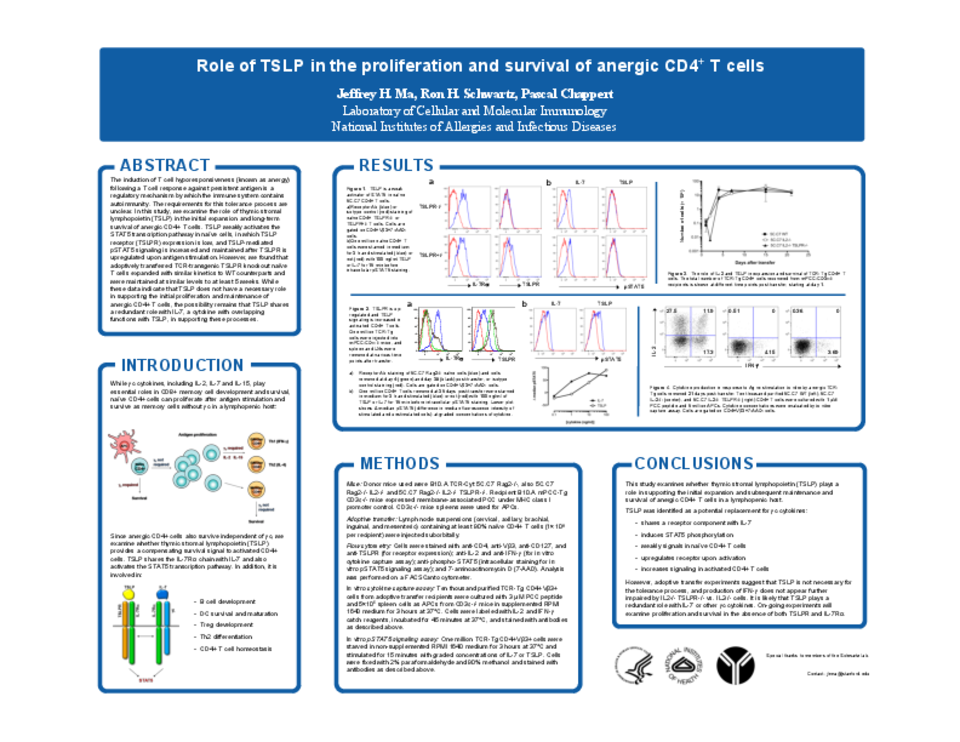
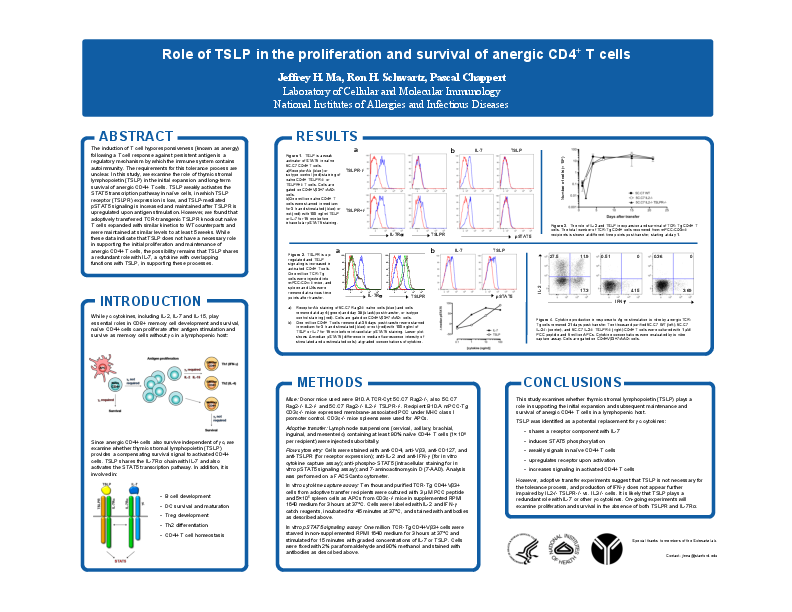
Role of TSLP in the Proliferation and Survival of Anergic CD4+ T cells
Abstract
The induction of T cell hyporesponsiveness (known as anergy) following a T cell response against persistent antigen is a regulatory mechanism by which the immune system contains autoimmunity. The requirements for this tolerance process are unclear. In this study, we examine the role of thymic stromal lymphopoietin (TSLP) in the initial expansion and long-term survival of anergic CD4+ T cells. TSLP weakly activates the STAT5 transcription pathway in naïve cells, in which TSLP receptor (TSLPR) expression is low, and TSLP-mediated pSTAT5 signaling is increased and maintained after TSLPR is upregulated upon antigen stimulation. However, we found that adoptively transferred TCR-transgenic TSLPR knockout naïve T cells expanded with similar kinetics to WT counterparts and were maintained at similar levels to at least 5 weeks. While these data indicate that TSLP does not have a necessary role in supporting the initial proliferation and maintenance of anergic CD4+ T cells, the possibility remains that TSLP shares a redundant role with IL-7, a cytokine with overlapping functions with TSLP, in supporting these processes.
Related articles