Abstract
INTRODUCTION
Myxofibrosarcoma (MFS) is a rare malignant soft-tissue sarcoma characteristically presenting as a painless slowly growing mass in the extremities of elderly males. It is a malignant tumour with a high risk of local recurrence and a low risk of distant metastasis. It tends to become a progressively higher grade in recurrences. Local occurrences of MFS are treated surgically but metastatic presentations do not have effective treatment modalities. The recent development in genomic studies has provided us with an advanced treatment modality in the form of immunotherapy. Programmed Death Ligand 1 (PDL1) is a therapeutic target found in sarcomas. Pembrolizumab, a monoclonal antibody targeting PDL1, is highly effective against tumours with this marker.
CASE PRESENTATION
A 41-year-old female was diagnosed with MFS of her left leg which was surgically resected.
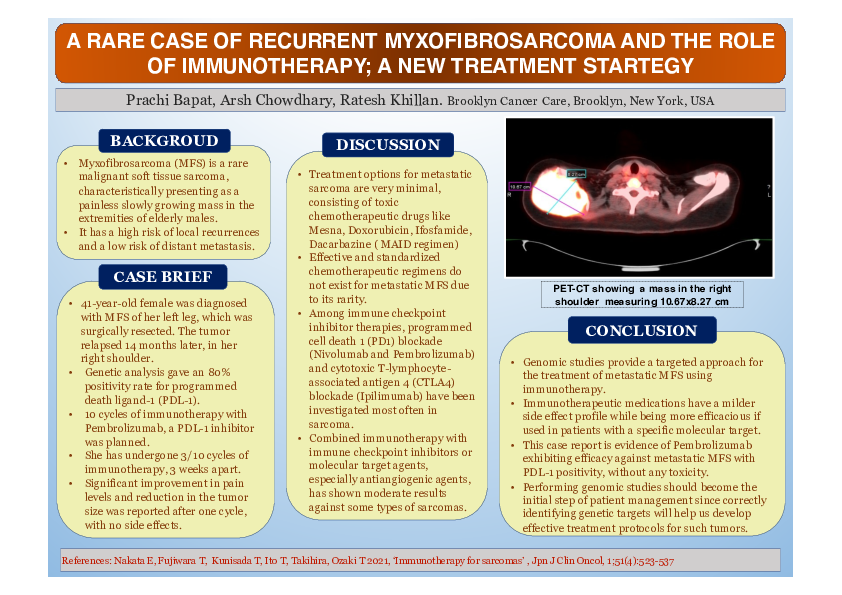
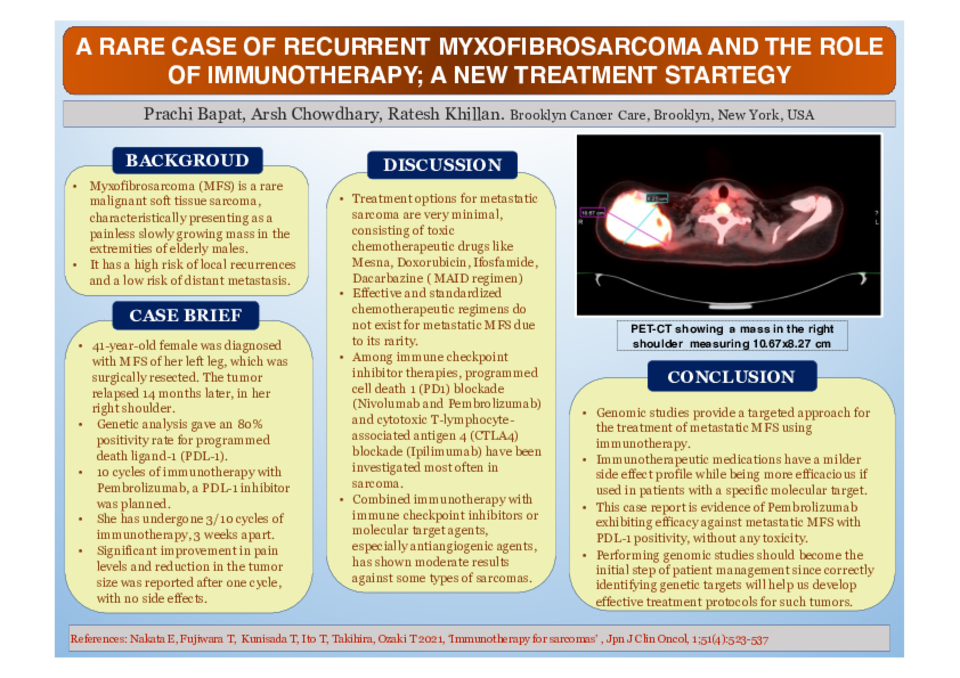
The tumour relapsed 14 months later, in her right shoulder. The size and location of the tumour made her an unsuitable candidate for surgery. The genetic analysis gave an 80% positivity rate for PDL1. 10 cycles of immunotherapy with pembrolizumab a PDL1 inhibitor, was planned. She has undergone 2 out of 10 cycles of immunotherapy, 3 weeks apart. Significant improvement in pain levels was reported after just the first cycle of immunotherapy.
DISCUSSION/CONCLUSION
Treatment options for metastatic sarcomas are very minimal, consisting of toxic chemotherapeutic drugs. Genomic studies provide a targeted approach for the treatment of metastatic MFS using immunotherapy.With an 80% PDL1 positivity rate, treatment with the first cycle of Pembrolizumab showed a significant improvement in pain levels. Immunotherapeutic medications have a milder side effect profile while being more efficacious.
KEYWORDS
Myxofibrosarcoma, immunotherapy, pembrolizumab, Keytruda, PDL-1