Abstract
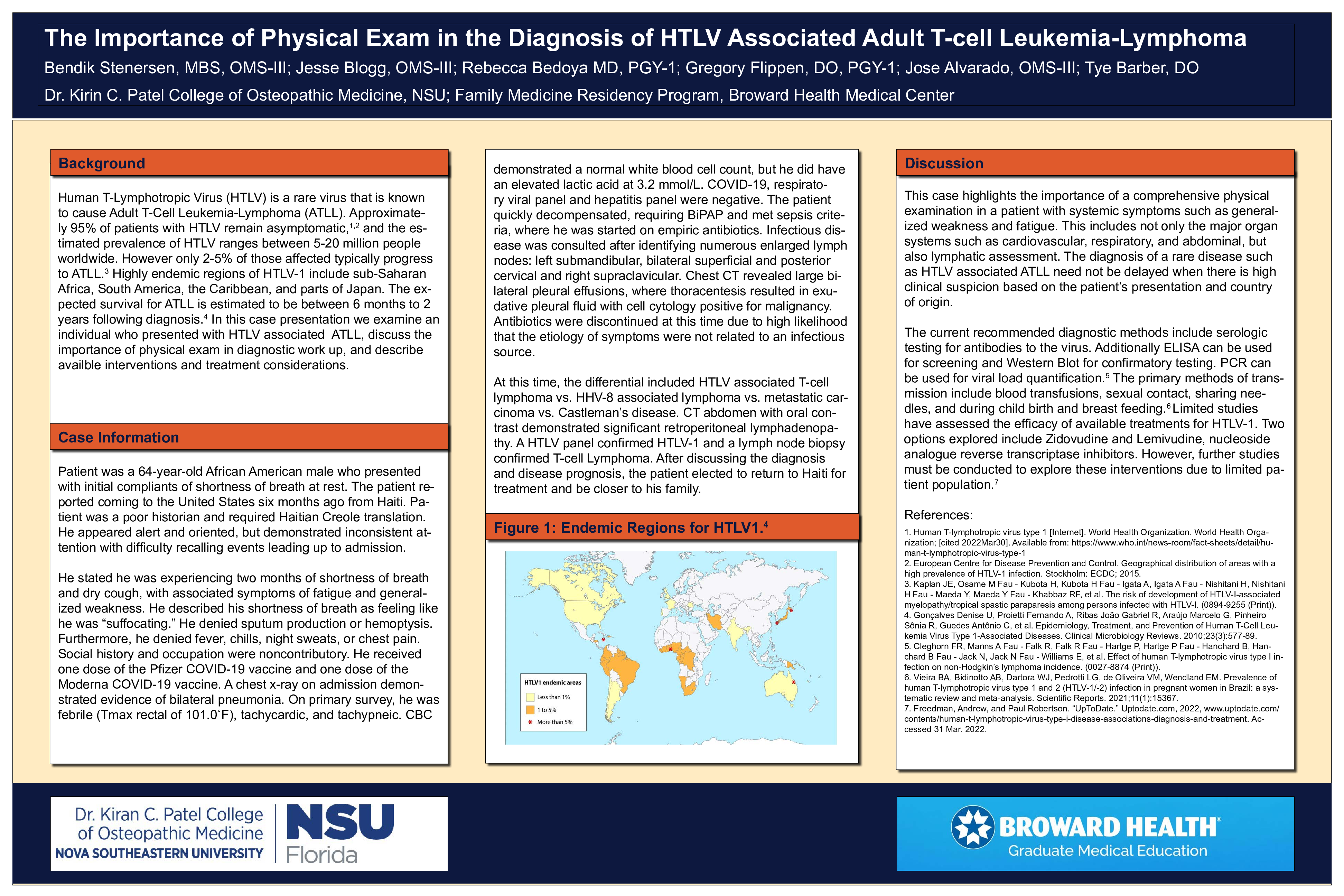
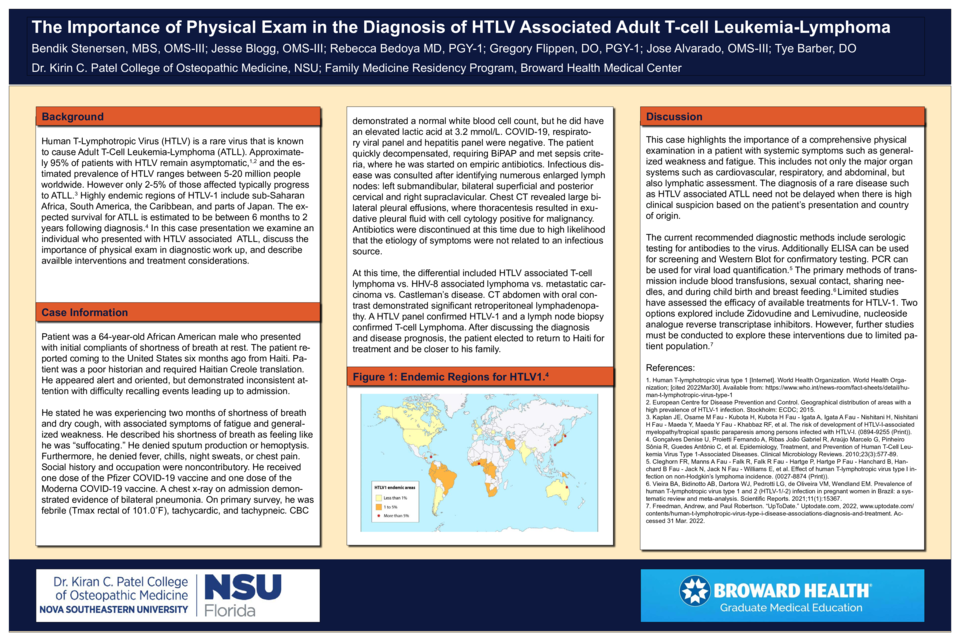
Case Description: A 64-year-old Haitian male who presented to a large public urban hospital with primary complaint of shortness of breath at rest. The patient reported coming to the United States six months ago from Haiti, and his symptoms had progressed over the past few weeks. The patient was a poor historian and required Haitian Creole translation. He appeared alert and oriented, but demonstrated inconsistent attention with difficulty recalling events leading up to admission. He described experiencing two months of shortness of breath and dry cough, with associated symptoms of fatigue and generalized weakness. He also explained his shortness of breath as feeling like he was “suffocating.” He denied sputum production or hemoptysis. He also denied any associated fever, chills, night sweats, or chest pain. Social history and occupation were noncontributory. He received one dose of the Pfizer COVID-19 vaccine and one dose of the Moderna COVID-19 vaccine. A chest x-ray on admission demonstrated evidence of bilateral pneumonia. On primary survey, he was febrile (Tmax rectal of 101.0˚F), tachycardic, and tachypneic. Complete blood count (CBC) demonstrated a normal white blood cell count, but he did have an elevated lactic acid at 3.2 mmol/L. COVID-19, respiratory viral panel, and hepatitis panel were negative. The patient quickly decompensated, requiring BiPAP and met sepsis criteria, where he was started on empiric antibiotics. Infectious disease was consulted after identifying numerous enlarged lymph nodes: Left submandibular, bilateral superficial, and posterior cervical and right supraclavicular. Chest computed tomography (CT) revealed large bilateral pleural effusions, where thoracentesis resulted in exudative pleural fluid with cell cytology positive for malignancy. Antibiotics were discontinued at this time due to high likelihood that the etiology of symptoms were not related to an infectious source. At this time, the differential included HTLV associated T-cell lymphoma versus HHV-8 associated lymphoma versus metastatic carcinoma versus Castleman’s disease. CT abdomen with oral contrast demonstrated significant retroperitoneal lymphadenopathy. A HTLV panel confirmed HTLV-1 and a lymph node biopsy confirmed T-cell Lymphoma. After discussing the diagnosis and disease prognosis, the patient elected to return to Haiti for treatment and be closer to his family.
Discussion: This case highlights the importance of a comprehensive physical examination in a patient with systemic symptoms such as generalized weakness and fatigue. This includes not only the major organ systems such as cardiovascular, respiratory, and gastrointestinal, but also lymphatic assessment. The diagnosis of a rare disease such as HTLV associated ATLL need not be delayed when there is high clinical suspicion based on the patient's presentation and country of origin. The current recommended diagnostic methods include serologic testing for antibodies to the virus. In addition, enzyme-linked immunosorbent assay (ELISA) can be used for screening and Western Blot for confirmatory testing. Polymerase chain reaction (PCR) can be used for viral load quantification. Two options explored include Zidovudine and Lemivudine, nucleoside analogue reverse transcriptase inhibitors. However, further studies must be conducted to explore these interventions due to limited patient population.