Abstract
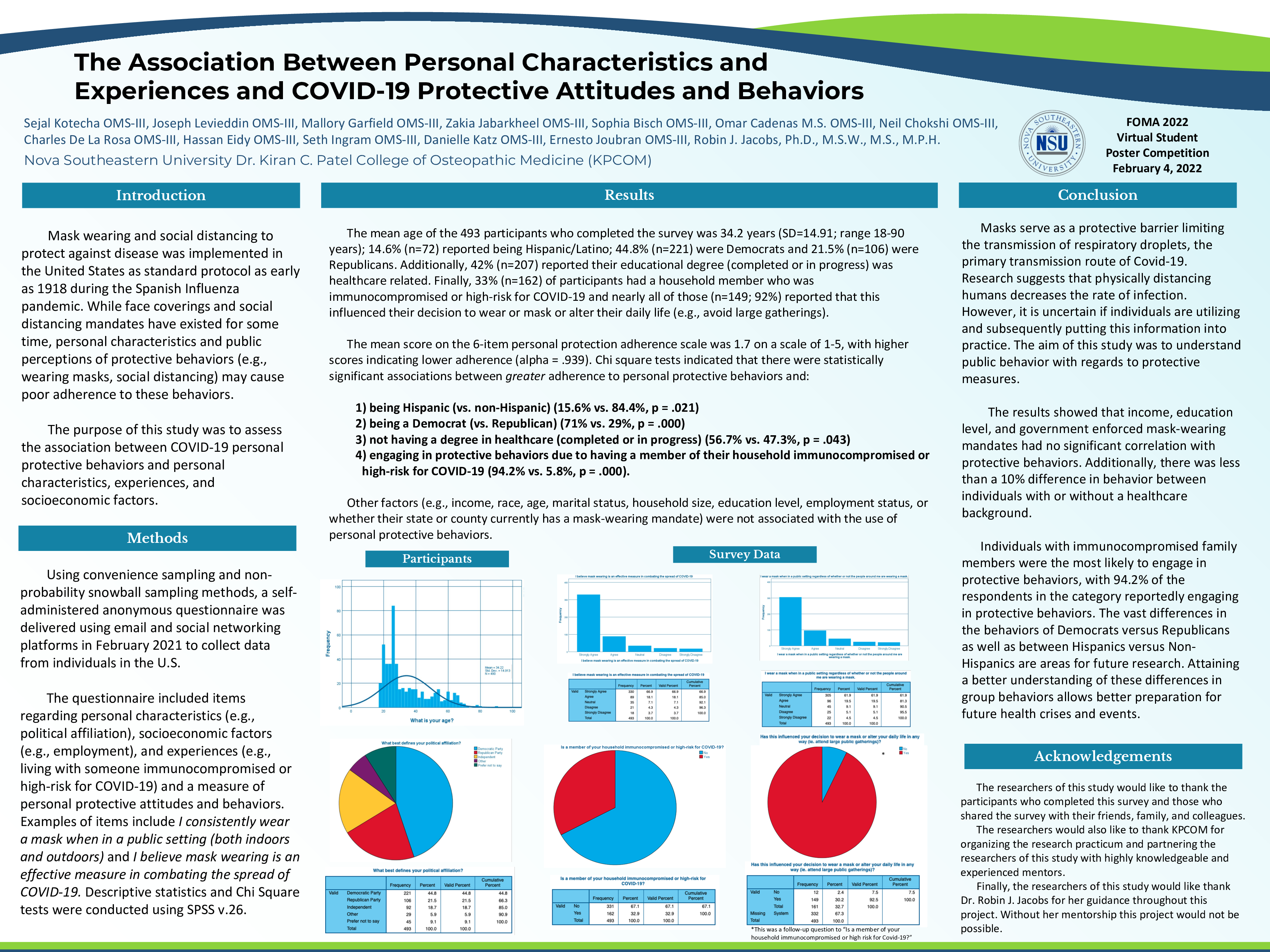
Background: Mask wearing and social distancing to protect against disease was implemented in the United States as standard protocol as early as 1918 during the Spanish Influenza pandemic. While face coverings and social distancing mandates have existed for some time, personal characteristics and public perceptions of protective behaviors (e.g., wearing masks, social distancing) may cause poor adherence to these behaviors.
Objective: The purpose of this study was to assess the association between COVID-19 personal protective behaviors and personal characteristics, experiences, and socioeconomic factors.
Methods: Using convenience sampling and non-probability snowball sampling methods, a self-administered anonymous questionnaire was delivered using email and social networking platforms in February 2021 to collect data from individuals in the U.S. The questionnaire included items regarding personal characteristics (e.g., political affiliation), socioeconomic factors (e.g., employment), and experiences (e.g., living with someone immunocompromised or high-risk for COVID-19) and a measure of personal protective attitudes and behaviors. Examples of items include I consistently wear a mask when in a public setting (both indoors and outdoors) and I believe mask wearing is an effective measure in combating the spread of COVID-19. Descriptive statistics and Chi Square tests were conducted using SPSS v.26.
Results: The mean age of the 493 participants who completed the survey was 34.2 years (SD=14.91; range 18-90 years); 14.6% (n=72) reported being Hispanic/Latino; 44.8% (n=221) were Democrats and 21.5% (n=106) were Republicans. Thirty-three percent (n=162) of participants had a household member who was immunocompromised or high-risk for COVID-19 and nearly all of those (n=149; 92%) reported that this influenced their decision to wear a mask or alter their daily life (e.g., avoid large gatherings). Chi square tests indicated that there were statistically significant associations between greater adherence to personal protective behaviors and 1) being Hispanic (vs. non-Hispanic) (15.6% vs. 84.4%, p = .021), 2) being a Democrat (vs. Republican) (71% vs. 29%, p = .000), 3) not having a degree in healthcare (completed or in progress) (56.7% vs. 47.3%, p = .043), and 4) engaging in protective behaviors due to having a member of their household immunocompromised or high-risk for COVID-19 (94.2% vs. 5.8%, p = .000). Notable statistically significant associations were found between protective behavior and political party, with Democrats comprising 71% of those with greater adherence to protective measures.
Conclusion: The results showed that income, education level, and government enforced mask-wearing mandates had no statistically significant correlation with protective behaviors. Individuals with immunocompromised family members were the most likely to engage in protective behaviors, with most respondents in the category reportedly engaging in protective behaviors. The vast differences in the behaviors of Democrats versus Republicans as well as between Hispanics versus Non-Hispanics is an area for future research. Attaining a better understanding of these differences in group behaviors allows better preparation for future health crises and events.