Abstract
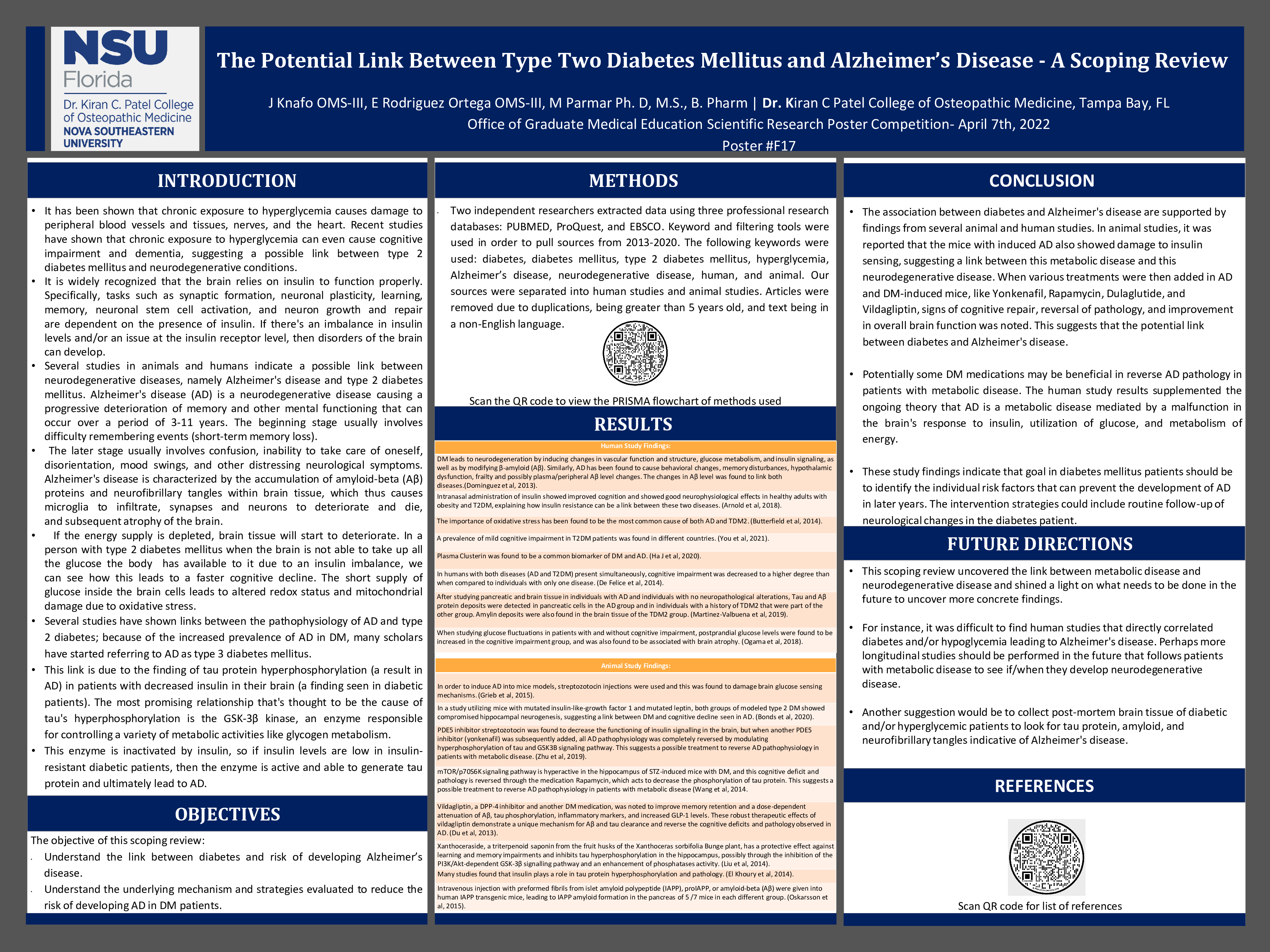
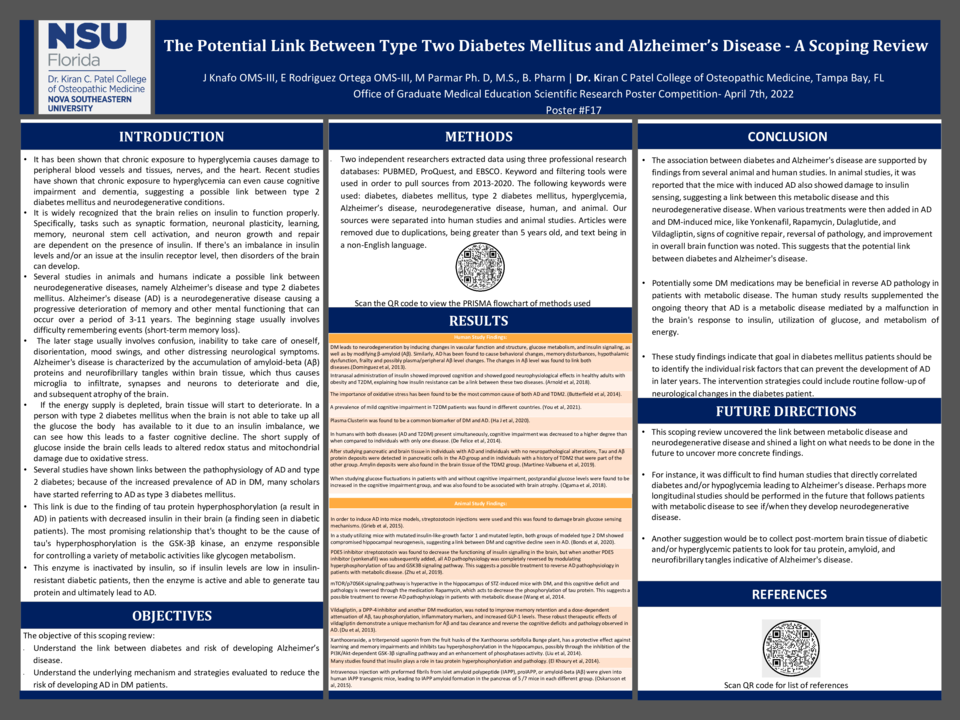
Background: Diabetes Mellitus is a metabolic disease associated with secondary complications. Several studies in animals and humans indicate a possible link between neurodegenerative diseases, namely Alzheimer's disease (AD), and type 2 diabetes mellitus (DM).
Objectives: This scoping review aims to 1) understand the link between diabetes and the risk of developing AD, and 2) understand the underlying mechanism and strategies evaluated to reduce the risk of developing AD in DM patients.
Methods: Two independent researchers extracted data using three professional research databases: PUBMED, ProQuest, and EBSCO. Keyword and filtering tools were used in order to pull sources from 2013-2020. The following keywords were used: diabetes, diabetes mellitus, type 2 diabetes mellitus, hyperglycemia, Alzheimer's disease, neurodegenerative disease, human, and animal. Our sources were separated into human studies and animal studies. Articles were removed due to duplication, being greater than eight years old, and text in a non-English language.
Results: Eighteen sources (nine human studies and nine animal studies) were identified. In animal studies, alteration of Aβ and tau pathology, insulin growth factor, Leptin, the mTOR/p70S6K signaling pathway action, and other inflammatory markers were noted. Several anti-diabetic molecules, such as dulaglutide, vildagliptin, and yonkenafil were found to be effective in treating AD pathology in animal studies. Studies have also indicated mitochondrial damage and oxidative stress in both these diseases. In human studies, mild cognitive impairment was also noted in DM patients. The human study results supplemented the ongoing theory that AD is a metabolic disease mediated by a malfunction in the brain's response to insulin, utilization of glucose, and metabolism of energy.
Conclusion: The scoping review indicates that in animal and human studies, a potential link between DM and AD was noted. These study findings suggest that a goal in DM patients should be to identify the individual risk factors that can prevent the development of AD in later years. The intervention strategies could include routine follow-up of neurological changes in the diabetes patient.