Evaluation of the Abilities of Hemoprotein Reductants to Attenuate Rhabdomyolysis-Induced Renal Failure
Abstract
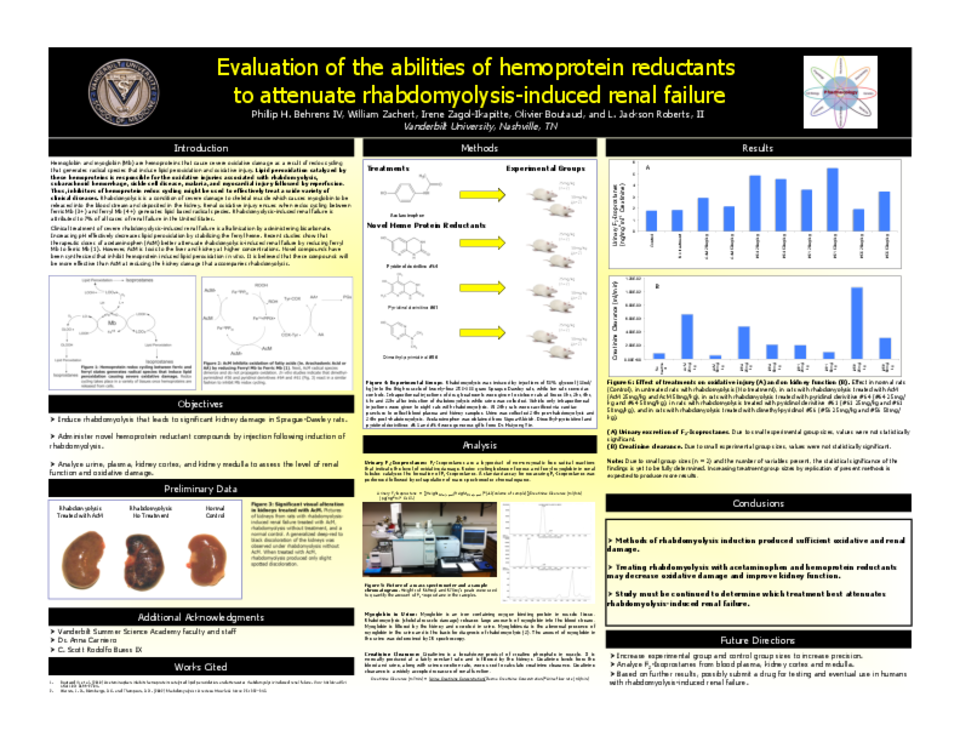
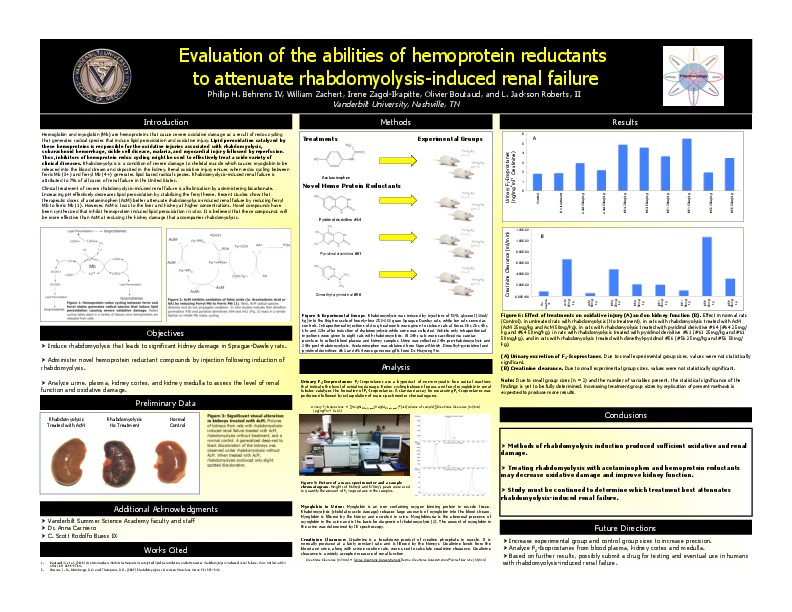
Hemoglobin and myoglobin (Mb) are hemoproteins that cause severe oxidative damage as a result of redox cycling that generates radical species which induce lipid peroxidation and oxidative injury. Lipid peroxidation catalyzed by these hemoproteins is responsible for the oxidative injuries associated with rhabdomyolysis, subarachnoid hemorrhage, sickle cell disease, malaria, and myocardial injury followed by reperfusion. Thus, inhibitors of hemoprotein redox cycling might be used to effectively treat a wide variety of clinical diseases.
Rhabdomyolysis is a condition of severe damage to skeletal muscle which causes myoglobin to be released into the blood stream and deposited in the kidney. Renal oxidative injury ensues when redox cycling between ferric Mb (3+) and ferryl Mb (4+) generates lipid based radical species. Rhabdomyolysis-induced renal failure is attributed to 7% of all cases of renal failure in the United States.
Traditional treatment of rhabdomyolysis-induced renal failure is alkalinization by administering bicarbonate. Increasing pH effectively decreases lipid peroxidation by stabilizing the ferryl heme. However, recent studies show that therapeutic doses of acetaminophen (AcM) better attenuate rhabdomyolysis-induced renal failure by reducing ferryl Mb to ferric Mb (1). Unfortunately, AcM is toxic to the liver and kidney at higher concentrations. Novel compounds have been synthesized that inhibit hemoprotein induced lipid peroxidation in vitro. It is believed that these compounds will be more effective than AcM at reducing the kidney damage that accompanies rhabdomyolysis.
In this preliminary study, rhabdomyolysis was induced by injecting of 50% glycerol into the thigh muscle of twenty-four Sprague Dawley rats. Intraperitoneal injections of drug treatments were given to sixteen rats at times 0hr, 2hr, 4hr, 6hr and 22hr after induction of rhabdomyolysis while urine was collected. At 24hr, rats were sacrificed via cardiac puncture to collect blood plasma and kidney samples. Isoprostane levels from urine were measured to detect the level of oxidative damage and creatinine clearance was used as an indicator of renal function. As a result of treatment, kidney function was improved in all treatment groups. There may have been an increase in oxidative damage in treatment vs. control groups. However, increasing sample sizes in the follow up study should provide more conclusive results.
Related articles