Abstract
Introduction: Hereditary spherocytosis is an autosomal dominant disorder rendering red blood cells incapable of maintaining a biconcave shape. Wilson’s disease (WD) is a rare, autosomal recessive disorder causing a defect in the copper transporter ATP7B gene, and is marked by toxic levels of copper especially in the liver and brain. Resultant liver cirrhosis and fibrosis can cause asymptomatic elevations in serum aminotransferase or bilirubin, as well as hepatic failure, chronic hepatitis, and severe neurologic and psychiatric complications. Approximately one case in 30,000 live births has been cited in most populations . Post-hepatic, or obstructive, jaundice is due to the blocked excretion of conjugated bilirubin at the bile ducts, and causes include choledocholithiasis, cancer of the pancreatic head, biliary atresia, and acute and chronic pancreatitis .
By utilizing screening studies that measured ceruloplasmin levels in large patient cohorts, Bandmann et al. estimate prevalence rates of Wilson’s disease to be 1:1,500-1:3,000 in East Asia.
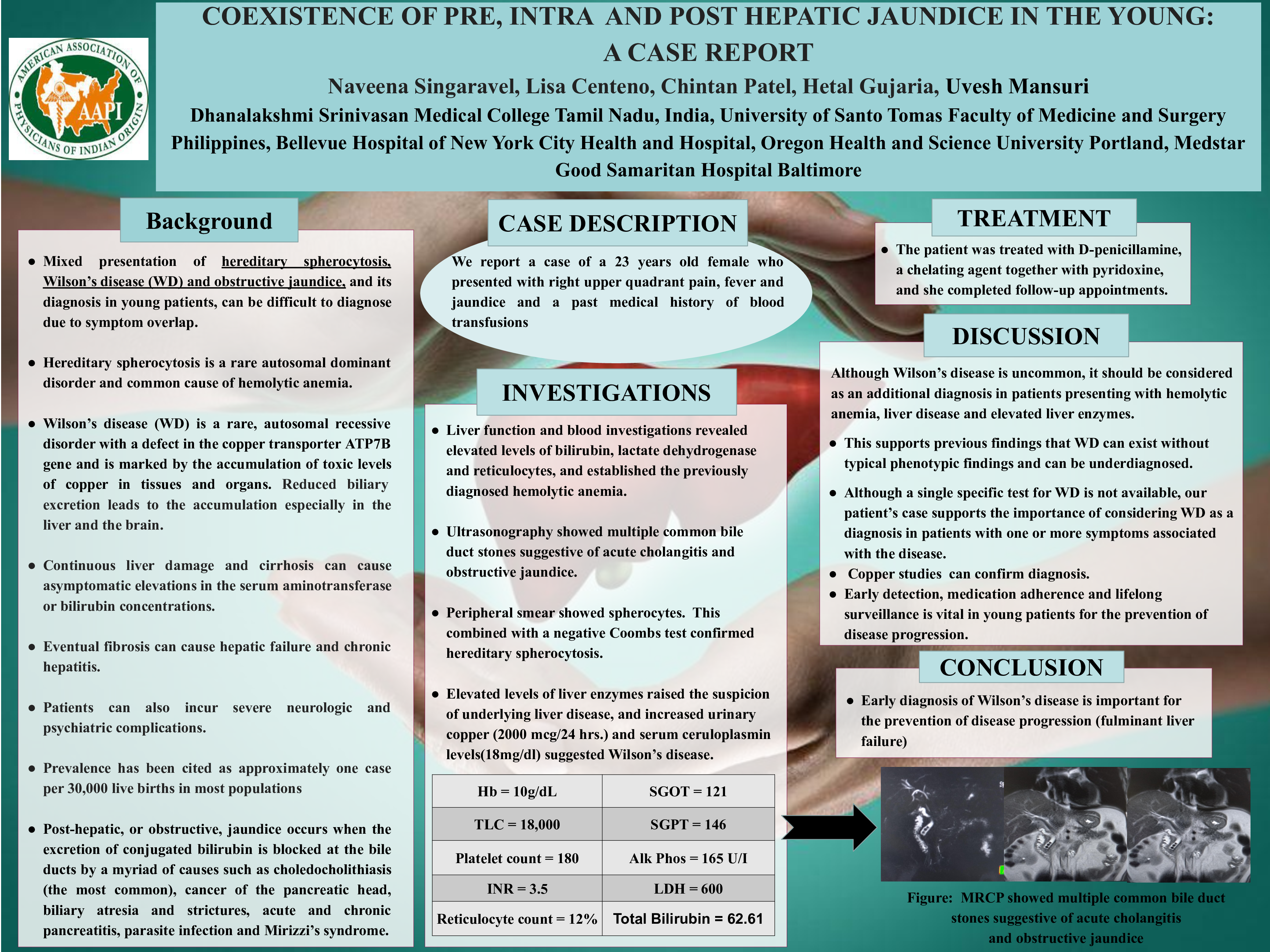
Case Presentation: We report a case of a 23-year-old female presenting with right upper quadrant pain, fever, jaundice, and a history of blood transfusions. Ultrasonography showed multiple common bile duct stones suggestive of acute cholangitis and obstructive jaundice. Blood investigations and liver function tests revealed hyperbilirubinemia, and elevated lactate dehydrogenase and reticulocytes. Peripheral smear showed spherocytes, and a negative Coombs test confirmed hereditary spherocytosis. Increased urinary copper (2000 mcg/24 hrs.) and serum ceruloplasmin levels suggested Wilson’s disease. The patient was treated with D-penicillamine and pyridoxine, and she completed follow-up appointments.
Discussion: Our case demonstrates that Wilson’s disease should be considered an additional diagnosis in patients with coexisting hemolytic anemia and elevated liver enzymes. Previous findings have shown that WD can be underdiagnosed and can present without phenotypic features. Patients experiencing symptoms typical of WD can be evaluated for copper studies. Early detection, medication adherence and surveillance is vital in young patients for the prevention of disease progression.