Abstract
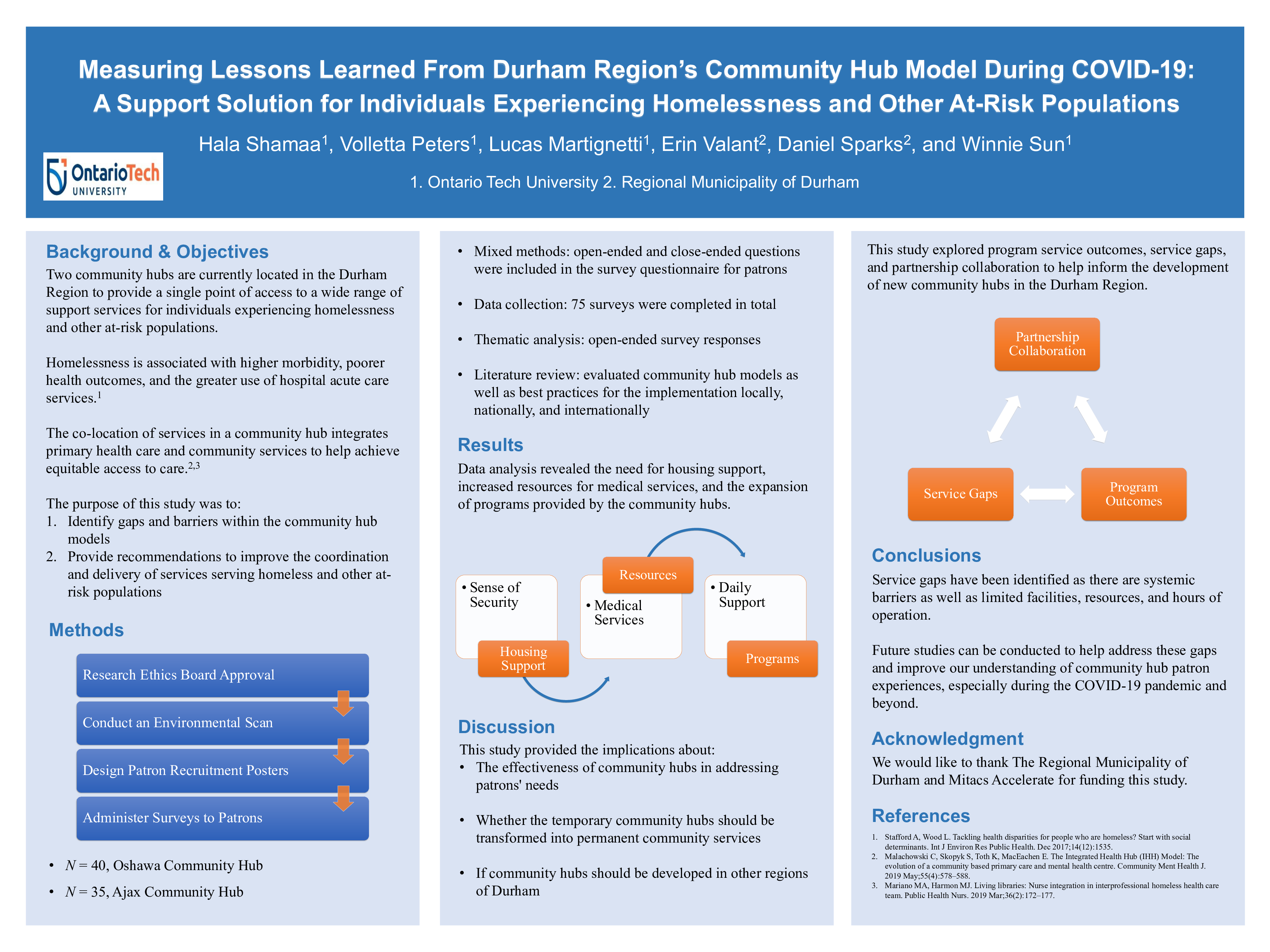
Background: Two community hubs are currently located in the Durham Region to provide a single point of access to a wide range of support services for individuals experiencing homelessness and other at-risk populations. The community hub in Oshawa is formally known as the Back Door Mission for the Relief of Poverty and the community hub in Ajax is formally known as the Ajax Hygiene Hub. It is unclear if these two community hubs are effective in addressing the needs of patrons and how the COVID-19 pandemic continues to impact these services amongst this population. This study was conducted to identify gaps and barriers within the community hub models as well as provide recommendations to improve the coordination and delivery of services serving homeless and other at-risk populations.
Methods: A mixed methods approach was utilized in this study, which included surveys for the patrons through open-ended and close-ended questions, to assess their experiences at either one of the two community hubs. A literature review was conducted to evaluate the community hub models as well as best practices for the implementation locally, nationally, and internationally.
Results: Thematic analysis was performed for all the open-ended survey responses. Data analysis revealed the need for housing support, increased resources for medical services, and the expansion of programs provided by the community hubs.
Discussion: This study provided the implications about the effectiveness of community hubs in addressing patrons' needs, whether the temporary community hubs should be transformed into permanent community services, and if community hubs should be developed in other regions of Durham. This study also explored the experiences and needs of patrons, program service outcomes, service gaps, partnership collaboration, and best practices to help inform the development of new community hubs in the Durham Region.
Conclusions: Service gaps have been identified as there are systemic barriers as well as limited facilities, resources, and hours of operation. Future studies can be conducted to help address these gaps and improve our understanding of community hub patron experiences, especially during the COVID-19 pandemic and beyond.