Modification of Vibrio cholerae Quorum Sensing Receptors with Autoinducer Substrate Analogs
Abstract
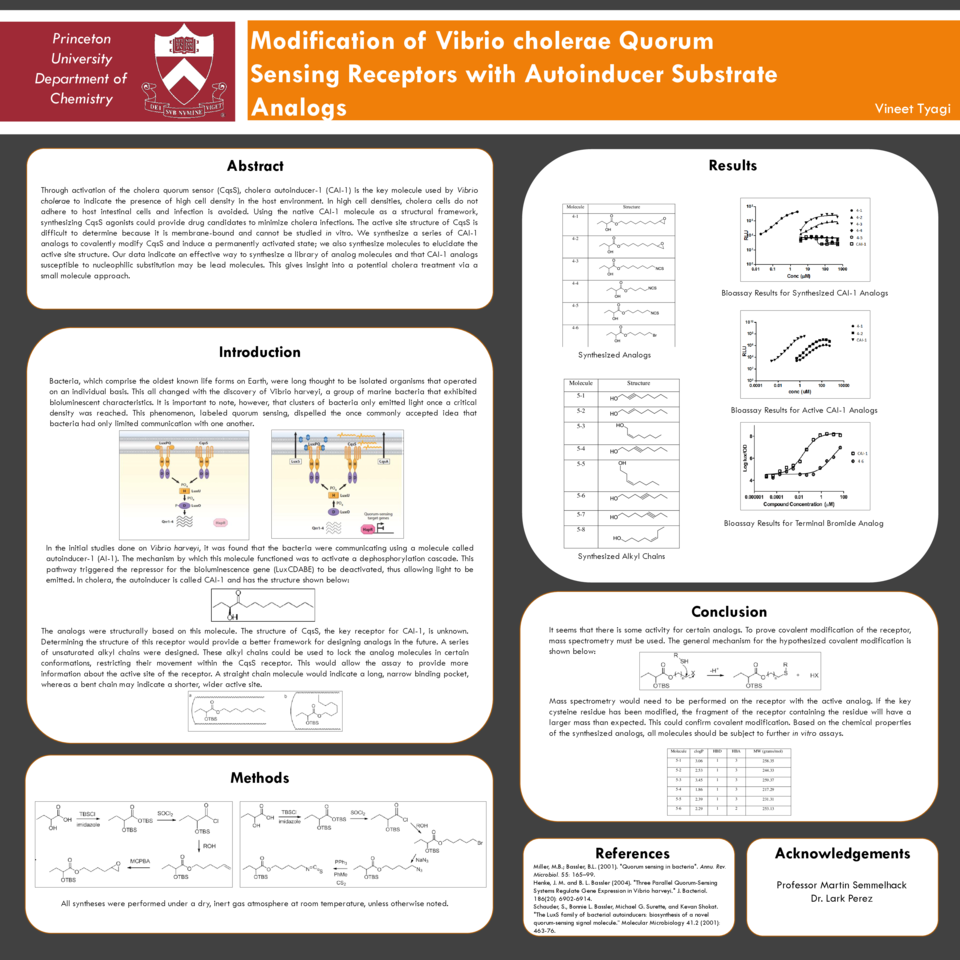
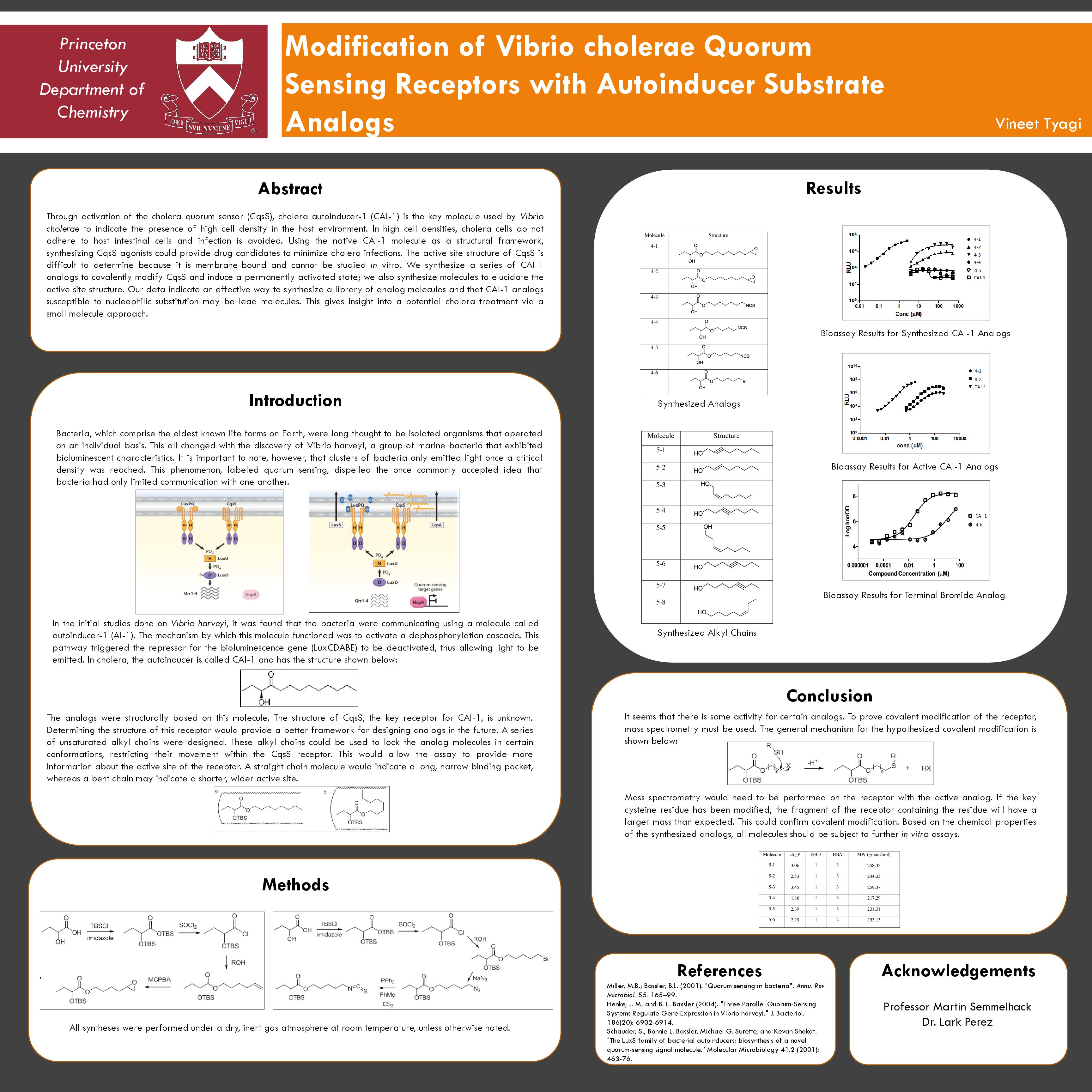
Through activation of the cholera quorum sensor (CqsS), cholera autoinducer-1 (CAI-1) is the key molecule used by Vibrio cholerae to indicate the presence of high cell density in the host environment. In high cell densities, cholera cells do not adhere to host intestinal cells and infection is avoided. Using the native CAI-1 molecule as a structural framework, synthesizing CqsS agonists could provide drug candidates to minimize cholera infections. The active site structure of CqsS is difficult to determine because it is membrane-bound and cannot be studied in vitro. We synthesize a series of CAI-1 analogs to covalently modify CqsS and induce a permanently activated state; we also synthesize molecules to elucidate the active site structure. Our data indicate an effective way to synthesize a library of analog molecules and that CAI-1 analogs susceptible to nucleophilic substitution may be lead molecules. This gives insight into a potential cholera treatment via a small molecule approach.
Related articles