Abstract
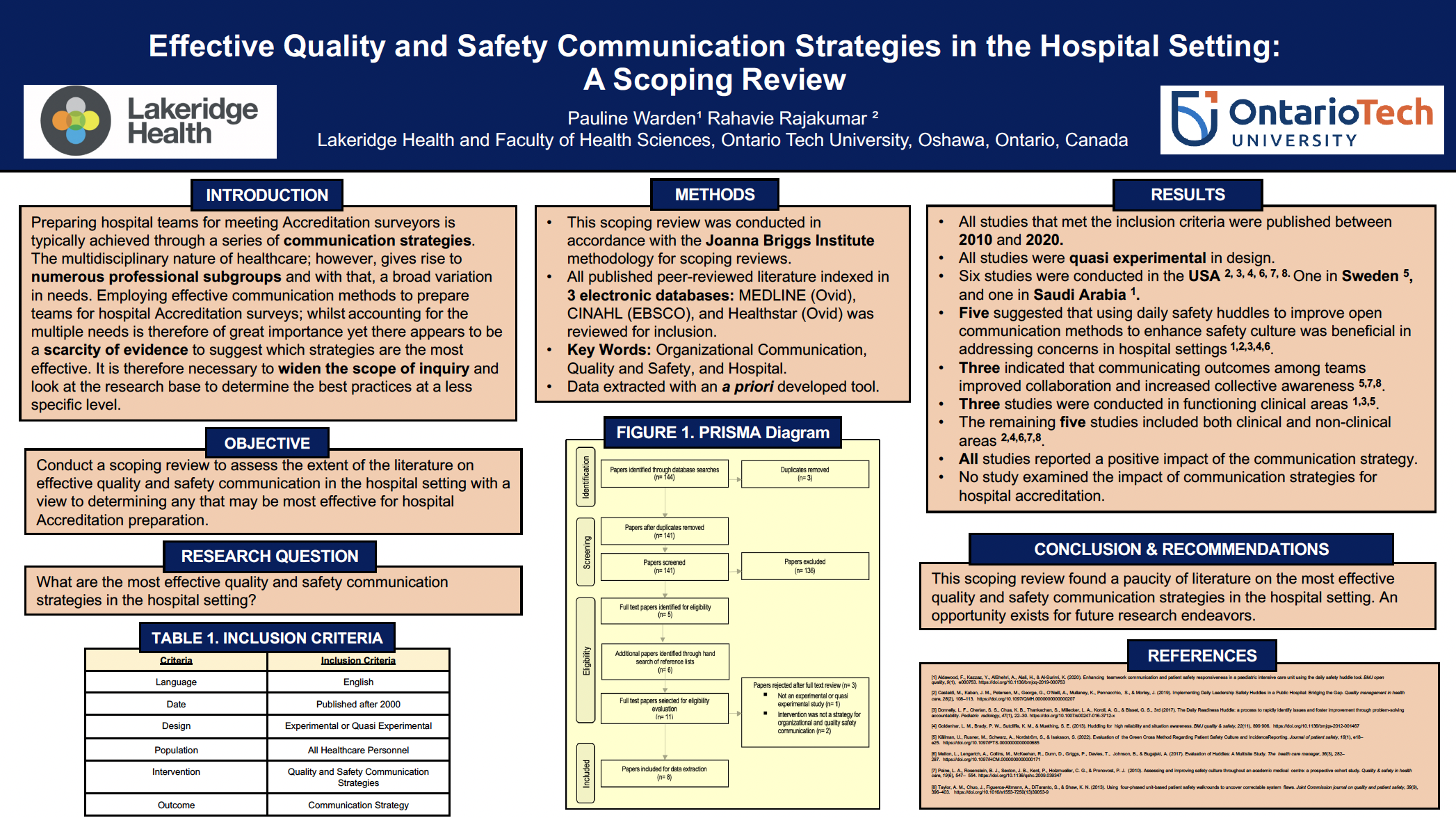
Background: Preparing hospital teams for meeting Accreditation surveyors is typically achieved through a series of communication strategies. The multidisciplinary nature of healthcare; however, gives rise to numerous professional subgroups and with that, a broad variation in needs. Employing effective communication methods to prepare teams for hospital Accreditation surveys; whilst accounting for the multiple needs is therefore of great importance yet there appears to be a scarcity of evidence to suggest which strategies are the most effective. It is therefore necessary to widen the scope of inquiry and look at the research base to determine the best practices at a less specific level.
Objective: The aim of this scoping review was to map the extent and nature of the existing research on what is considered to be the most effective strategies for organizational quality and safety communication in the hospital setting.
Inclusion Criteria: Studies that described the findings of experimental and quasi experimental research on strategies for organizational quality and safety communication in the hospital setting.
Methods: This scoping review was conducted in accordance with the Joanna Briggs Institute methodology for scoping reviews. All published peer-reviewed literature indexed in MEDLINE (Ovid), CINAHL (EBSCO), Healthstar (Ovid) from 2000 to 2022 was reviewed for inclusion. Data was manually extracted then themed to generate the conclusions.
Results: A total of eight studies were included. Five suggested that using daily safety huddles to improve open communication methods to enhance safety culture was beneficial in addressing concerns in hospital settings 1,2,3, 4, 6. Three 5,7,8 indicated that communicating outcomes among teams improved collaboration and increased collective awareness.
Conclusion: This scoping review revealed a paucity of experimental and quasi experimental research on effective quality and safety organizational communication strategies in the hospital setting. It is therefore suggested that an opportunity exists for future research endeavors.