Abstract
Introduction
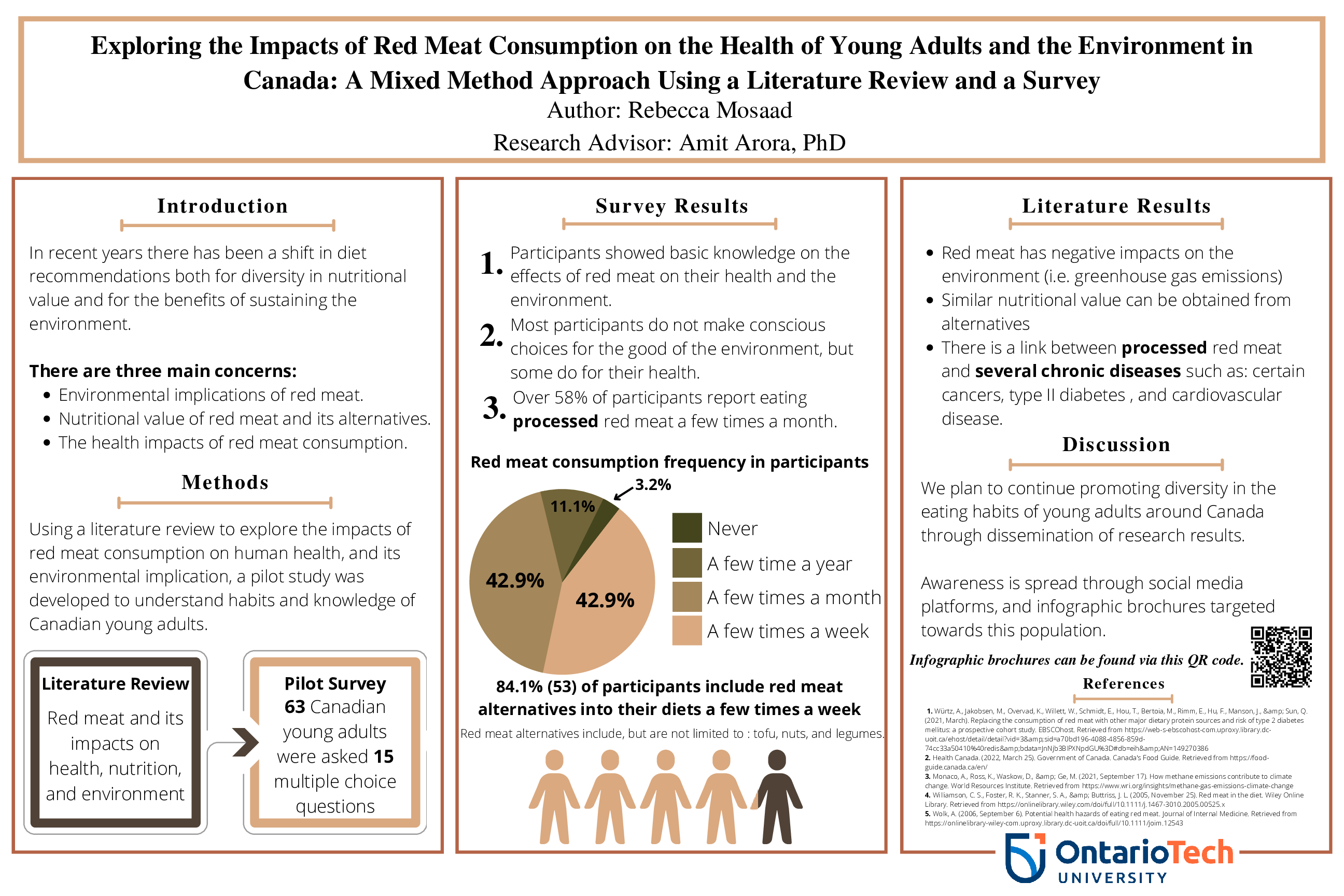
In recent years there has been a shift in diet recommendations both for diversity in nutritional value and for the benefits of sustaining the environment. The purpose of this project was twofold: to conduct a literature review exploring the impacts of red meat consumption on the health of young adults, and the environmental implications. This uncovered a gap in the literature, namely that we do not understand habits of young Canadians in relation to red meat consumption. There were three main concerns that needed addressing, and are discussed in this abstract: the environmental impact of red meat, the nutritional value of red meat and its alternatives, and the health impacts of its consumption.
Methods
Research methodology included a literature review of available, and applicable data, as well as usage of certain grey literature. A pilot survey was constructed based on the finding from these resources. Via an online aid, participants were asked a series of 15 multiple choice questions. 63 young adults took part in questioning to help researchers better understand their extent of red meat intake, and to assess current understanding of the research topic (98.9% participation rate per question). Basic statistical analysis, and charts were prepared.
Results
A review of the literature has identified a link between regular red meat consumption and poor health implications, as well as a negative impact on the environment.
In the participants studied, it was discovered that the majority (85.8%) eat red meat regularly, half reporting several times a week, and half reported several times a month. Other important data such as the quality of red meat (i.e. if it is processed) was collected, and found to be eaten a few times a month in 58.7% of cases. Most participants do not consciously make decisions with the environment in mind, however, in some cases make choices that they believe may better health. Finally, the population surveyed demonstrates surface-level knowledge on red meat alternatives.
Discussion
Findings suggest that Canadian young adults are indeed eating significant amounts of red meat, and are not considering all the consequences. We hope to promote diversity in the eating habits of young adults around Canada through dissemination of research results. Findings are communicated through social media platforms, and infographic brochures targeted towards this population.