Abstract
Objective
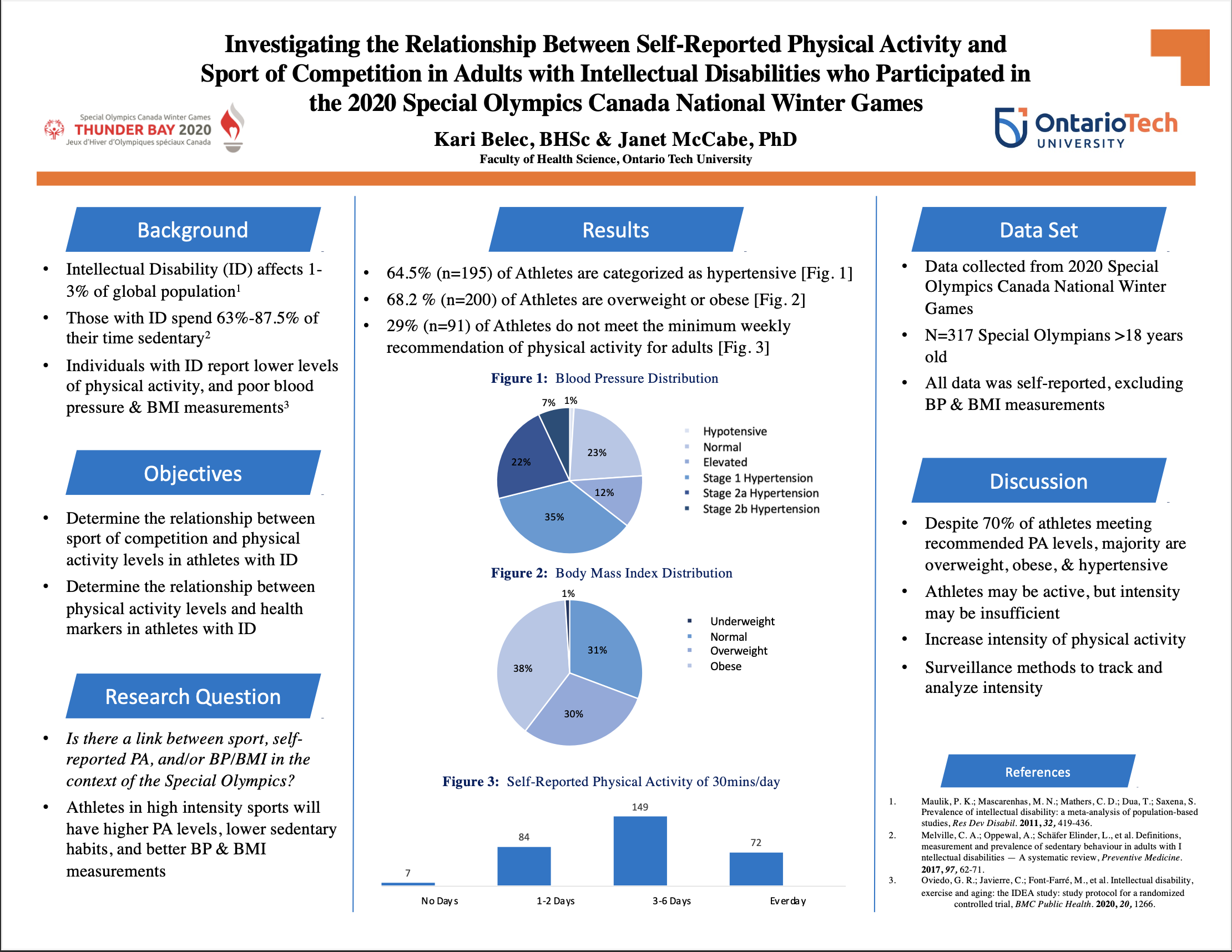
The objective of this study was to determine the relationship between physical activity, sport of competition, and health markers of adults with Intellectual Disabilities (ID) who participated in the 2020 Special Olympics Canada National Winter Games.
Data Set/Participants
The original data was collected at the 2020 Special Olympics Canada National Winter Games (N = 317 participants over the age of 18.). Ethics approval was granted to access this secondary data set from Special Olympics International, following REB approval from Ontario Tech University. The original data set was comprised of self-reported answers from a Health Assessment Survey administered by trained volunteers, and measurements of BP and BMI were also obtained by trained volunteers.
Methods
The data was cleaned and inputted into SPSS (v28) statistics software. Data was analyzed using descriptive data analysis and frequency analysis. Crosstabulations were used to compare variables against each other to determine statistically significant relationships.
Results
Of the 317 athletes, 62.1% (n=197) were male and 37.9% (n=120) were female, ranging from 18-75 years old. 64.5% (n=195) of the athletes had BP classified by Special Olympics International as hypertension. 68.2% (n=200) of athletes were classified as being either overweight or obese. 29% (n=91) of participants did not meet the minimum recommended weekly physical activity levels for adults. Speed Skating had the lowest levels of physical inactivity with 13% (n=2) of its athletes. Snowshoeing (27.7%) had the highest percentage of sedentary athletes. Overall, 195 athletes had hypertension, Floor Hockey (79.2%) had the highest proportion. The highest levels of overweight and obese BMI classifications were found in Other (76.4%) athletes.
Discussion
There is a dichotomy presented by the data – despite approximately 70% of the athletes surpassing the recommended weekly physical activity levels for adults, a majority were still classified as overweight, obese, or had some form of hypertension. This suggests that while the athletes may be physically active, the intensity levels may not be sufficient to contribute to positive health outcomes.