Abstract
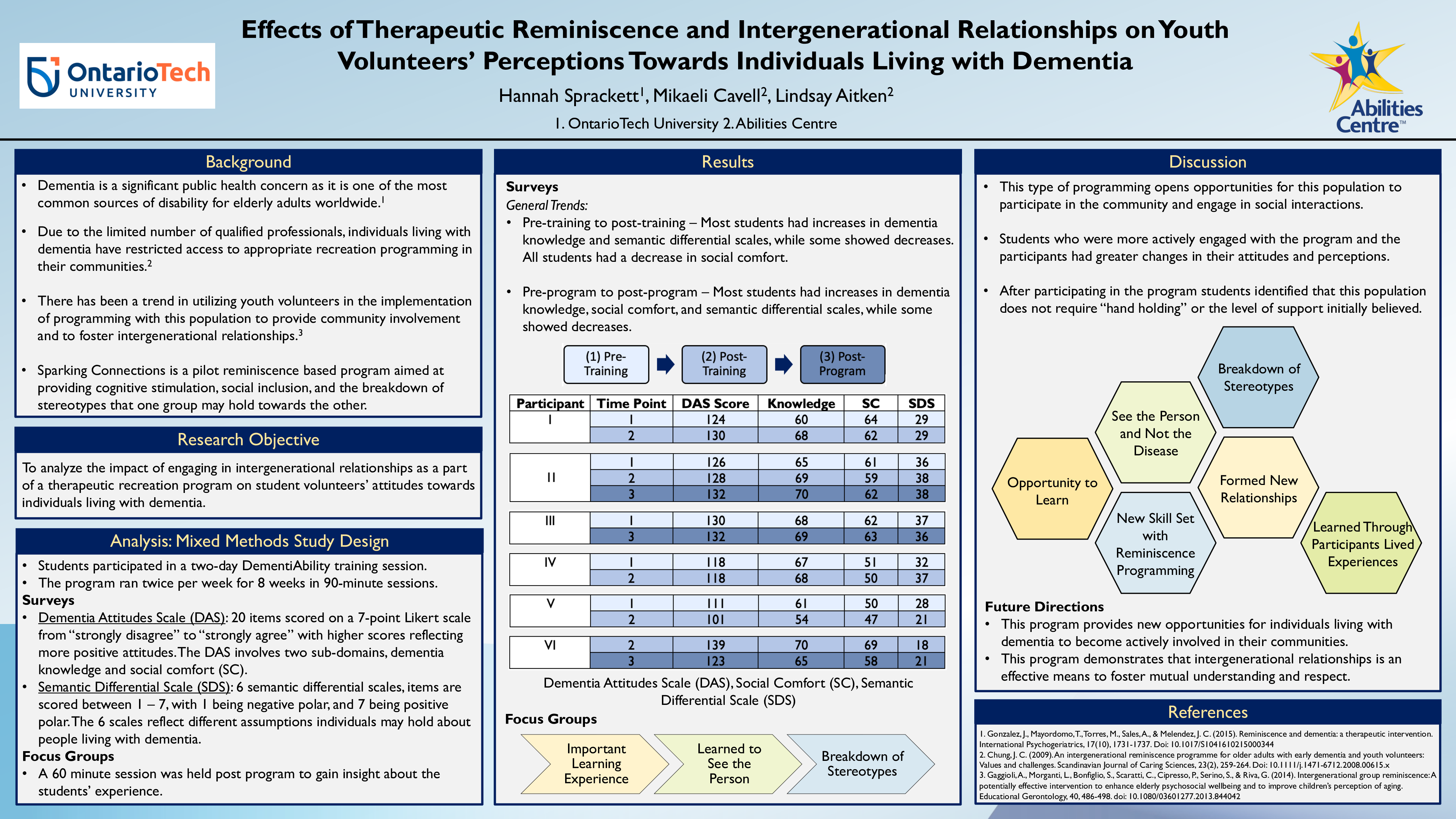
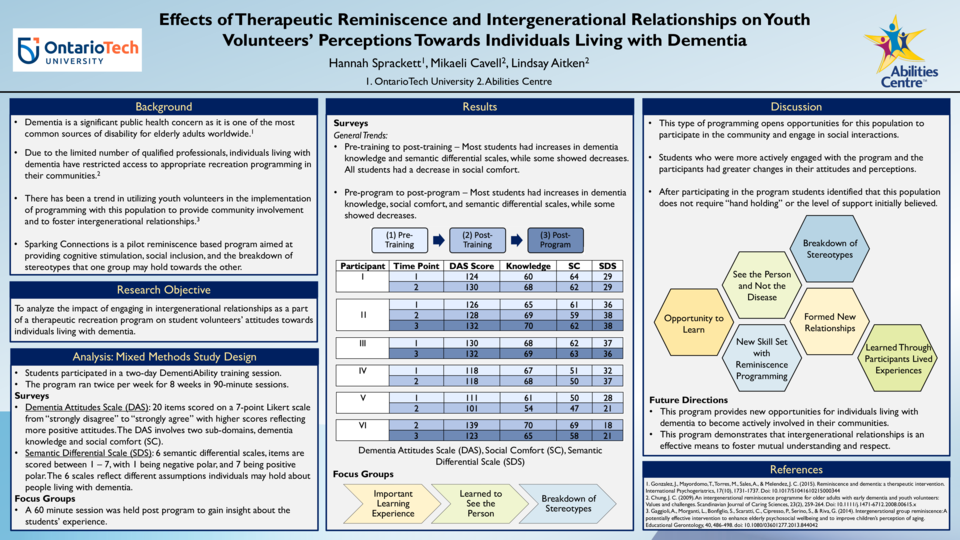
Background: Globally, dementia is one of the leading causes of disability among older adults. Due to the limited number of qualified professionals, individuals living with dementia have restricted access to appropriate recreation programming in their communities. To overcome this barrier, there has been a trend of therapeutic reminiscence programs operating with the support of youth volunteers. The present pilot study, the Sparking Connections program, aimed to promote intergenerational relationships and the breakdown of stereotypes one group may hold towards the other.
Methods: To understand the impact of the Sparking Connections program on youth volunteers’ perceptions towards individuals living with dementia, this study utilized a mixed-methods approach. Changes in attitudes and perceptions were assessed through surveys completed at three time points: at initiation, after pre-program training, and at end of program. A focus group was done with the students after the pilot was completed to better understand their experiences. Analysis involved descriptive statistics and inductive thematic analysis, respectively.
Results: Quantitative changes in attitudes and perceptions of individuals with dementia were analyzed in two components: before and after pre-program training, and before and after engaging in the program. The first set of data demonstrated that most students had increases in dementia knowledge and perceptions of people with dementia, while some showed decreases. All students had a decrease in social comfort. The second set of data demonstrated that most students had increases in dementia knowledge, social comfort, and perceptions of people with dementia, while some showed decreases. The focus group yielded consensus on the importance of programming for this population and the preliminary breakdown of stereotypes held towards individuals living with dementia.
Discussion: Overall, the varied quantitative results can be attributed to the students’ engagement with the program. Students who were more involved experienced greater changes in their attitudes and perceptions towards the individuals living with dementia. The decrease in social comfort after training can be attributed to the overwhelming amount of information provided during training. Regarding the entirety of the program, students were able to learn from the lived experiences of the participants and developed the ability to see the person, and not the disease.