Abstract
Background:
Li-Fraumeni syndrome (LFS) is a rare autosomal dominant disease which causes various early onset cancers which are mainly caused due the Tp53 gene mutation. The individuals with LFS usually have a strong family history of cancers in the family. The presentation of LFS as gastric carcinoma is however a rare occurrence in comparison to other types of cancers such as sarcomas, breast cancers and leukemias. We present a case of a 35 year old female who developed adenocarcinoma of the stomach which was confirmed by endoscopy guided biopsy and 18F FDG PET scan. This patient was further tested for the Tp53 mutation due a strong family history of cancers and was found to be positive for the same. The patient was started on chemotherapy and was discharged with advice to return for frequent follow up visits. This case highlights the rarity of Li Fraumeni syndrome presenting as early gastric carcinoma and the need for its early detection for an improved quality of life and reduced treatment associated complications.
Case Description :
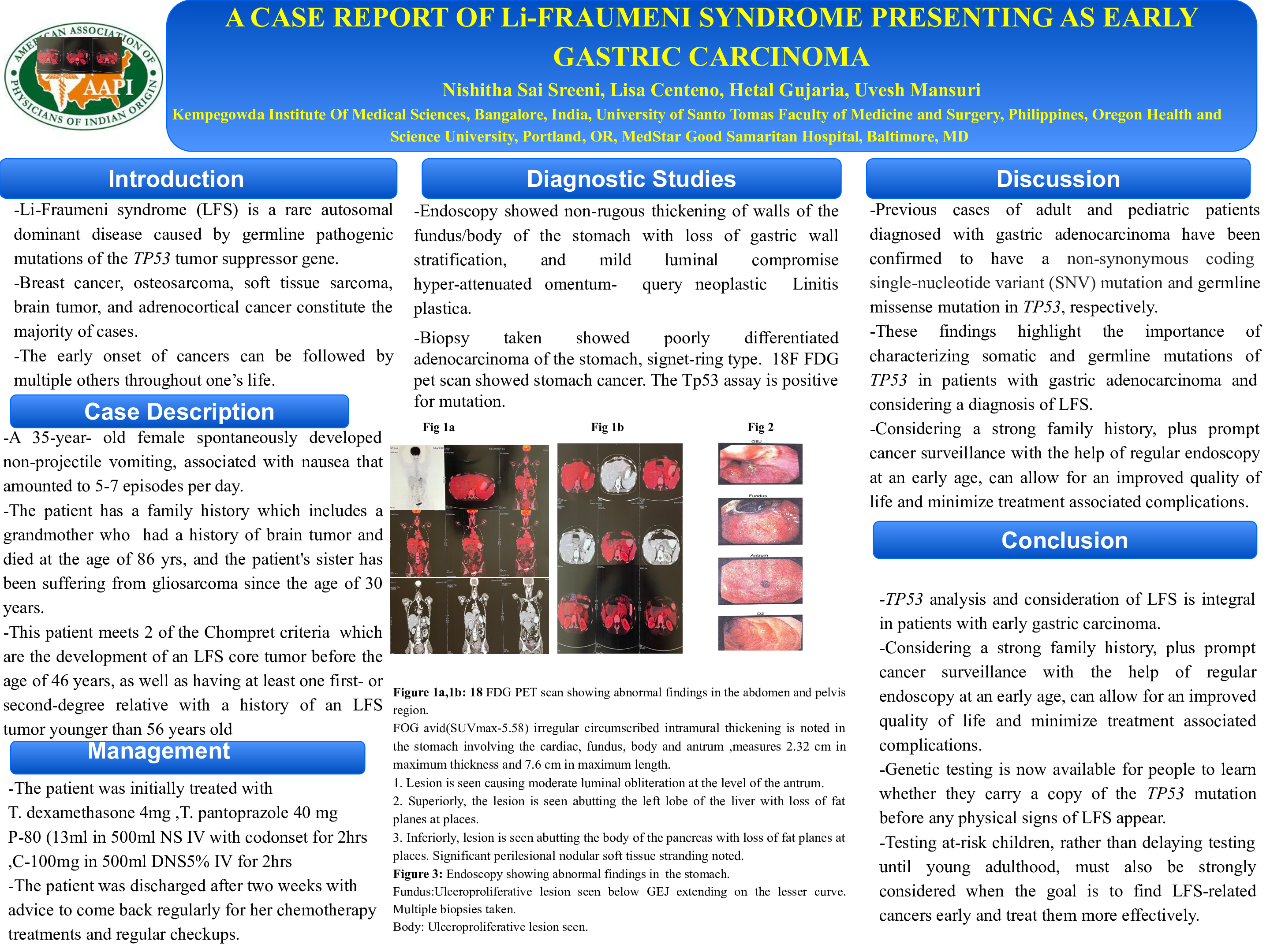
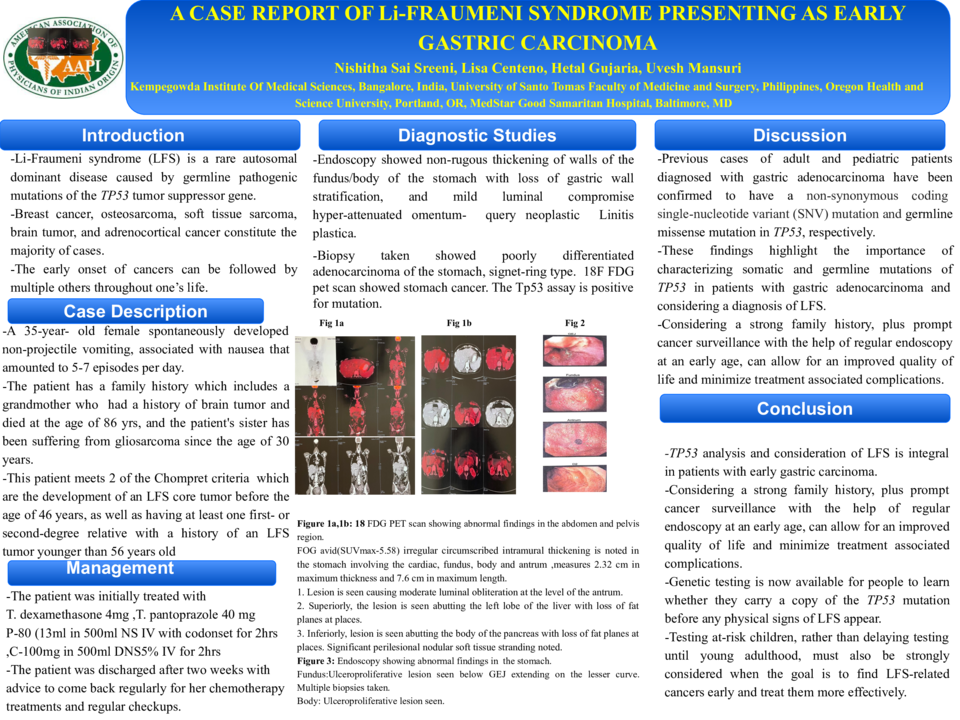
A 35-year- old female spontaneously developed non-projectile vomiting, associated with nausea that amounted to 5-7 episodes per day. She also claimed 2 days of loose, non-bloody, watery stool associated with epigastric pain. She had similar episodes 15 days ago and was admitted and treated for irritable bowel syndrome. Upon examination she had normal vitals but appeared pale, and the rest of the general examination was unremarkable. Laboratory investigation yielded hyperkalemia (+ 6.2mmol/l) , hemoglobin - 11.9g/dl and serum amylase - 49U/. Abdominal ultrasound showed perigastric lymphadenopathy with minimal ascites and mesenteric haziness in RIF. An abdominal CT showed non-rugous thickening of walls of the fundus/body of the stomach with loss of gastric wall stratification, and mild luminal compromise hyper-attenuated omentum with query neoplastic linitis plastica. Endoscopy guided biopsy showed poorly differentiated adenocarcinoma of the stomach, signet-ring type and later on 18F FDG pet scan was done which revealed hypermetabolic primary lesion in the stomach with extensions suggestive of primary gastric neoplasm along with hypermetabolic peri-gastric and gastro-hepatic lymph nodes- lymph node metastases and hypermetabolic metastatic omental and peritoneal soft tissue deposits and finally Tp53 gene analysis was done to obtain a definitive diagnosis.
Discussion:
Previous cases of adult and pediatric patients diagnosed with gastric adenocarcinoma have been confirmed to have a non-synonymous coding single-nucleotide variant (SNV) mutation and germline missense mutation in TP53, respectively. LFS should be suspected in individuals who meet the Chompret criteria, have early-onset hypodiploid acute lymphoblastic leukemia (ALL), or have suggestive findings on somatic tumor tissue testing and the diagnosis is established by the classic LFS criteria. Our patient meets all three Chompret criteria as well the classic three LFS criteria in addition to having a Tp53 gene mutation. These findings highlight the importance of characterizing somatic and germline mutations of TP53 in patients with gastric adenocarcinoma and considering a diagnosis of LFS. Considering a strong family history, plus prompt cancer surveillance with the help of regular endoscopy at an early age, can allow for an improved quality of life and minimize treatment associated complications.