Abstract
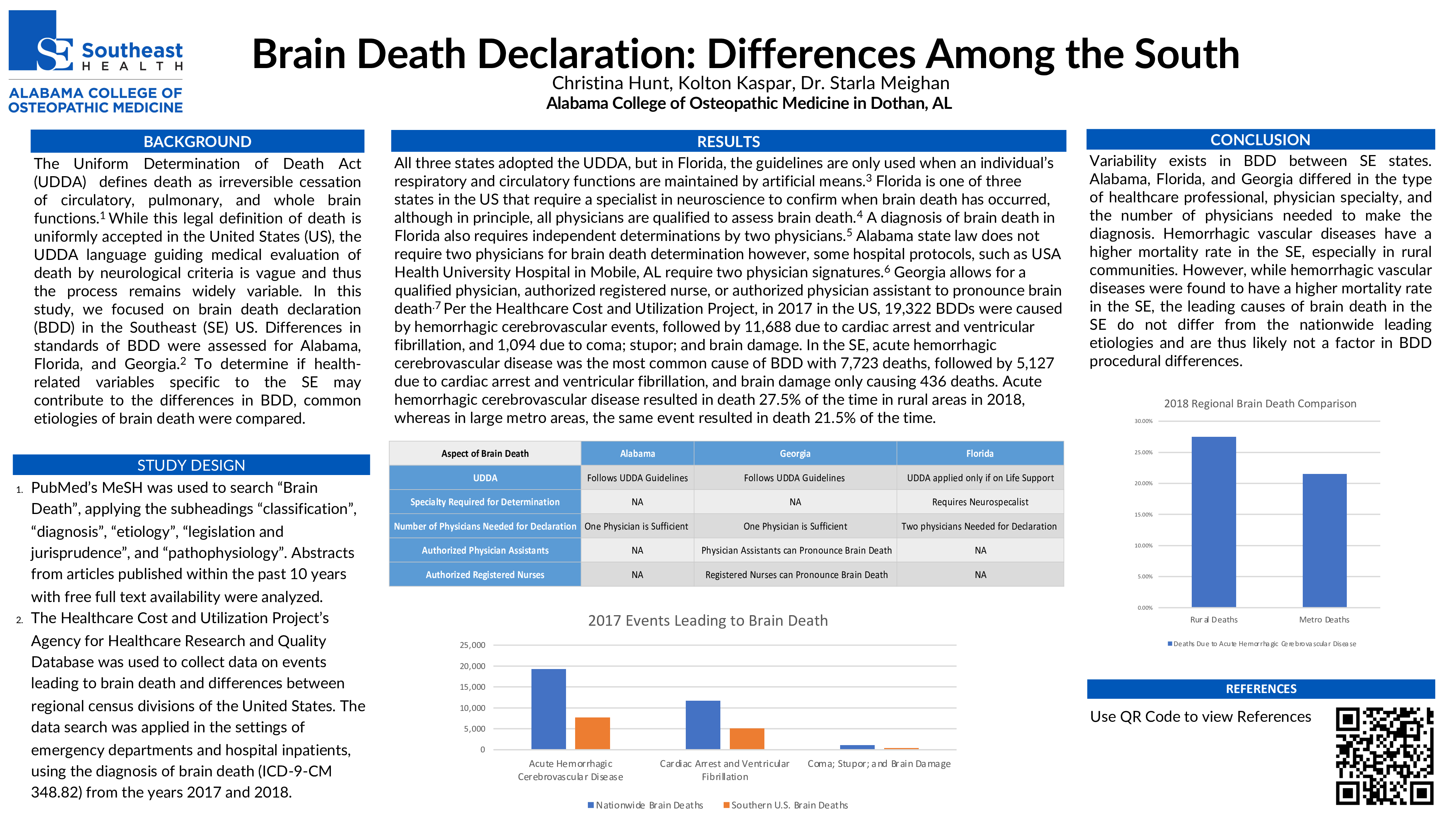
The Uniform Determination of Death Act (UDDA) defines death as irreversible cessation of circulatory, pulmonary, and whole brain functions. While this legal definition is uniformly accepted in the US, the vague UDDA language for evaluation of death by neurological criteria results in variable procedure. In this study, we focused on brain death declaration (BDD) in the Southeast (SE) United States. Differences in standards for BDD were assessed for Alabama, Florida, and Georgia. To determine if health-related variables specific to the SE contribute to BDD variability, common etiologies of brain death were compared. A PubMed literature review was utilized to analyze differences in the BDD process between states. The Healthcare Research and Quality database was used to collect data on brain death etiology. Alabama, Florida, and Georgia differed in the type of healthcare professional required to diagnose brain death, including number of physicians required for diagnosis. Hemorrhagic vascular diseases have a higher mortality rate in the SE, especially in rural communities. Acute hemorrhagic cerebrovascular disease was the leading cause of brain death in the SE, but this was not unique to the SE. In conclusion, variability exists in BDD between SE states. However, while hemorrhagic vascular diseases were found to have a higher mortality rate in the SE, the leading causes of brain death in the SE do not differ from those nationwide and are thus likely not a factor in BDD procedural differences.