Single-Agent Chk1 Inhibition is Anti-Proliferative in Leukemia Cells in Vitro and in Vivo
Abstract
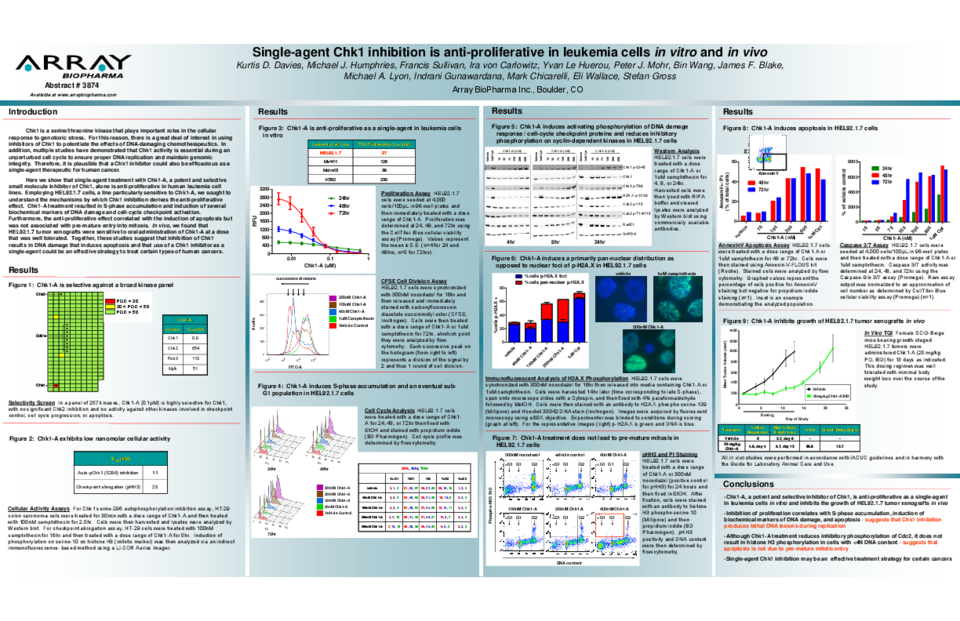
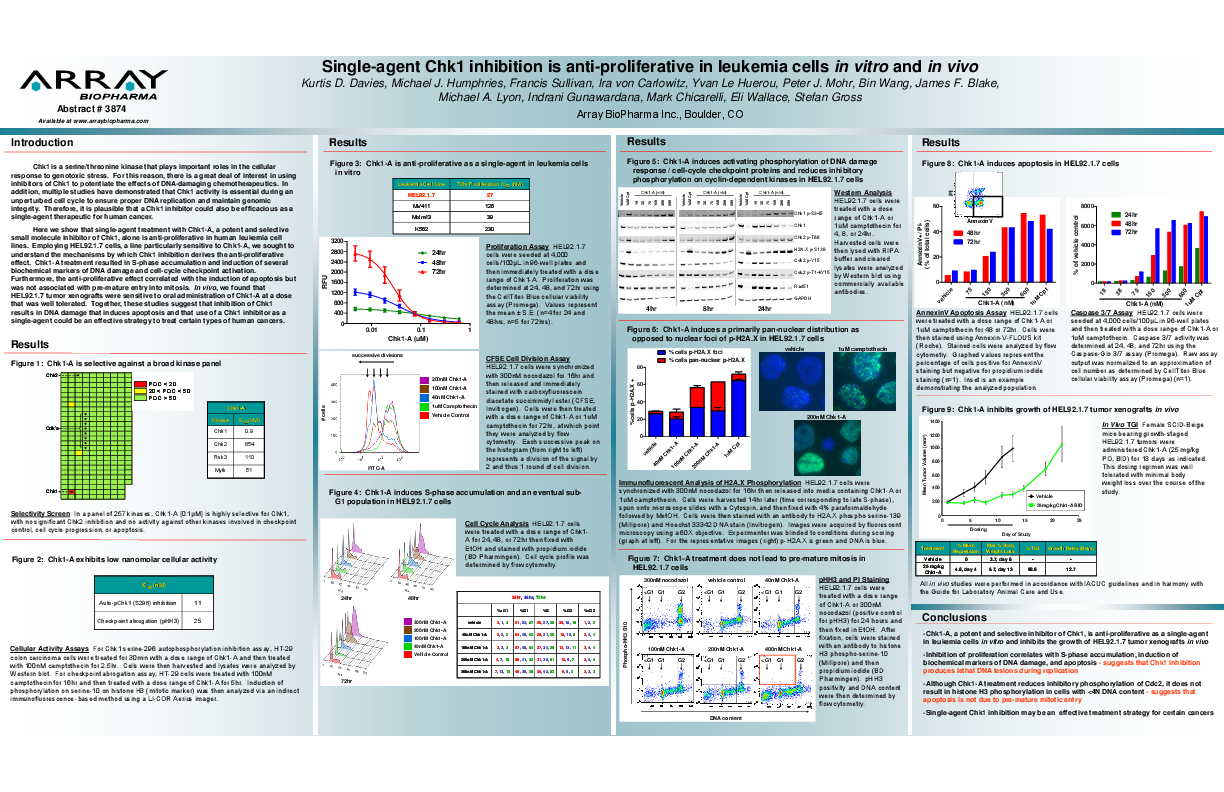
Chk1 is a serine/threonine kinase that plays important roles in the cellular response to genotoxic stress. For this reason, there is a great deal of interest in using inhibitors of Chk1 to potentiate the effects of DNA-damaging chemotherapeutics. In addition, multiple studies have demonstrated that Chk1 activity is essential during an unperturbed cell cycle to ensure proper DNA replication and maintain genomic integrity. Therefore, it is plausible that a Chk1 inhibitor could also be efficacious as a single-agent therapeutic for human cancer. Here we show that single-agent treatment with Chk1-A, a potent and selective small molecule inhibitor of Chk1, alone is anti-proliferative in human leukemia cell lines. Employing HEL92.1.7 cells, a line particularly sensitive to Chk1-A, we sought to understand the mechanisms by which Chk1 inhibition derives the anti-proliferative effect. Chk1-A treatment resulted in S-phase accumulation and induction of several biochemical markers of DNA damage and cell-cycle checkpoint activation. Furthermore, the anti-proliferative effect correlated with the induction of apoptosis but was not associated with pre-mature entry into mitosis. In vivo, we found that HEL92.1.7 tumor xenografts were sensitive to oral administration of Chk1-A at a dose that was well tolerated. Together, these studies suggest that inhibition of Chk1 results in DNA damage that induces apoptosis and that use of a Chk1 inhibitor as a single-agent could be an effective strategy to treat certain types of human cancers.
Related articles