Abstract
BACKGROUND
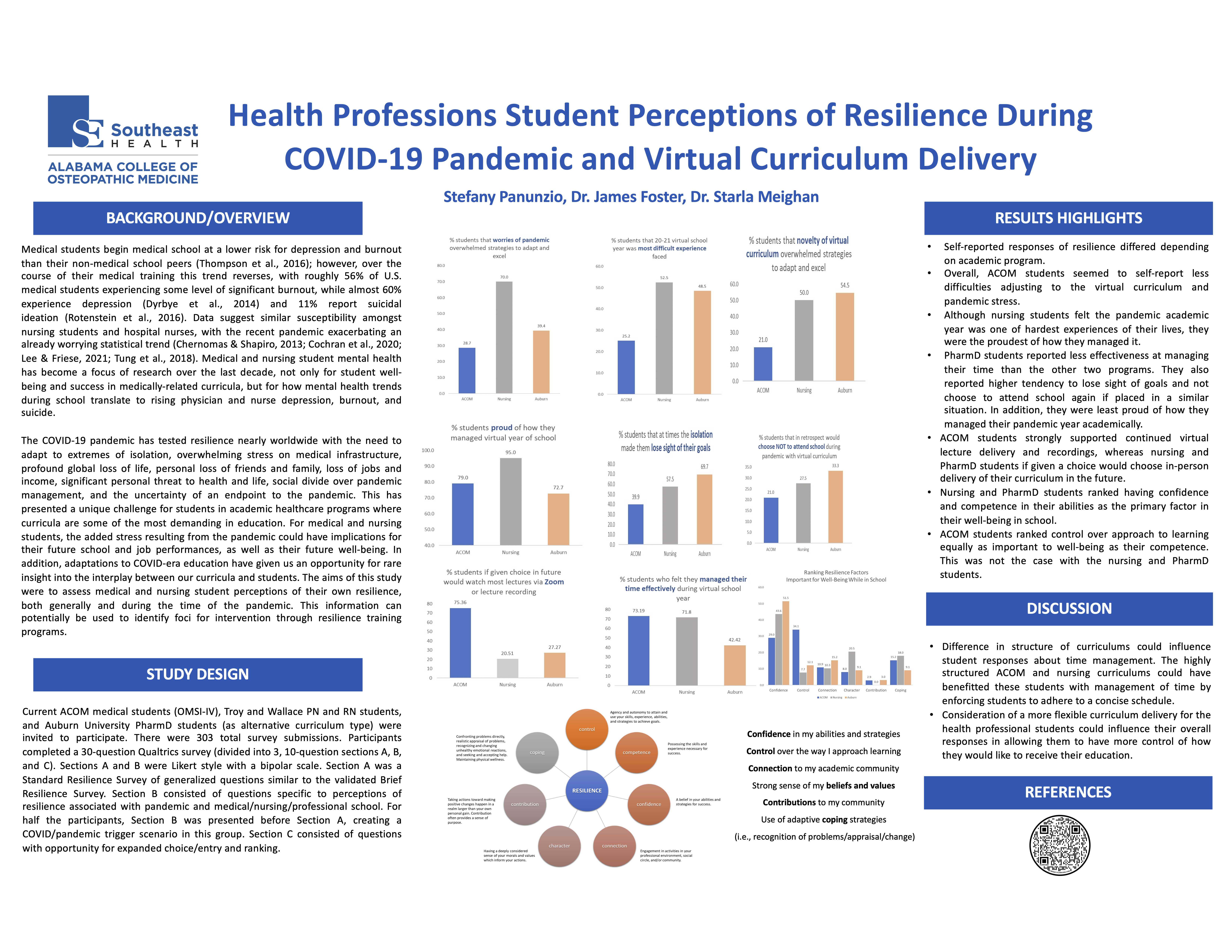
The COVID-19 pandemic has tested resilience nearly worldwide with the need to adapt to extremes of isolation, overwhelming stress on medical infrastructure, profound loss of life, interruptions in jobs and income, and the uncertainty of an endpoint to the pandemic. Amid this loss and uncertainty, students in professional curricula have been faced with changes to curriculum delivery that have created a learning environment unlike any they have experienced and learned to succeed in prior to the pandemic. Traditional didactic, in-person education transitioned to virtual learning overnight. With this transition, there has been a loss of in-person interaction with faculty and peers that could have an impact on morale, group study, skill-learning, problem-based learning, and forming personal and professional relationships, yet students have been tasked with performing as if normal. This likely presented a unique challenge for students in demanding healthcare curricula where pre-pandemic statistics already indicate high rates of stress-related depression and anxiety.
STUDY DESIGN
Participants (ACOM medical, Troy and Wallace nursing, and Auburn PharmD students) completed a 30-question survey on resilience and their ability to succeed in virtual curriculum delivery during the pandemic.
RESULTS
Although generally participants indicated a high self-perception of resilience, in specific areas there were significant differences in perception between the students in different programs. These differences included the factors each student cohort indicated were most important to fostering their resilience in their program of study.
CONCLUSION
These data could be important in developing curriculum-tailored modules to foster student resilience in healthcare training programs.