
Abstract
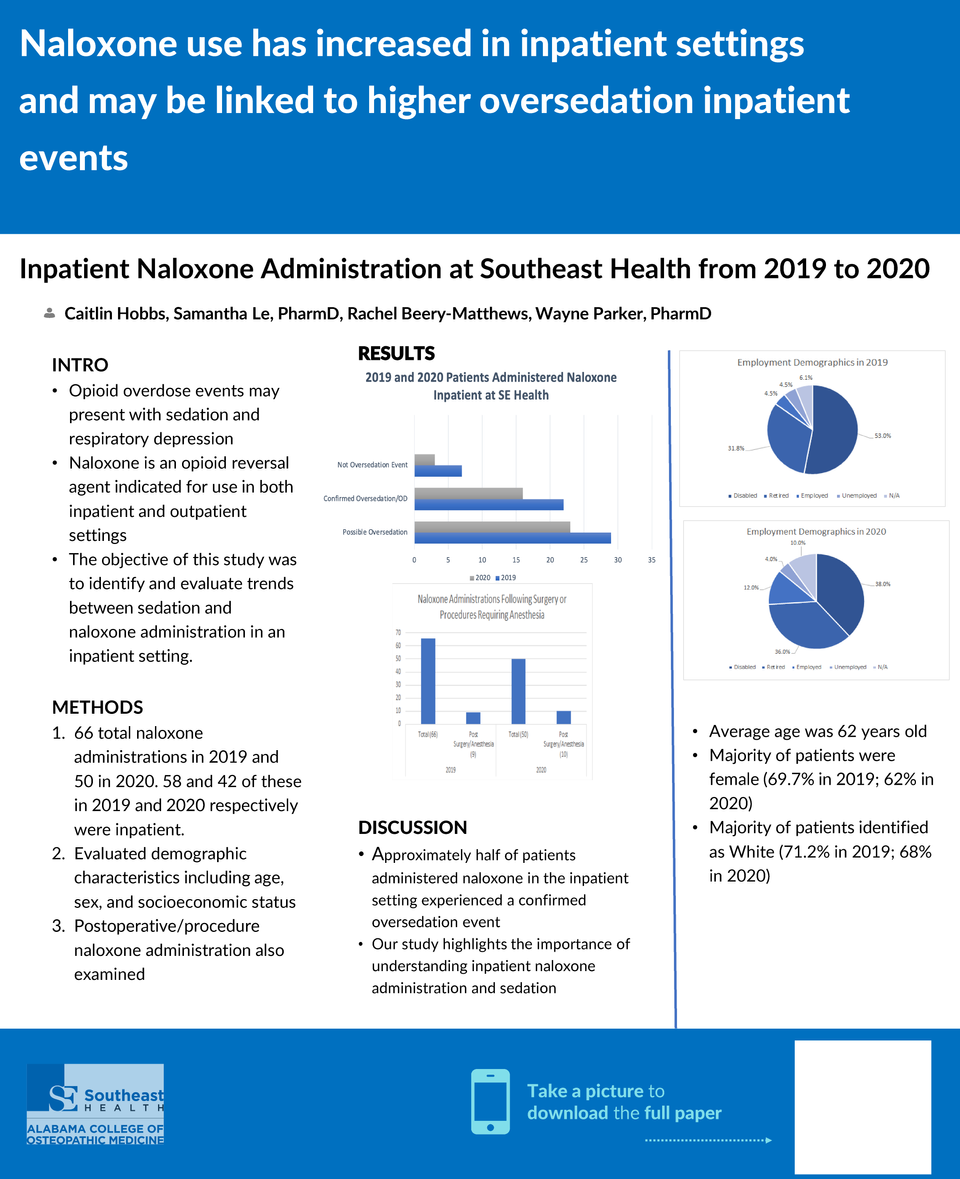
Background: Opioid overdose events may present with sedation and respiratory depression. Naloxone is an opioid reversal agent indicated for use in both inpatient and outpatient settings. The aim of this study was to identify and evaluate trends between sedation and naloxone administration in an inpatient setting.
Study Design: Data was collected from 2019 and 2020 at the Southeast Health Hospital. Entries were categorized as confirmed, possible, not opioid overdose-related, and outpatient administrations. Entries were then categorized into post-surgical and inpatient procedural events.
Results: 108 entries were analyzed from 2019 and 2020. In 2019, 85.9% patients received naloxone while inpatient in 2019 and 75.0% in 2020.
In 2019, the average age was 62.8. Around 68.8% of patients were female and 73.4% identified as White. Overall, 41.8% patients experienced a confirmed oversedation event, 45.5% had a possible oversedation event and 12.7% did not improve. In patients who received inpatient naloxone, 23.6% occurred post surgery or during a procedure which required anesthesia.
In 2020, the average age was 60.8. 68.2% of patients were female and 63.6% identified as White. 48.5% of patients experienced a confirmed oversedation event, 45.5% possible oversedation, and 6% had no response to naloxone use. 24.2% of these events occurred post surgery or during a procedure which required anesthesia.
Conclusion: In conclusion, approximately half of patients administered naloxone inpatient experienced a confirmed oversedation event. Our study highlights the importance of understanding inpatient naloxone administration and oversedation.



