A Comparison of Curricular Versus Extracurricular Multicultural Experiences: Effect on First and Second Year Medical Student Cultural Competency
Abstract
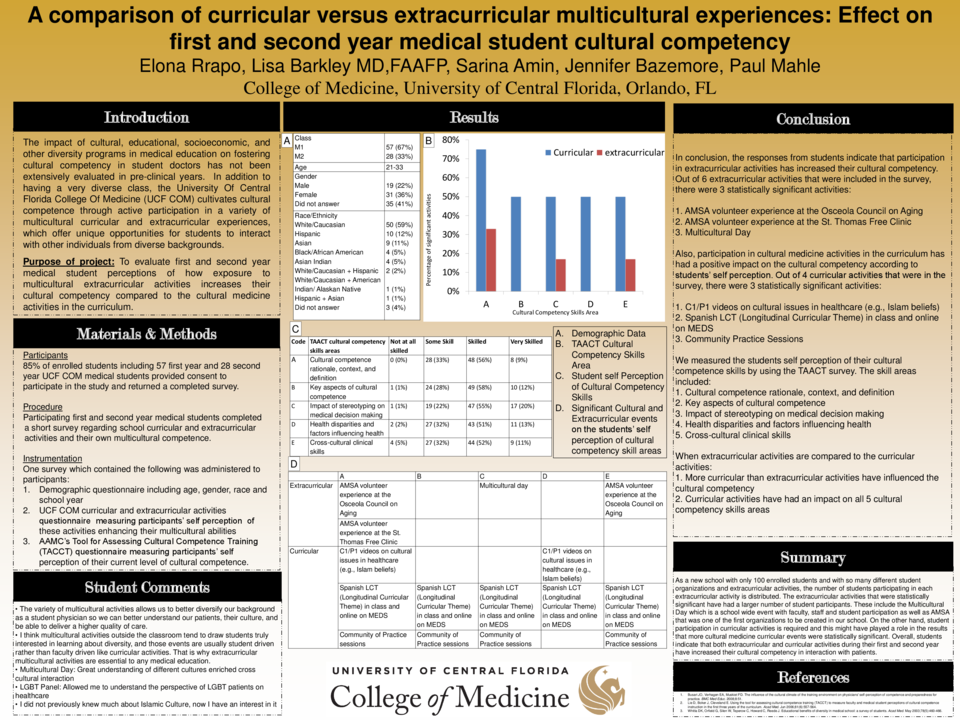
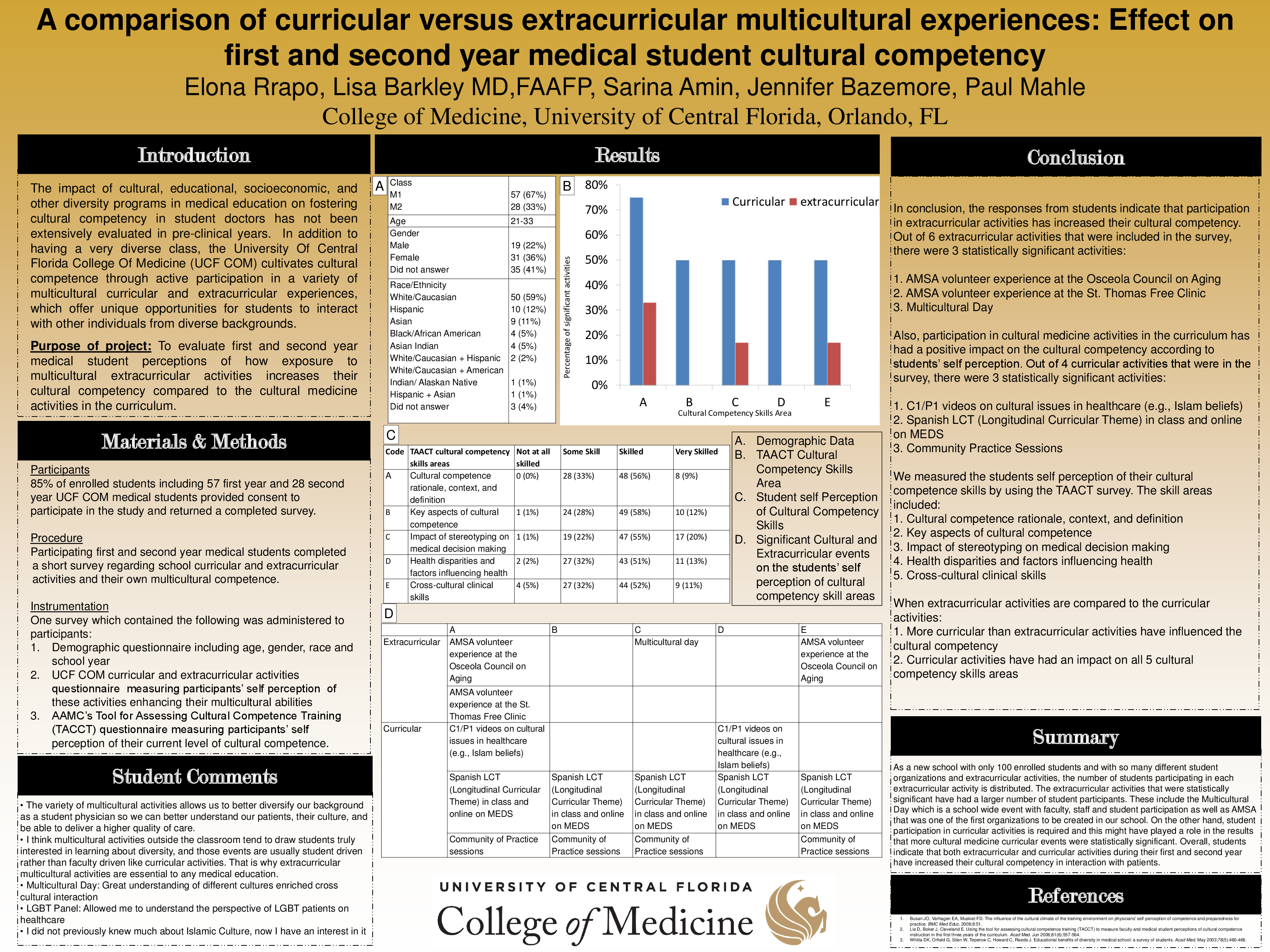
Introduction: The impact of cultural, educational, socioeconomic, and other diversity programs in medical education on fostering cultural competency in student doctors has not been extensively evaluated in pre-clinical years. In addition to having a very diverse class, the University Of Central Florida College Of Medicine (UCF COM) cultivates cultural competence through active participation in a variety of multicultural curricular and extracurricular experiences, which offer unique opportunities for students to interact with other individuals from diverse backgrounds.
Purpose of project: To evaluate first and second year medical student perceptions of how exposure to multicultural extracurricular activities increases their cultural competency compared to the cultural medicine activities in the curriculum.
Materials and Methods: 85% of enrolled students including 57 first year and 28 second year UCF COM medical students provided consent to participate in the study and returned a completed survey. Participating first and second year medical students completed a short survey regarding school curricular and extracurricular activities and their own multicultural competence. One survey which contained the following was administered to participants: demographic questionnaire including age, gender, race and school year; UCF COM curricular and extracurricular activities questionnaire measuring participants’ self-perception of these activities enhancing their multicultural abilities; AAMC’s Tool for Assessing Cultural Competence Training (TACCT) questionnaire measuring participants’ self-perception of their current level of cultural competence.
Results: 67% of participants were in the first year and 33 % were in their second year of medical school. The majority of students expressed that more curricular activities than extracurricular activities have played an important role in the 5 TAACT cultural competency skill areas. Most of the students felt skilled in the 5 main areas of the cultural competency included in the TAACT survey.
Conclusion: In conclusion, the responses from students indicate that participation in extracurricular activities has increased their cultural competency.
Related articles