Abstract
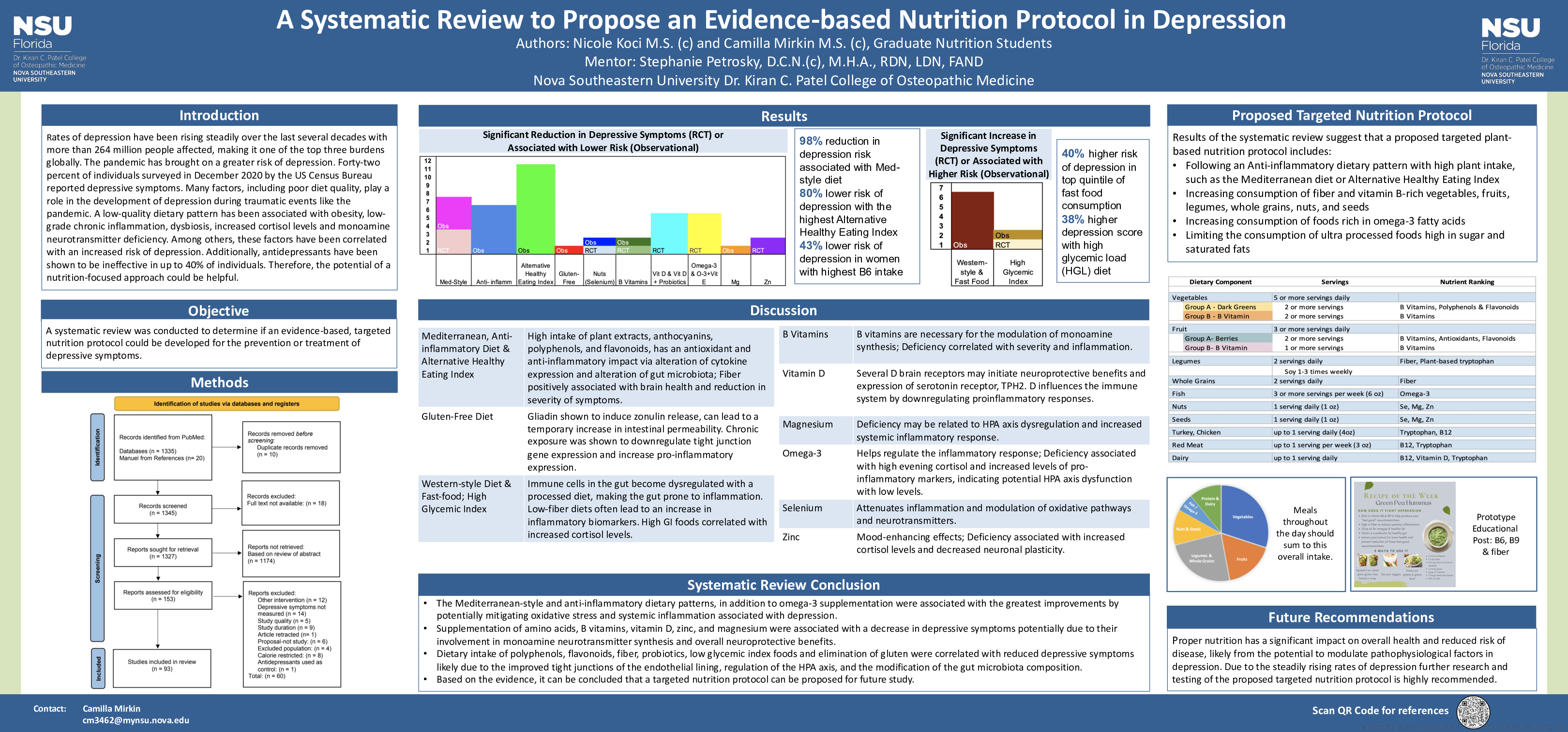
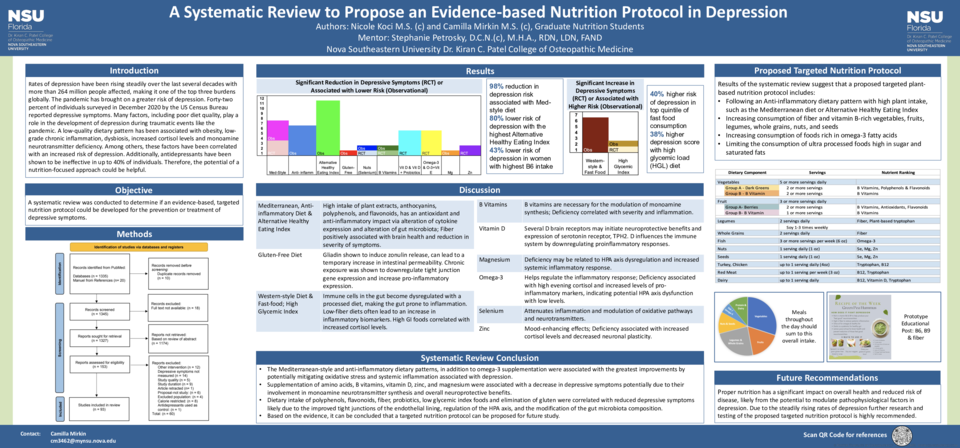
Rates of depression have been rising steadily over the last several decades with more than 264 million people affected, making it one of the top three burdens globally. The pandemic has brought on a greater risk of depression. Forty-two percent of individuals surveyed in December 2020 by the US Census Bureau reported depressive symptoms. Many factors, including poor diet quality, play a role in the development of depression during traumatic events like the pandemic. A low-quality dietary pattern has been associated with obesity, low-grade chronic inflammation, dysbiosis, increased cortisol levels and monoamine neurotransmitter deficiency. Among others, these factors have been correlated with an increased risk of depression. Additionally, antidepressants have been shown to be ineffective in up to 40% of individuals. Therefore, the potential of a nutrition-focused approach could be helpful. A systematic review was conducted to determine if an evidence-based, targeted nutrition protocol could be developed for the prevention or treatment of depressive symptoms. The results of nearly 100 studies strongly indicate certain nutrients and dietary patterns have the potential to reduce depressive symptoms. A proposed nutrition protocol was developed as a result and will be presented in this session along with the summary findings of this unique review.