Abstract
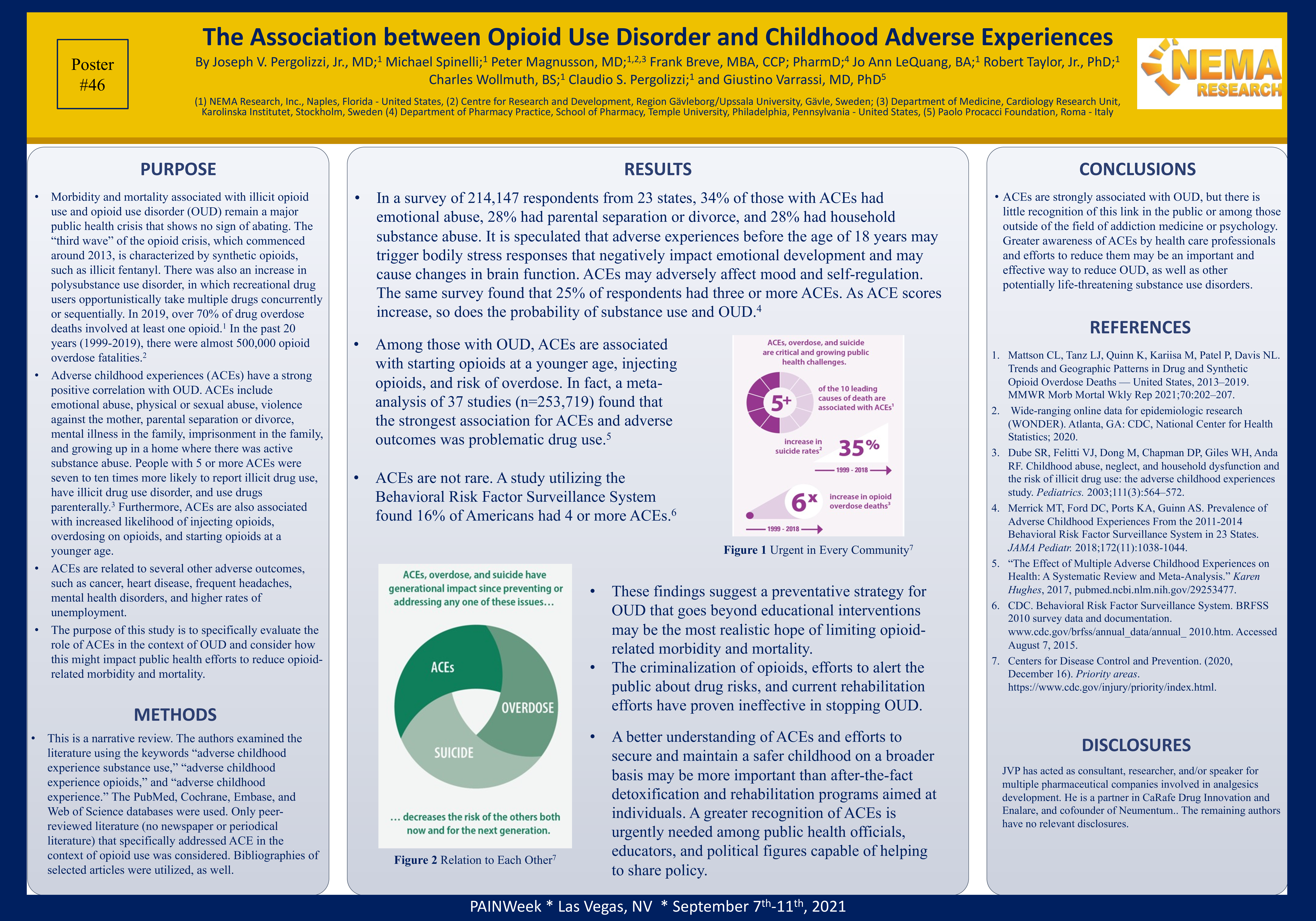
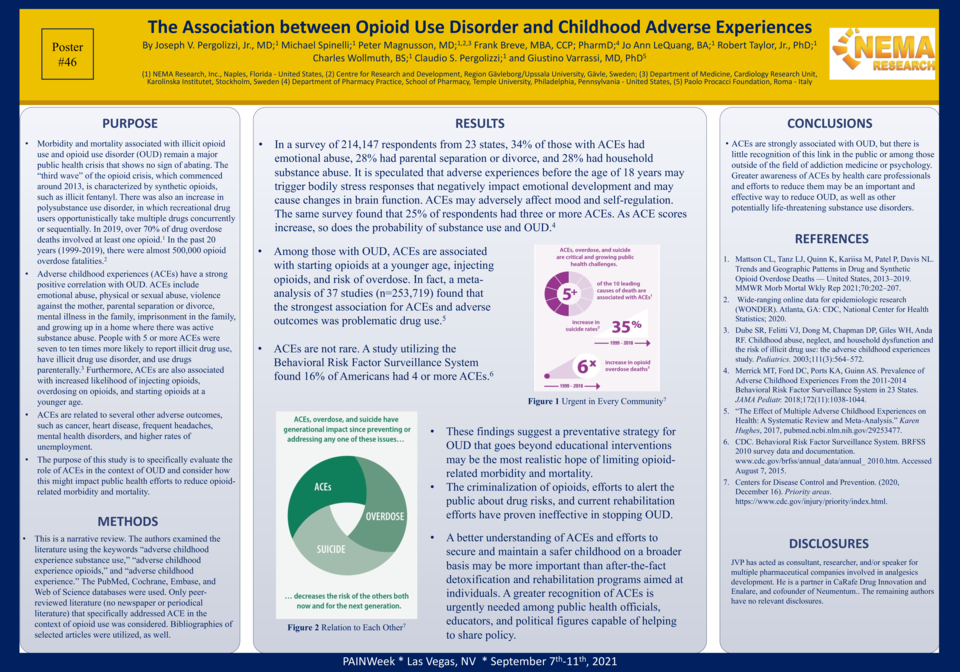
Morbidity and mortality associated with illicit opioid use and opioid use disorder (OUD) remain a major public health crisis that shows no sign of abating. The “third wave” of the opioid crisis, which commenced around 2013, is characterized by synthetic opioids, such as illicit fentanyl. There was also an increase in polysubstance use disorder, in which recreational drug users opportunistically take multiple drugs concurrently or sequentially. In 2019, over 70% of drug overdose deaths involved at least one opioid. [1] In the past 20 years (1999-2019), there were almost 500,000 opioid overdose fatalities. Adverse childhood experiences (ACEs) have a strong positive correlation with OUD. ACEs include emotional abuse, physical or sexual abuse, violence against the mother, parental separation or divorce, mental illness in the family, imprisonment in the family, and growing up in a home where there was active substance abuse. People with 5 or more ACEs were seven to ten times more likely to report illicit drug use, have illicit drug use disorder, and use drugs parenterally. [3] Furthermore, ACEs are also associated with increased likelihood of injecting opioids, overdosing on opioids, and starting opioids at a younger age. ACEs are related to several other adverse outcomes, such as cancer, heart disease, frequent headaches, mental health disorders, and higher rates of unemployment. The purpose of this study is to specifically evaluate the role of ACEs in the context of OUD and consider how this might impact public health efforts to reduce opioid related morbidity and mortality.