Abstract
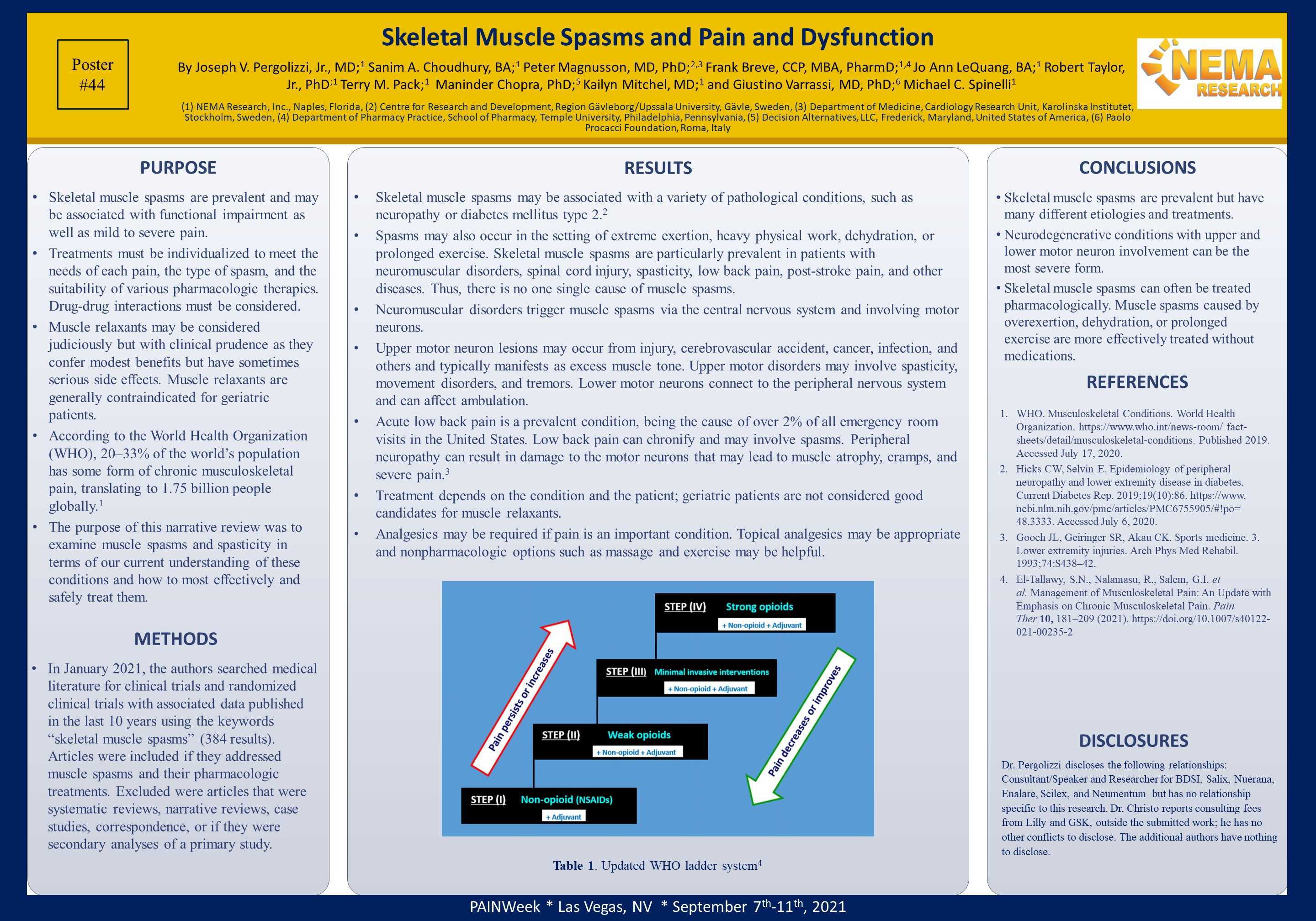
•Skeletal muscle spasms are prevalent and may be associated with functional impairment as well as mild to severe pain.
•Treatments must be individualized to meet the needs of each pain, the type of spasm, and the suitability of various pharmacologic therapies. Drug-drug interactions must be considered.
•Muscle relaxants may be considered judiciously but with clinical prudence as they confer modest benefits but have sometimes serious side effects. Muscle relaxants are generally contraindicated for geriatric patients.
•According to the World Health Organization (WHO), 20–33% of the world’s population has some form of chronic musculoskeletal pain, translating to 1.75 billion people globally.1
•The purpose of this narrative review was to examine muscle spasms and spasticity in terms of our current understanding of these conditions and how to most effectively and safely treat them.