Abstract
A Systematic Review of Evidence-Based Interventions to Address Medical Burnout During the COVID-19 Pandemic
Andrea Roca, MS-2, Algevis Wrench, Ph.D, and Arkene Levy, Ph.D
Nova Southeastern University Dr. Kiran C. Patel College of Allopathic Medicine
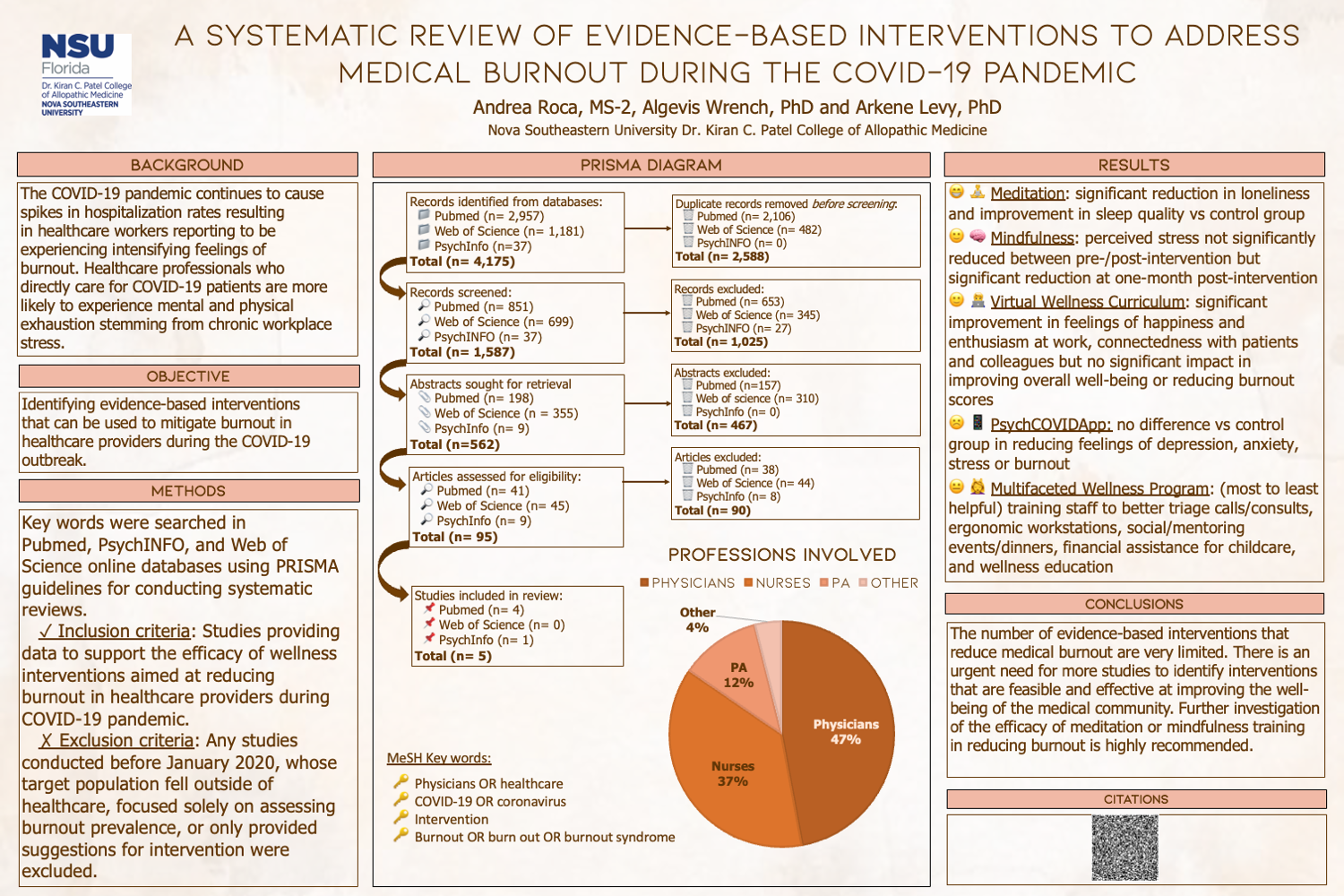
Background: The pandemic continues to create spikes in hospitalization rates, and healthcare workers are experiencing intensifying feelings of burnout. The literature has identified those directly taking care of COVID-19 patients are more likely to experience mental and physical exhaustion stemming from chronic workplace stress.
Objective: Identifying evidence-based interventions that can be used to mitigate burnout in healthcare providers during the COVID-19 outbreak.
Methods: A PRISMA systematic review of articles from Pubmed, PsychINFO, and Web of Science databases was conducted using MeSH key words. Inclusion criteria was limited to studies providing data to support the efficacy of wellness interventions aimed at reducing burnout in healthcare providers during COVID-19 pandemic. Any studies conducted before January 2020, whose target population fell outside of healthcare, focused solely on assessing burnout prevalence, or only provided suggestions for intervention were excluded.
Results: Five studies were selected for review with a variety of interventions explored. Meditation showed significant reduction in loneliness and improved sleep quality vs control group. Mindfulness showed significant reduction in perceived stress one-month post-intervention. The two wellness curriculums did not show a significant improvement in overall well-being or in reducing burnout scores. The PsychCOVIDApp showed no difference vs control group in reducing feelings of depression, anxiety, stress, or burnout.
Conclusion: The number of evidence-based interventions are very limited. There is an urgent need to identify interventions that are effective and feasible for the well-being of the medical community. Further investigation of the efficacy of meditation or mindfulness training in reducing burnout is highly recommended.