Abstract
Background
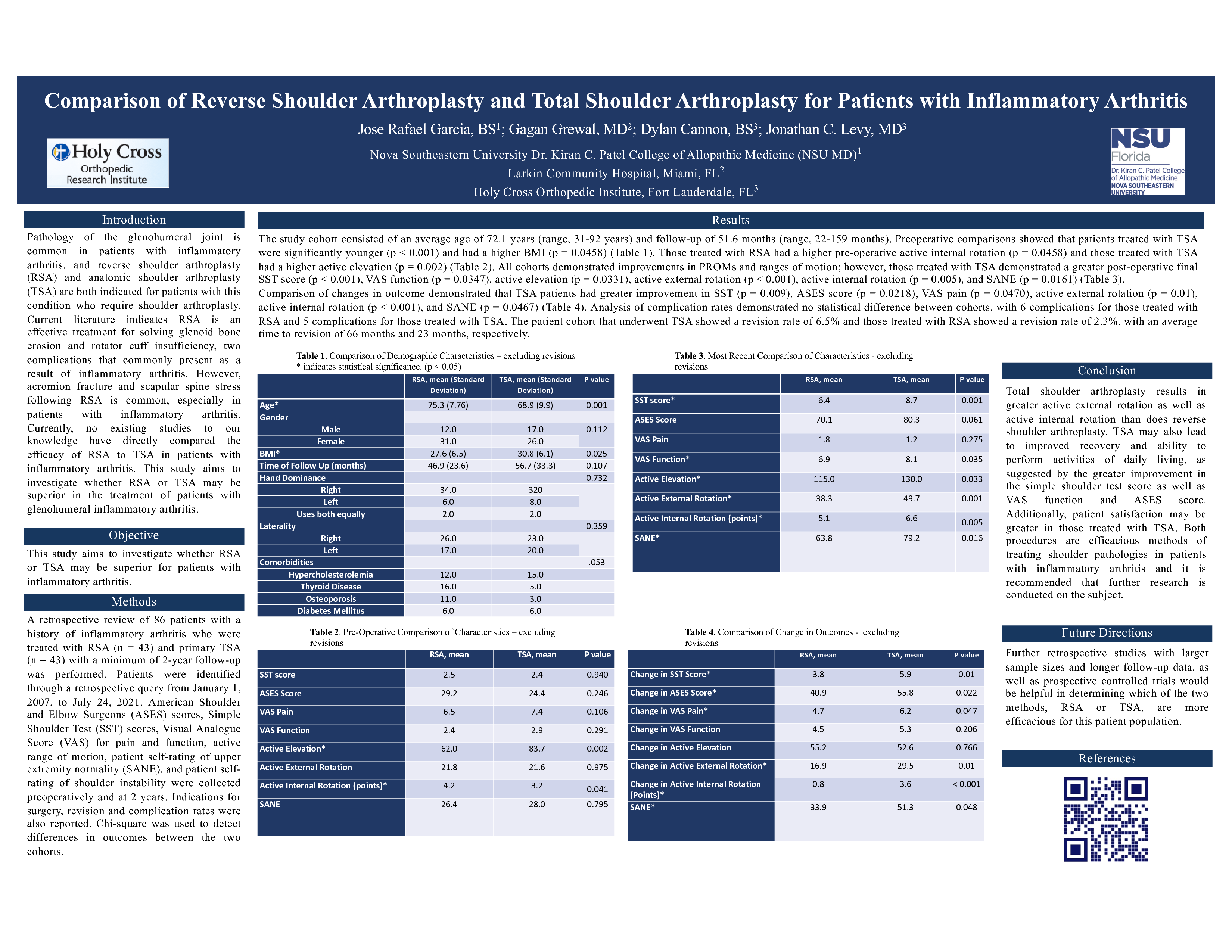
Pathology of the glenohumeral joint is common in patients with inflammatory arthritis. Reverse shoulder arthroplasty (RSA) and total shoulder arthroplasty (TSA) are indicated for these patients. No existing literature directly compares the efficacy of these methods for this specific population. This study aims to investigate whether RSA or TSA may be superior for patients with inflammatory arthritis.
Methods
A retrospective review of patients with inflammatory arthritis treated with RSA and TSA with a minimum 2-year follow-up was performed. American Shoulder and Elbow Surgeons (ASES) scores, Simple Shoulder Test (SST) scores, Visual Analogue Score (VAS) for pain and function, and active range of motion were reviewed.
Results
The study cohort consisted of 86 patients who met the inclusion criteria, with an average age of 72.1 years (range, 31-92 years) and a follow-up of 51.6 months (range, 22-159 months). There were 43 patients treated with RSA and 43 patients treated with TSA. The TSA cohort demonstrated a greater improvement in SST score (p < 0.001), VAS function (p = 0.035), active elevation (p = 0.033), active external rotation (p < 0.001), and active internal rotation (p = 0.005). TSA patients had greater changes in outcome of ASES score (p = 0.022) and VAS pain (p = 0.047).
Conclusion
TSA may result in improved recovery and greater active range of motion, when compared to RSA. Both procedures are efficacious methods of treating shoulder pathologies in patients with inflammatory arthritis and it is recommended that further research is conducted on the subject.