Abstract
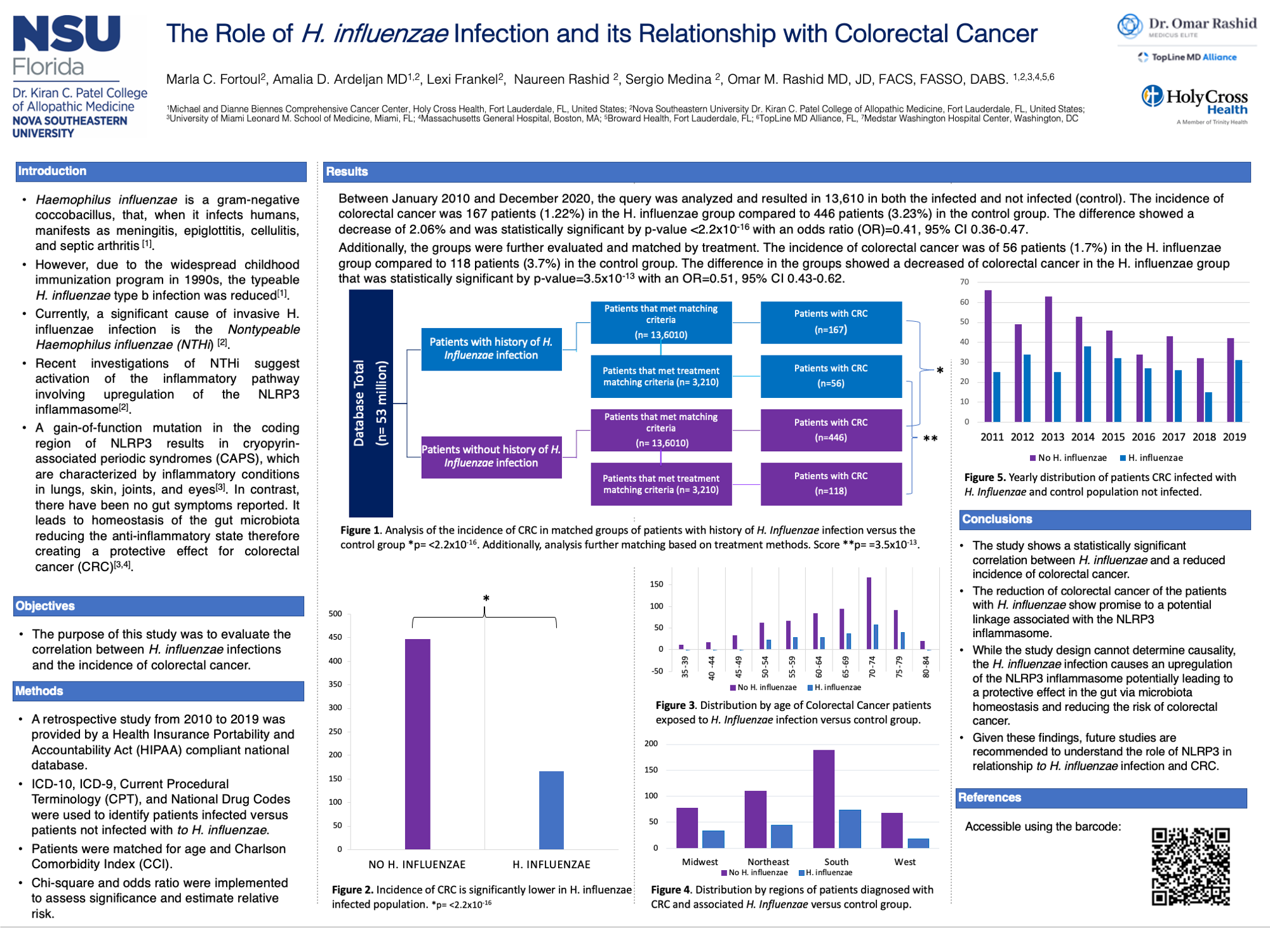
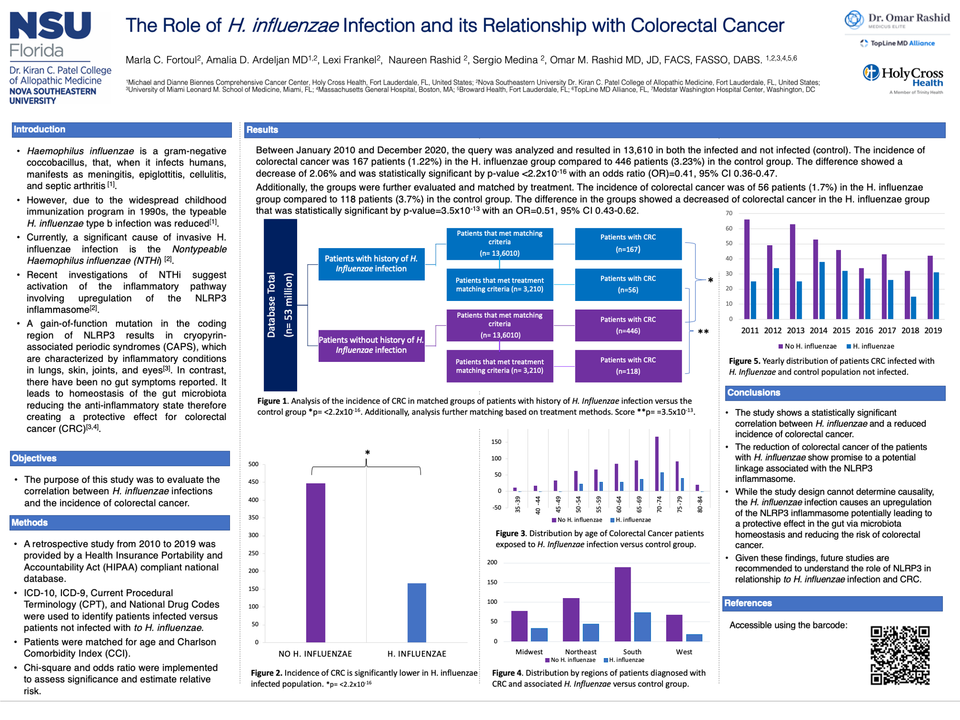
Background: Haemophilus influenzae is a gram-negative coccobacillus that manifests as meningitis, epiglottitis, and cellulitis. Currently, a significant cause of invasive infection is the NTHi. Recently NTHi infections suggest activation of the inflammatory pathway involving the NLRP3 inflammasome. A gain-of-function mutation of NLRP3 results in CAPS characterized by inflammatory conditions in lungs, skin, joints, and eyes, but no gut symptoms. It leads to homeostasis of the gut microbiota reducing the anti-inflammatory state therefore creating a protective effect for colorectal cancer (CRC). The aim of this study was to evaluate the correlation between H. influenzae infection and incidence of CRC.
Methods: A retrospective study from 2010-2019 was provided by a HIPAA compliant national database. ICD-10, ICD-9, CPT, and National Drug Codes were used to identify patients infected versus patients not infected with to H. influenzae.
Results: Between 2010-2019, the query was analyzed and matched and resulted in 13,610 in both the infected and control group, respectively. The incidence of CRC was 167 patients in the H. influenzae group compared to 446 patients in the control group. The difference showed a decrease of 2.06% and was statistically significant (p-value <2.2x10⁻¹⁶; OR=0.41). Additionally, the groups were further evaluated and matched by treatment and CCI score, resulting in a decreased of CRC in the H. influenzae group.
Conclusion: The study shows a statistically significant correlation between H. influenzae and a reduced incidence of CRC. The reduction of CRC of the patients with H. influenzae show promise to a potential linkage with the NLRP3 inflammasome.