Abstract
Introduction: Brain arteriovenous malformations (BAVMs) are aberrant intracranial vascular tangles with direct connection between artery and vein that lack an intervening capillary network. These malformations pose substantial risk for intracranial hemorrhage in children and adolescents, but their prevalence in the general population remains largely unknown. Although initially regarded as congenital in nature, recent research on BAVMs supports the idea that these vascular lesions may develop into adulthood and in response to vascular events. Understanding the underlying mechanisms of pathogenesis for BAVMs is crucial to directing management as well as designing future screening and treatment modalities.
Methods: We identified literature for this review through a search of PubMed articles focusing on embryology and development of brain arteriovenous malformations written in the last 10 years. Other articles frequently referenced in our search with pertinent information were also included.
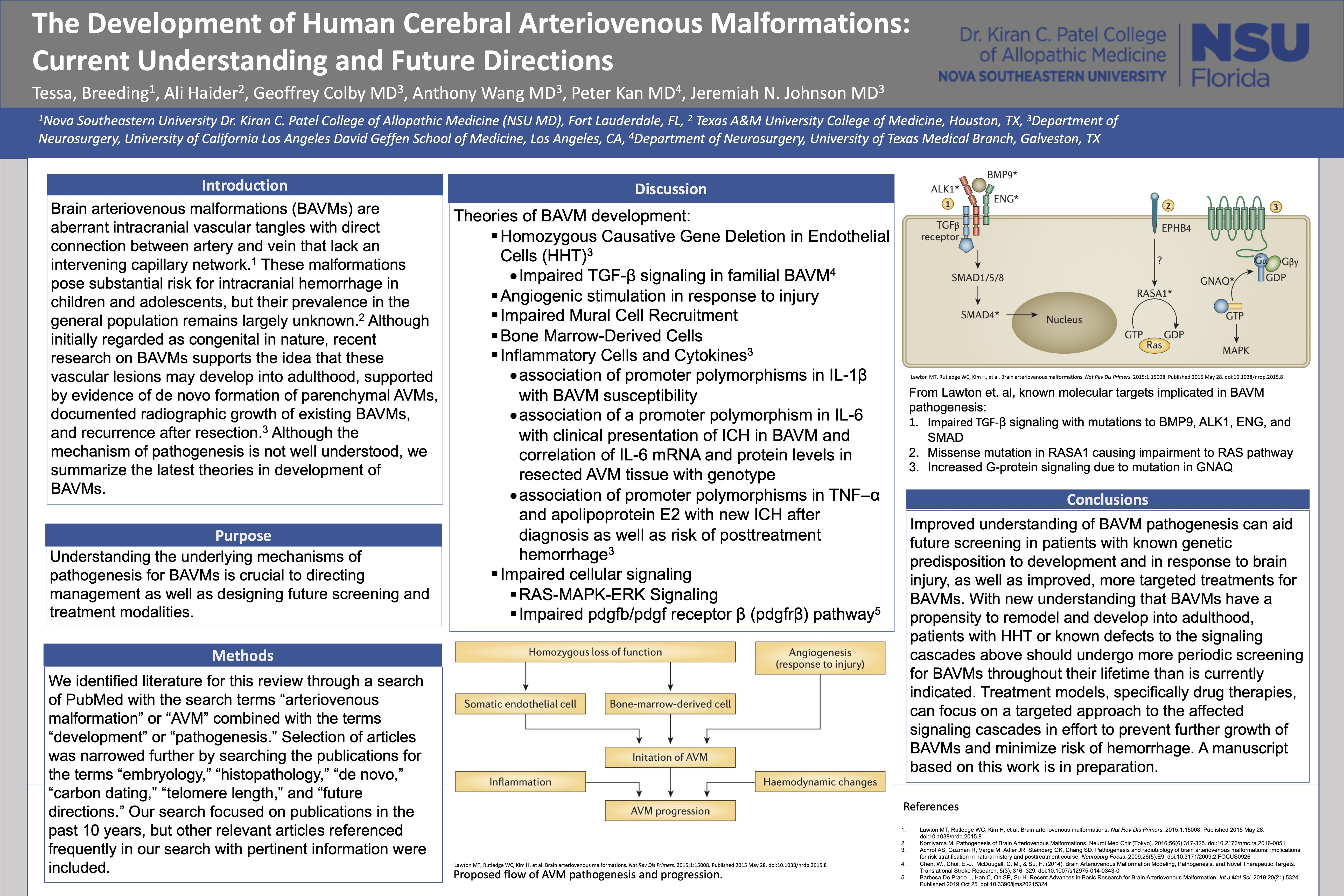
Outcomes: Evidence supports that BAVMs are not solely congenital by demonstrating de novo formation of parenchymal AVMs, documented radiographic growth of existing BAVMs, and recurrence after resection. Current theories for BAVM development implicate congenital malformations, genetic polymorphisms, angiogenic stimulation in response to injury, and impairment to various inflammatory cells and molecular signaling pathways.
Discussion: Although the mechanism of pathogenesis for BAVMs is not well understood, in this review we summarize cerebrovascular arteriovenous embryology and histopathology as a basis to discuss what is known and unknown about the timing and mechanism by which these lesions develop in context of the most recent theories, and additionally discuss directions for future research and possible implications for treatment.