
Abstract
Introduction: Pelvic insufficiency (fragility) fractures are becoming an increasingly common musculoskeletal injury in the elderly.
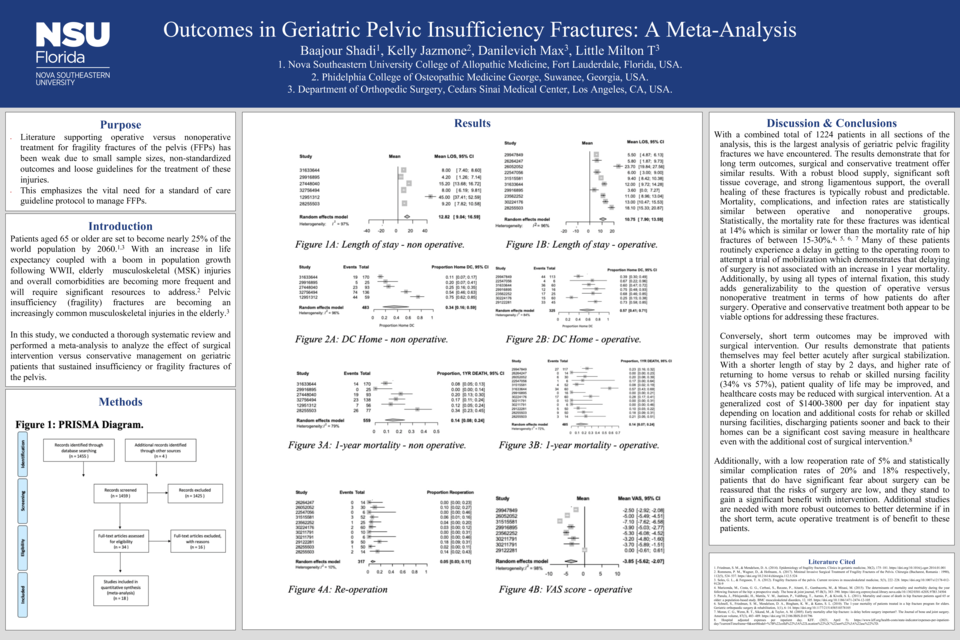
Methods: We conducted a thorough systematic review and performed a meta-analysis to analyze the effect of surgical intervention versus conservative management on geriatric patients that sustained insufficiency or fragility fractures of the pelvis. The primary outcomes were length of hospital stay, visual analog score (VAS), discharge disposition, 1-year mortality, in-hospital complication including infection, and re-operation.
Outcomes: The results demonstrate that for long-term outcomes, surgical and conservative treatment offer similar results. Mortality, complications, and infection rates are statistically similar between operative and nonoperative groups. Conversely, short-term outcomes may be improved with surgical intervention. Our results demonstrate that patients themselves may feel better acutely after surgical stabilization. With a shorter length of stay by 2 days, and a higher rate of returning to home versus to rehab or skilled nursing facility (34% vs 57%), patient quality of life may be improved and healthcare costs may be reduced with surgical intervention.
Discussion: With a combined total of 1224 patients in all sections of the analysis, this is the largest analysis of geriatric pelvic fragility fractures we have encountered. This study found that patients with fragility fractures of the pelvis do well after both operative and non-operative management.




