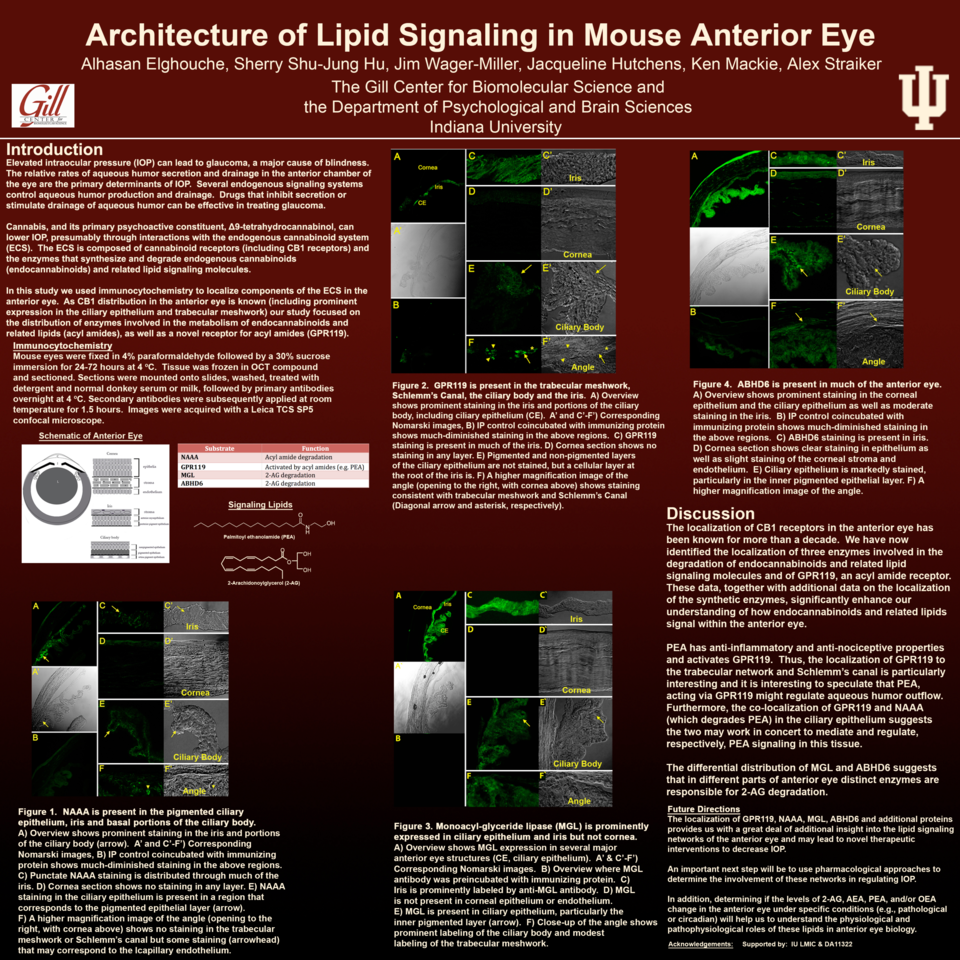
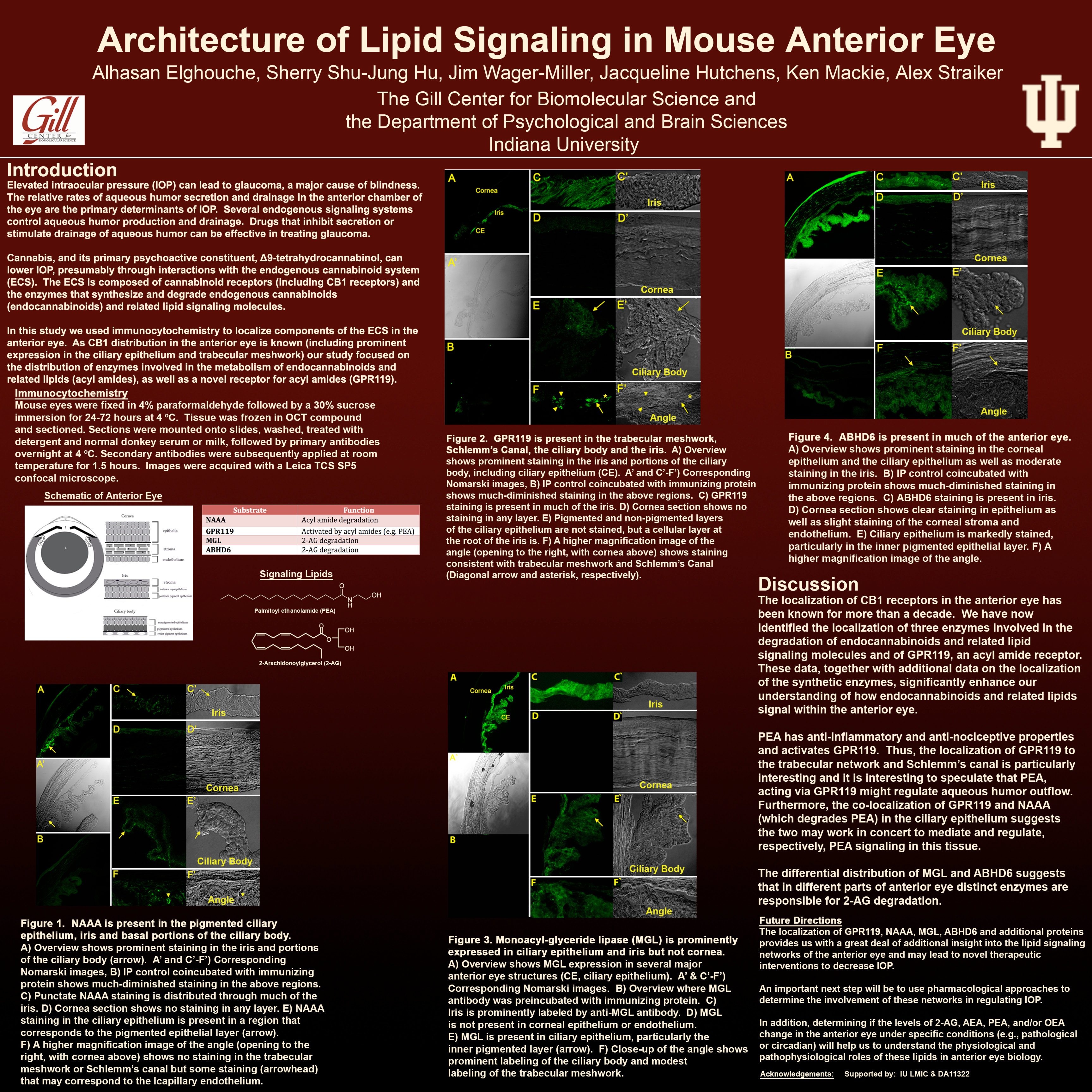
Architecture of Lipid Signaling in Mouse Anterior Eye
Abstract
Elevated intraocular pressure (IOP) can lead to glaucoma, a major cause of blindness. The relative rates of aqueous humor secretion and drainage in the anterior chamber of the eye are the primary determinants of IOP. Several endogenous signaling systems control aqueous humor production and drainage. Drugs that inhibit secretion of stimulate drainage of aqueous humor can be effective in treating glaucoma.
Cannabis, and its primary psychoactive constituent, delta-9-tetrahydrocannabinol, can lower IOP, presumably through interactions with the endogenous cannabinoid system (ECS). The ECS is composed of cannabinoid receptors (including CB1 receptors) and the enzymes that synthesize and degrade endogenous cannabinoids (endocannabinoids) and related lipid signaling molecules.
In this study we used immunocytochemistry to localize components of the ECS in the anterior eye. As CB1 distribution in the anterior eye is known (including prominent expression in the ciliary epithelium and trabecular meshwork) our study focused on the distribution of enzymes involved in the metabolism of endocannabinoids and related lipids (acyl amides), as well as a novel receptor for acyl amides (GPR119).
Related articles