Abstract
Introduction: With an estimated rise of 4 million new cases each year worldwide, Gi cancers are becoming more prevalent. The commonly associated risk factors like cigarette smoking, alcohol consumption, gastroesophageal reflux disease, Helicobacter pylori infection, diets high in saturated fats, and inflammatory bowel disease. The most common Gi cancers are colorectal cancer, gastric cancer, pancreatic cancer, and liver cancer whereas the least common ones are neuroendocrine tumors, gastrointestinal stromal tumors (GIST), and anal cancer are less common[1].
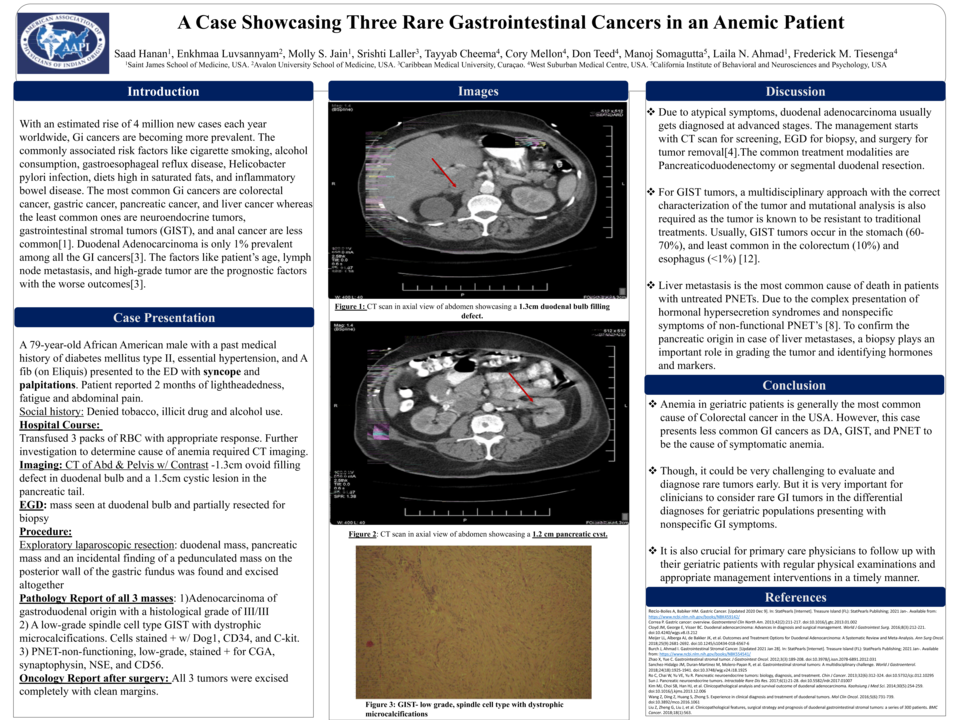
Case report: A 79-year-old African American male with a past medical history of diabetes mellitus type II, essential hypertension, and A fib (on Eliquis) presented to the ED with syncope and palpitations. He reported experiencing symptoms of fatigue, abdominal pain, and lightheadedness for two months. Complete blood count revealed a hemoglobin level of 4.9 g/dl requiring three packed red blood cell transfusions. Due to his symptoms and concurrent severe anemia, the GI mass was suspected, and a CT of the abdomen and pelvis with contrast was promptly ordered. The findings of the CT report demonstrated a 1.3cm ovoid filling defect in duodenal bulb and a 1.5cm cystic lesion in the pancreatic tail. Furthermore, the patient completed an esophagogastroduodenoscopy (EGD) which exhibited a mass in the duodenal bulb that was partially resected for biopsy. The biopsy confirmed invasive adenocarcinoma of gastroduodenal origin with a histological grade of III/III under WHO classification. During the surgical removal of the duodenal bulb tumor, the examination of the stomach showcased a pedunculated mass near the fundus on the posterior wall of the stomach.
Conclusion: Anemia in geriatric patients is generally the most common cause of Colorectal cancer in the USA. However, this case presents less common GI cancers as DA, GIST, and PNET to be the cause of symptomatic anemia. It is very important for clinicians to consider rare GI tumors in the differential diagnoses for geriatric populations presenting with nonspecific GI symptoms.