Abstract
Background:
In late April 2020, The British National Health Service released a warning to pediatricians about an unusual inflammatory syndrome, linked to Covid-19Multisystem Inflammatory Syndrome in Children(MIS-C), a rare condition, has been reported approximately 2-4 weeks after the onset of Covid-19 in children and adolescents, causing inflammation in multiple organ systems.
Hypothesis:
Through this article, we discuss rare immunological phenomena similar to Kawasaki disease(KD) in children and adolescents post Covid-19 infection, known as MIS-C.
Methodology:
We performed a systematic review of articles on the Covid-19 positive (RT-PCR confirmed) pediatric population. Our inclusion criteria were - age less than 21 years and showing signs and symptoms of MIS-C post-Covid-19 infection. Demographic variables, clinical features, laboratory investigations like CRP, ESR, cytokines, D-dimer, ECG changes, and Cardiac troponin were included in our review. We discussed the period between the Covid-19 onset and MIS-C, the differential points between MIS-C illness and KD as well as therapeutic options.
Results:
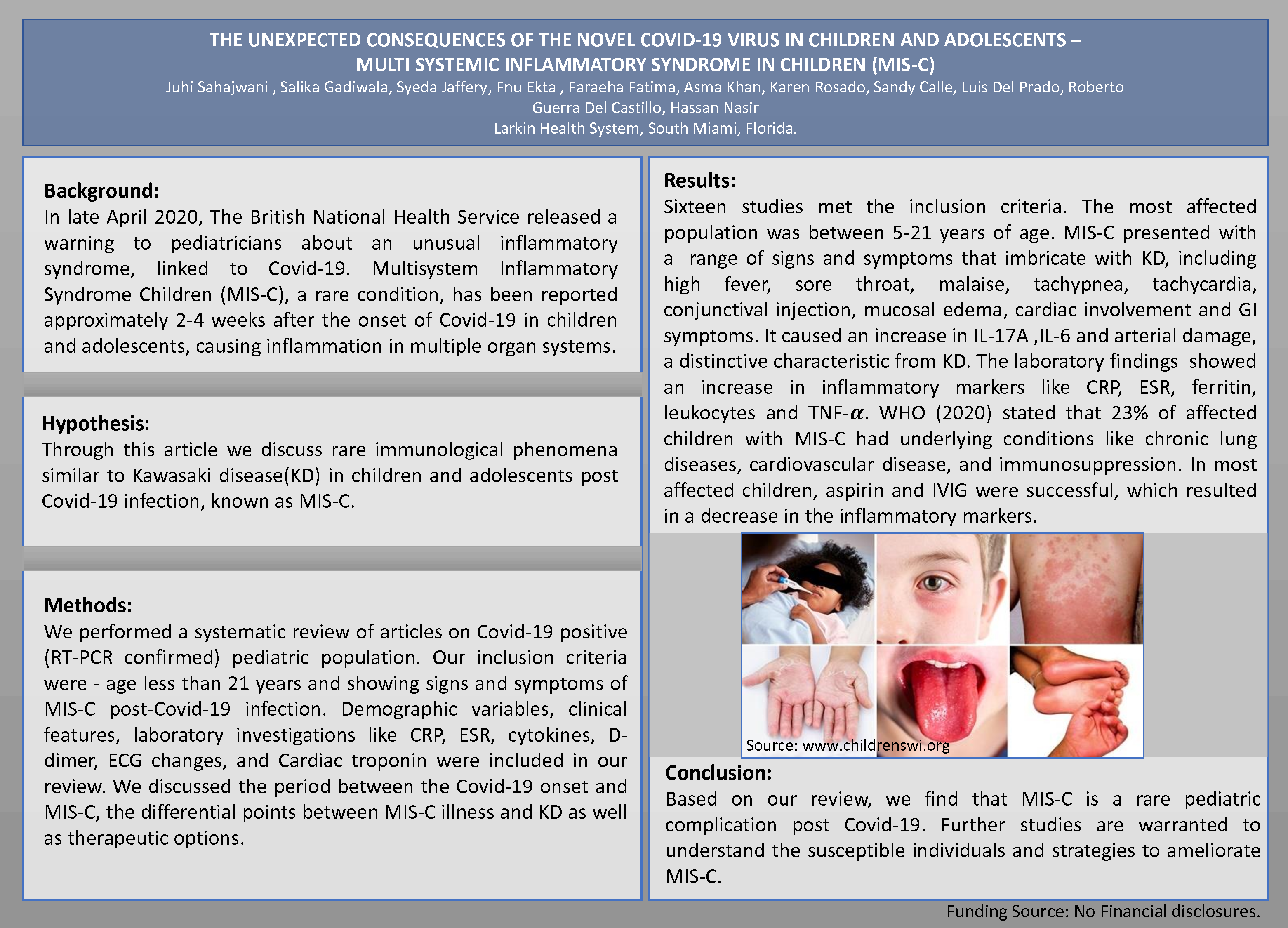
Sixteen studies met the inclusion criteria. The most affected population was between 5-21 years of age. MIS-C presented with a range of signs and symptoms that imbricate with KD, including high fever, sore throat, malaise, tachypnea, tachycardia, conjunctival injection, mucosal edema, cardiac involvement, and GI symptoms. It caused an increase in IL-17A, IL-6 and arterial damage, a distinctive characteristic from KD. The laboratory findings showed an increase in inflammatory markers like CRP, ESR, ferritin, leukocytes, and TNF-𝜶. WHO (2020) stated that 23% of affected children with MIS-C had underlying conditions like chronic lung diseases, cardiovascular disease, and immunosuppression. In most affected children, aspirin and IVIG were successful, which resulted in a decrease in the inflammatory markers.
Conclusion:
Based on our review, we find that MIS-C is a rare pediatric complication post-Covid-19. Further studies are warranted to understand the susceptible individuals and strategies to ameliorate MIS-C.