Abstract
Introduction
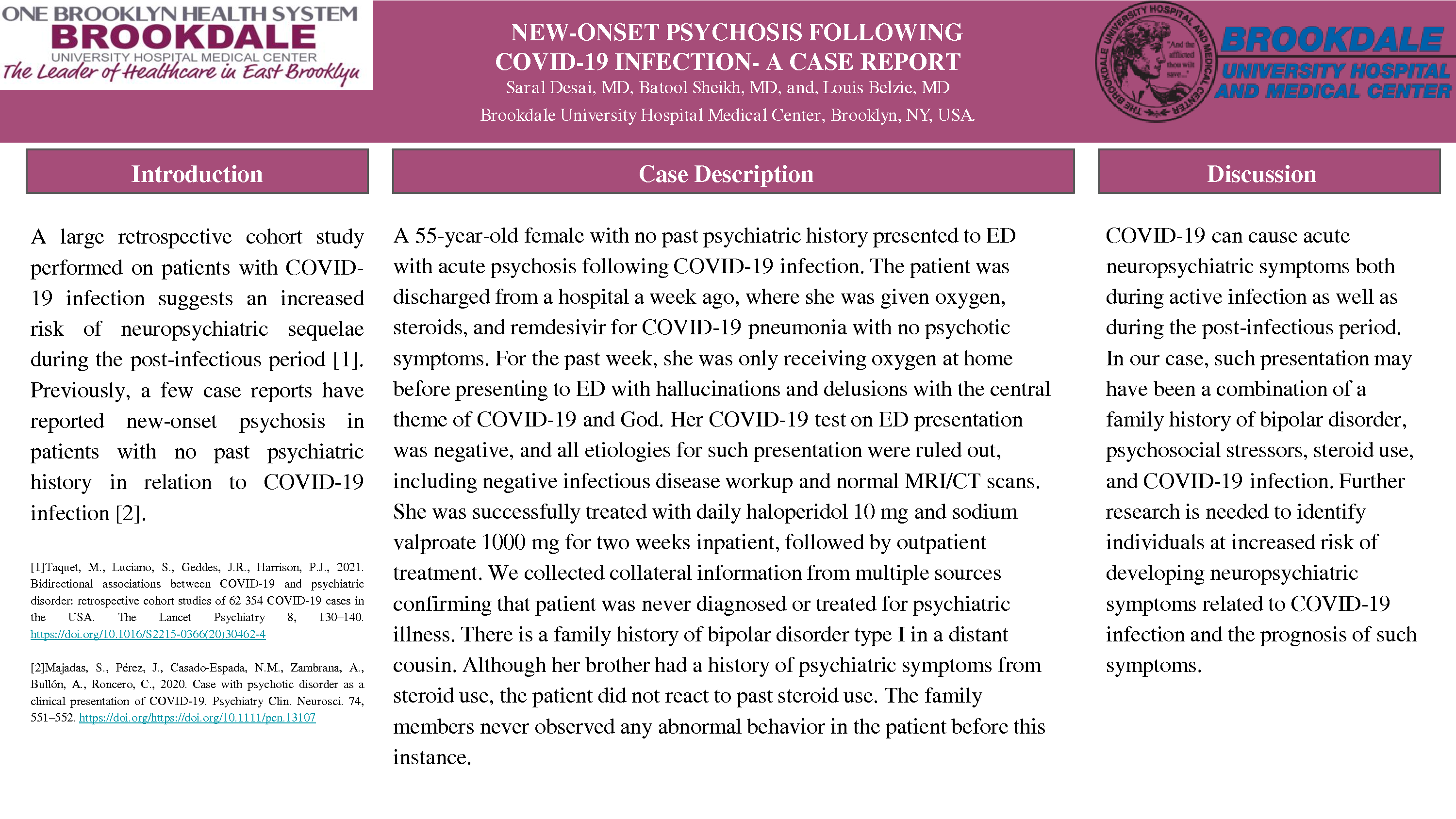
A large retrospective cohort study performed on patients with COVID-19 infection suggests an increased risk of neuropsychiatric sequelae during the post-infectious period [1]. Previously, a few case reports have reported new-onset psychosis in patients with no past psychiatric history in relation to COVID-19 infection [2].
Case Description
A 55-year-old female with no past psychiatric history presented to ED with acute psychosis following COVID-19 infection. The patient was discharged from a hospital a week ago, where she was given oxygen, steroids, and remdesivir for COVID-19 pneumonia with no psychotic symptoms. For the past week, she was only receiving oxygen at home before presenting to ED with hallucinations and delusions with the central theme of COVID-19 and God. Her COVID-19 test on ED presentation was negative, and all etiologies for such presentation were ruled out, including negative infectious disease workup and normal MRI/CT scans. She was successfully treated with daily haloperidol 10 mg and sodium valproate 1000 mg for two weeks inpatient, followed by outpatient treatment. We collected collateral information from multiple sources confirming that patient was never diagnosed or treated for psychiatric illness. There is a family history of bipolar disorder type I in a distant cousin. Although her brother had a history of psychiatric symptoms from steroid use, the patient did not react to past steroid use. The family members never observed any abnormal behavior in the patient before this instance.
Discussion
COVID-19 can cause acute neuropsychiatric symptoms both during active infection as well as during the post-infectious period. In our case, such presentation may have been a combination of a family history of bipolar disorder, psychosocial stressors, steroid use, and COVID-19 infection. Further research is needed to identify individuals at increased risk of developing neuropsychiatric symptoms related to COVID-19 infection and the prognosis of such symptoms.
References
[1]Taquet, M., Luciano, S., Geddes, J.R., Harrison, P.J., 2021. Bidirectional associations between COVID-19 and psychiatric disorder: retrospective cohort studies of 62 354 COVID-19 cases in the USA. The Lancet Psychiatry 8, 130–140. https://doi.org/10.1016/S2215-0366(20)30462-4
[2]Majadas, S., Pérez, J., Casado-Espada, N.M., Zambrana, A., Bullón, A., Roncero, C., 2020. Case with psychotic disorder as a clinical presentation of COVID-19. Psychiatry Clin. Neurosci. 74, 551–552. https://doi.org/https://doi.org/10.1111/pcn.13107