Abstract
Abstract
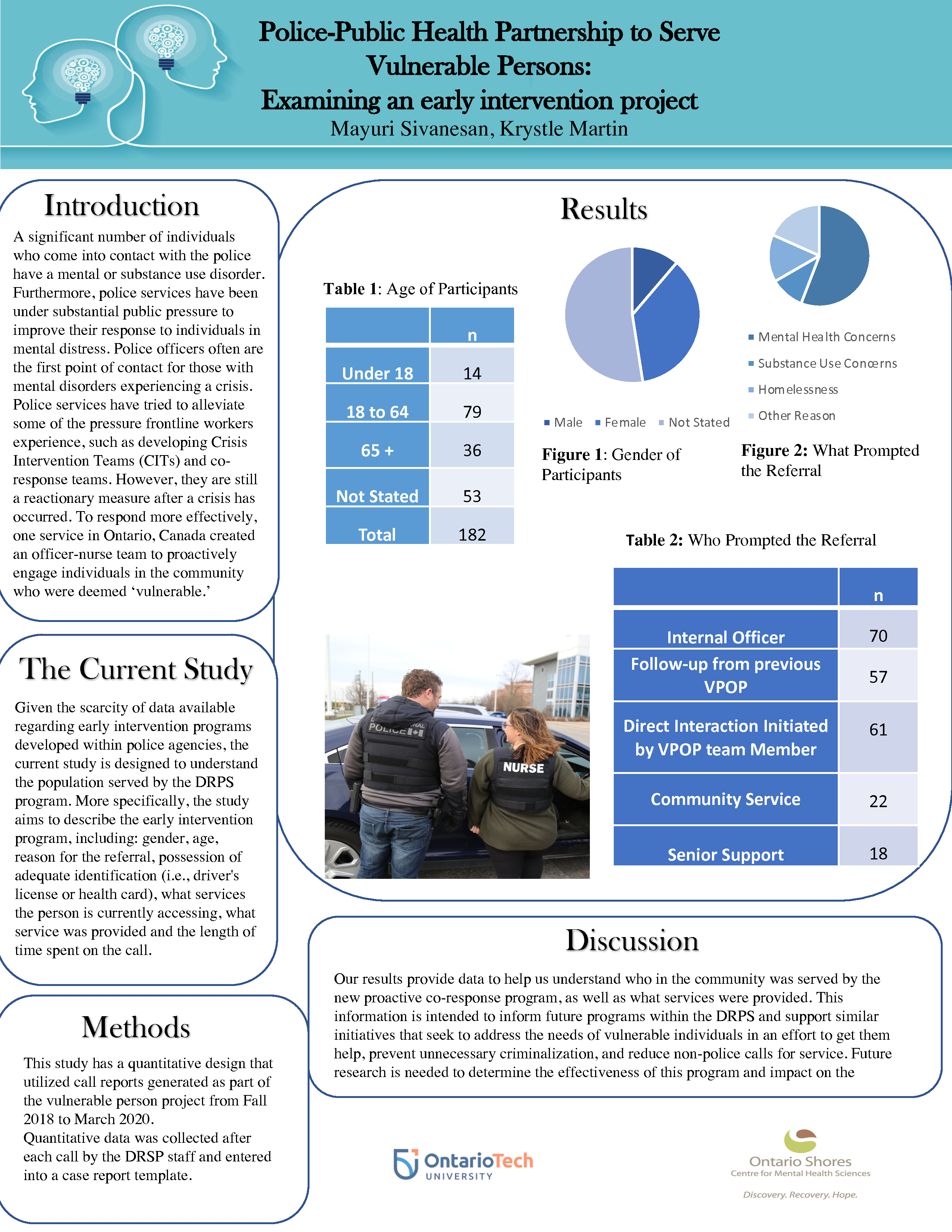
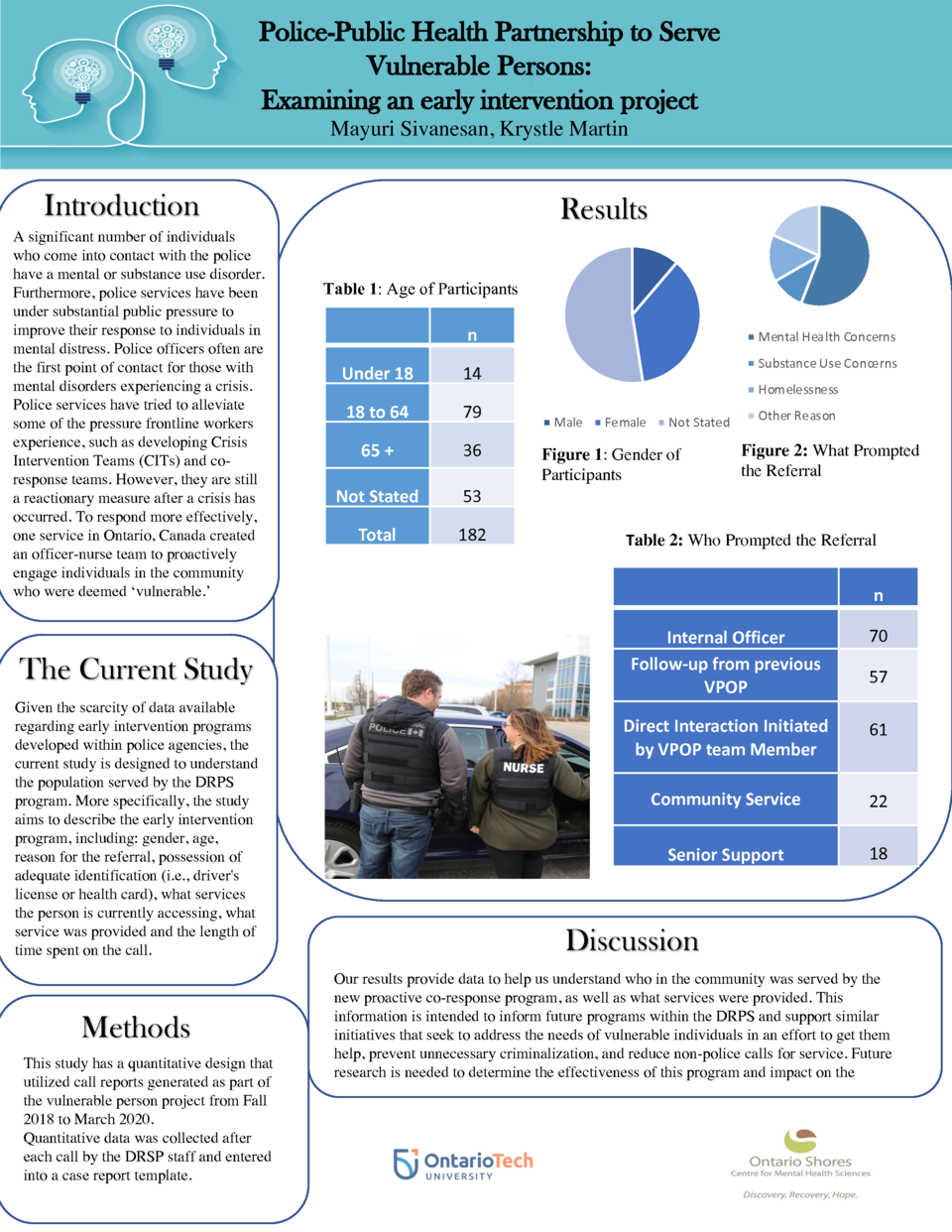
Background: Durham Regional Police Services (DRPS) has seen a 50% increase in mental health-related since 2012. To attend to this growing issue and better support vulnerable individuals, the DRPS developed proactive, co-response intervention program. This program aims to identify and connect individuals with community programs to help them find long-term solutions for their problems and reduce unnecessary criminal justice involvement. The current study was designed to explore the new initiative.
Methods: The current study has a quantitative design that undertook a review of police reports generated by DRPS as part of this program which ran from 2018 to March 2020. The data of interest included: gender, age, the reason for referral, possession of adequate identification (i.e., driver's license or health card), what services the person was currently accessing, what services were provided, and length of time of the call.
Results: The study included a total of 182 case reports created by police staff in this program. Our results show that most of the sample was female (n = 87, 47.8%) and within the age range of 18 to 64 (n = 79, 43.4%). A total of 134 cases were referred for mental concerns, 26 for substance use, and 36 for housing concerns. Most were generated by an internal staff member (n = 77, 42%). The DPRS team mostly provided verbal support to individuals, followed by helping people reconnect to services already used and providing practical support (e.g., giving clean water, snacks, gloves).
Conclusion: Our results provide data to help us understand who in the community was served by the new proactive co-response program and what services were provided. This information is intended to inform future programs within the DRPS and support similar initiatives that seek to address vulnerable individuals' needs to get them help, prevent unnecessary criminalization, and reduce non-police calls for service. Future research is needed to determine the effectiveness of this program and its impact on the community.